Tag: television

  • Why Doordarshan Failed | Doordarshan Downfall Explained

    With the increase of technology and advancement in the broadcast industry, government funding channels such as Doordarshan need to be more outspoken. The Indian TV industry has grown massively, as of today, there are around 890 channels.

    Like every other household has a television in their houses, the demand for more variety in channels increased which resulted in India being the third-largest market across the world, right after China and the US. However, Doordarshan was not inclined toward this race. The channel lost a large proportion of viewers, mainly because of satellite TV.

    There was a time when Doordarshan reached over 90 percent of households in the country, but with such huge channel options, it is not preferred by most households.

    The triggering fact is, that this isn’t limited to Doordarshan only, almost every government-based organization such as BSNL and AIR, lost audiences and customers in a very large number.

    As private organizations are facing extreme difficulty in surviving in the market, competition has risen massively. Because of this, the government established a committee under Sam Pitroda to improve the marketing strategies and revenue styles in Prasar Bharati, under which Doordarshan is controlled. However, there is still a long run for Doordarshan to boost up its revenue source and face the growing competition in the market.

    Since private television channels were allowed in 1991, Doordarshan has seen a sharp drop in viewership. Despite generating substantial advertising revenue from mandatory broadcasts of major national events, such as cricket matches, there has been a proposal to introduce a television ownership license fee in India to support its funding.

    Now, this brings us to the main content of this article, that is, how Doordarshan was the biggest marketing channel, what went wrong, and why it failed. So, let’s get started!

    History of Doordarshan

    Doordarshan started as an experimental broadcaster in the year 1959, with a small transmitter along with a makeshift studio. It is the first-ever TV channel in India, also called the Free Dish as being a free entertainment platform.

    Within a few years, Doordarshan became a huge success in the broadcast industry and reached over 25 million households. It covered all fields such as information & news, education, entertainment, and others.

    The reason why Doordarshan was praised so much by the Indian audience was that it carried the interests of all the geographical, linguistic, and cultural groups. With time, Doordarshan grew into a large network of 36 satellite channels, which provided a free DTH service of 110 in its Bouquet.

    Leading Television Channels Across India in Week 14 of 2024, by Weekly Viewership
    Leading Television Channels Across India in Week 14 of 2024, by Weekly Viewership

    What Led to the Downfall of Doordarshan

    The Massive Decline in Doordarshan’s Ratings

    With the growing demand for commercialization, Doordarshan began auctioning slots to private broadcasters. This resulted in 80 channels, 24 DD, and around 25 private with auctioning every month. However, this didn’t turn out as expected as a large portion of Doordarshan’s audience base shifted massively towards the private broadcasters. This led to a massive decline in the ratings and revenue of DD.

    Disastrous Advertising Model

    The advertising model of Doordarshan was a bit of a disaster for it as it stipulated that the private channels would not share their revenue with the DD platform. So, earlier, the private channels paid INR 8 crore per annum to DD Free Dish for transmission, annually which generated INR 2,500 crore in its total revenue, and became zero after its new advertising model.

    This resulted in the fall of Doordarshan’s advertising revenue from INR 1,301 crore to INR 475.7 crore. And among this, around INR 318.06 crore entirely came from government ads so the final revenue that DD generated was INR 157.59 crores.

    Absence of Proper Marketing Division

    Another big flaw in the marketing strategy of Doordarshan is the lack of a proper and independent marketing division. And because of this, when the private channel charged INR 90,000 to INR 1.2 lakh for a 10-second slot, Doordarshan charged merely INR 65,000 for the same slot.

    They didn’t have any team for strategic planning, research, advertising, internet handling, product management, branding, or any other. This played a major role in the downfall of Doordarshan and gave major advantages to private channels.

    Conclusion

    In conclusion, we can say that there was a time when Doordarshan used to rule the broadcast industry in India. But to stand still in the market, one needs to adapt to the advancement in technology and marketing. And Doordarshan failed in both of these. Plus, as being funded by the Government it did not make enough profit and in fact, runs in a loss.

    The former Prasar Bharti chief Jawhar Sircar blamed the incompetence, poorly backed policies, and lack of ambition, for the failure of Doordarshan rather than the competition. The irony here is, that most of the famous shows preset on Doordarshan were created by private producers.

    When they found better opportunities, they grasped onto them. For now, the best strategic planning of Doordarshan is to take the BBC model to enhance its marketing planings and strategies. Stay tuned for more such content!


    The BSNL Story: Growth, Downfall and Revival
    Explore an in-depth look at the history, rise, challenges, and resurgence of BSNL, one of India’s largest telecommunications networks.


    FAQ

    When Doordarshan started?

    Doordarshan was started on 15th September 1959.

    What is Doordarshan?

    Doordarshan is an Indian state-owned public television broadcaster founded by the Government of India.

    What caused the steep decline in Doordarshan viewership?

    As the private channels entered the market Doordarshan experienced a steep decline.

    How many viewers does Doordarshan have?

    In 2021, TV viewership was more than 6 Billion and the channels reached more than 680 million viewers in 2021.

    Is Doordarshan still active?

    Yes, Doordarshan is still active and has a network operating 34 satellite channels.
  • Revenue Generation Model of Television Channels

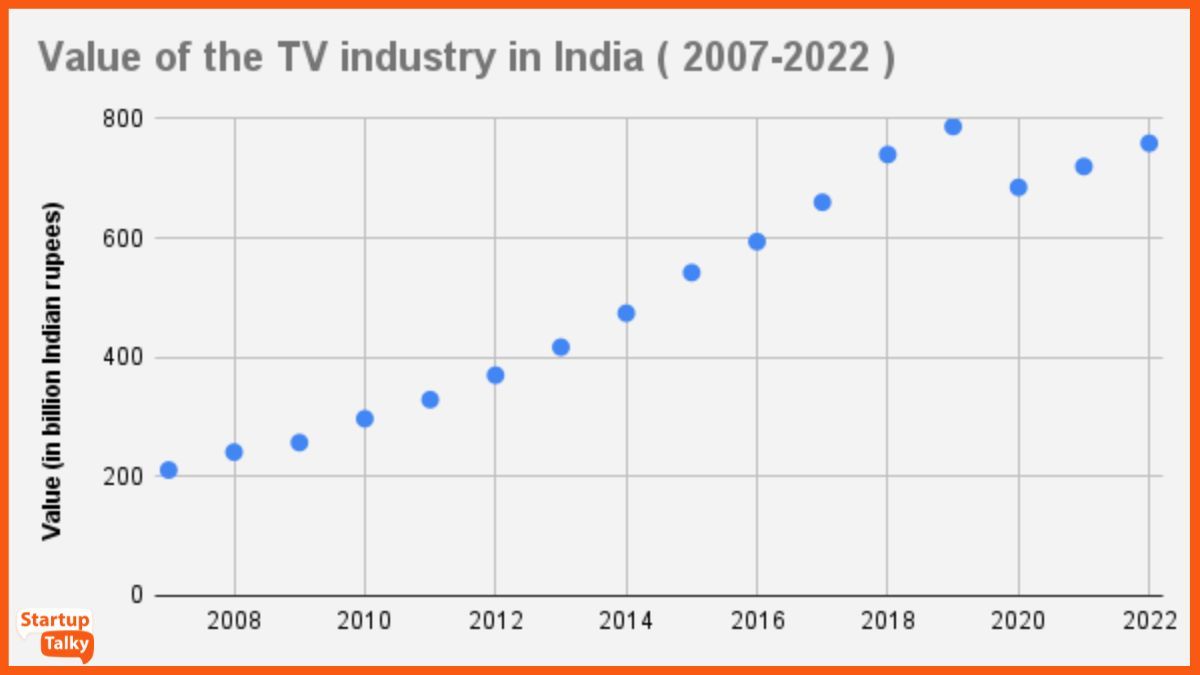
    The Indian Television Industry produces thousands of programs in many Indian languages with the Hindi, Tamil and Telugu factions of the industry being the largest.  In 2021, the Indian Television Industry was worth INR 720 billion and is estimated to reach INR 826 billion by 2024.

    Emergence & Expansion of the Television Industry

    Television emerged on the Indian market in 1959 as an experiment which offered two-hour programs for a week.  It soon garnered popularity and by the 1970s television centres were opened in other parts of the country.  The year 1976 saw Doordarshan emerging as a separate government department and in 1982 it telecasted the 9th Asian Games. The 1990s saw the television industry expand with the emergence of private television channels.  It began after CNN broadcasted the Gulf War.  STAR (Satellite Television Asian Region), which was based in Hongkong entered into an agreement with an Indian company giving birth of  Zee TV. Several other channels came into existence during this time including regional channels and international channels like CNN, BBC and Discovery offering different categories of entertainment to a wide variety of audience.  This expansion also gave rise to DTH (Direct To Home) cable operators. By the year 2016, Indian Television boasted of 857 channels of which 184 were paid channels.
    Television has become an integral part of people’s daily lives.  The popularity of the medium is due to its capability to cater to the needs of its audiences through various shows of different genres telecasted through various channels.

    Revenue Generation Model

    As with any commercial enterprise, television industry operates with the basic idea of generating revenue and posting profits.  The various channels generate revenue from three basic streams – Advertisements, Subscription Services, Sponsorships & Product Placements, Licensing owned Content and Re-transmission Fees.

    1. Advertisements

    Television channels sell airtime and slots to advertisers who wish to showcase their products or services during commercial breaks.  The slot and airtime rates depend on the time and on the popularity of the show as well as the time-length of the advertisement itself. Advertisements broadcasted during prime time cost more than those which are broadcasted at low viewership slots, like mornings or early evenings.  Even the TRP (Television Rating Points) ratings of the show affect the airtime rates.

    2. Subscription Services

    This is a two-pronged process.  Some television channels are made available to subscribers, by DTH operators, on payment, which could be monthly or annually.  A part of this subscription fees goes to the channel itself.  This model of revenue generation is largely volume based.

    3. Sponsorships & Product Placements

    Television channels are a high interest sponsorship venue due to their wide and deep audience penetration.  They receive funding from sponsors for programming.  A high revenue is also generated from specific advertiser product placement within their shows.

    4. Licensing Owned Content

    Television Channels also produce and distribute content like programs or movies and generate revenue by licensing or outright selling the rights to other networks or streaming devices.

    5. Re-transmission Fees

    Television channels charge fees from cable distributors and satellite operators to allow them the right to retransmit their local signals.  This can happen for a program that sees high demand.

    Specific coverage of live events like sports, concerts or award shows are also a high revenue generating stream for television channels.  Such events attract large audiences which, in turn, translate into higher advertisement rates.  Another minor, however, effective revenue generation source is the internet. Television channels stream their program episodes via YouTube and generate income on the number of times the program is viewed.  This also works as an advertisement for the program and the channel and can increase their audience reach.

    Trends in the Television Industry

    The delivery of television programs to the audience has undergone a huge change, especially in the recent years. What was delivered through relied antennas has switched to dishes, distribution through cable networks and direct broadcast satellites.  Through the use of Internet Protocol Television, programs are available to watch on mobile phones.

    Conclusion

    The television industry is fiercely competitive and its revenue generation is heavily dependent on capturing the viewers attention and sustaining it.  Effectively, it is that attention that the channels sell to the advertisers.  While the TV channel landscape continues to evolve with the rise of digital media and streaming services, the fundamental principles of generating revenue through high-quality content and effective advertising remain constant.

    💡
    The revenue of TV channels in India primarily comes from advertising, which contributes around 70-80% of their total revenue.

    • As per industry estimates, the Indian TV advertising market was valued at approximately 35,000 crore INR (~$4.7 billion) in 2021.
    • The television revenue is expected to grow at a CAGR of 4-5% and reach Rs 826 billion by 2024, according to EY FICCI M&E 2022 report.
    • The report says, the ad revenue of TV is expected to become Rs 394 billion in 2024.
    • Revenue from subscriptions for TV channels is expected to reach Rs 415 billion in 2023.

    What happened to Doordarshan | How it Lost 90% of Its market to Private channles
    Doordarshan was one of the most famous tv channels and the only option to the Indian audience in the 90s but how did lose 90% of its audience?

    FAQs

    How do free TV channels make money?

    Free Tv channels earn revenue by displaying ads between the shows.

    How much does it cost to start a TV channel?

    To start a non news channel the net worth of the company should be around 5 crores.

    What is the benefit of high TRP?

    If a channel has high TRP they can charge a higher amount from advertisers.

    What is the revenue model for TV Channels?

    The two key methods of revenue for TV Channels are:

    • Subscriber fee
    • Advertising

    How many TV channels are there in India?

    There are 850 TV channels in India.

    What is full form of TRP?

    TRP stands for Television Rating Point.

    Who calculates the TRP for Television Channels?

    TRP is calculated by Broadcast Audience Research Council using “BAR-O-meters”.

  • List of All the Media Channels Under Zee Media (Essel Group)

    One of India’s most renowned commercial organizations, Essel Group or the Zee Group, has a broad portfolio of assets in media, marketing, entertainment, enterprise solutions, infrastructure projects, and academia. This conglomerate, which has its headquarters in Mumbai, has distinguished itself in the Indian media sector. Popularly known as Zee, the business is a household name in itself.

    The current business sectors of Essel Group are TV broadcasting, publishing, filmmaking, science and technology, manufacturing, infrastructure, academia, valuable metals, healthy living, potash mining, financial services, oil and gas, and nuclear energy, and these are only a few examples.

    About Essel Group

    Speaking of the history of the Essel Group, it has its roots attached to the pre-independence era. It was founded in 1926 as a commodity trading and export company called Rama Associates Limited.

    Ever since, it has transformed into a conglomerate that is a representation of the creativity and strength of Indian entrepreneurship, with overseas operations and a workforce of close to around ten thousand devoted workers all over the nation.

    Today, one of the major business areas of Essel Group is Zee Media Corporation. Zee News Limited was the previous name of Zee Media Corporation Limited. It is one of the biggest television news networks in India, offering coverage of both the national and local news. The organization created Zee TV, the first satellite channel ever broadcast in the nation.

    It features around 19 news channels nationwide in eight different languages and is run by Subhash Chandra. Dish TV India Ltd., a distribution network, is also present. Zee Media also produces films and videos and manages ZIMA, the Zee Institute of Media Arts, a film school. Shares representing 30.89% of the company are available for trading on the stock exchange. The Essel Group of enterprises owns the remaining 69.11 percent of the shares.

    Let us now talk about the different channels owned by Zee Media.

    1. Zee News
    2. Zee Hindustan
    3. Zee Business
    4. Zee 24 Ghanta
    5. Zee Kannada
    6. Zee 24 Taas
    7. Zee 24 Kalak
    8. Zee Odisha
    9. Zee Rajasthan
    10. Zee Uttar Pradesh Uttarakhand
    11. Zee Madhya Pradesh Chhattisgarh
    12. Zee Bihar Jharkhand
    13. Zee Delhi NCR Haryana
    14. Zee Punjab Haryana Himachal
    15. WION
    16. Zee Salaam
    17. Zee Malayalam
    18. Zee Tamil News
    19. Zee Telugu News

    1. Zee News

    Launched: 1999

    Language: Hindi

    Zee News Logo
    Zee News Logo

    Zee News is one of the most popular news channels in India at present. It was launched in the year 1999 and today it primarily focuses on Hindi media and has turned out to be one of the most controversial news giants.

    2. Zee Hindustan

    Launched: 2017

    Language: Hindi

    Zee Hindustan Logo
    Zee Hindustan Logo

    Zee Hindustan is one such unique channel without any news anchor or presenter. It was revamped in the year 2018. The motive behind this was to show the real voices and opinions of the Indian masses through unique shows.

    3. Zee Business

    Launched: 2005

    Language: Hindi

    Zee Business Logo
    Zee Business Logo

    Zee Business, as the name suggests, is mainly engaged in the broadcasting of business-related day-to-day affairs. With its insightful debates on the finance and economy of the country with great business personalities, the channel has been growing ever since.

    4. Zee 24 Ghanta

    Launched: 2007

    Language: Bengali

    Zee 24 Ghanta Logo
    Zee 24 Ghanta Logo

    Zee 24 Ghanta is one of the most popular Bengali TV channels. Zee 24 Ghanta focuses on the overall news and shows happening in and around West Bengal.

    5. Zee Kannada

    Launched: 2006

    Language: Kannada

    Zee Kannada Logo
    Zee Kannada Logo

    Zee Kannada is Zee Network’s extension to the Kannada media. The channel deals with all the affairs happening in and around. It was launched back in the year 2006 and has been unstoppable.

    6. Zee 24 Taas

    Launched: 2007

    Language: Marathi

    Zee 24 Taas Logo
    Zee 24 Taas Logo

    Maharashtra, the state of the financial capital of India is one of the most important affairs of India and so is Zee 24 Taas which is broadcasted in Marathi primarily for the people of Maharashtra.

    7. Zee 24 Kalak

    Launched: 2017

    Language: Gujarati

    Zee 24 Kalak Logo
    Zee 24 Kalak Logo

    Similarly, Zee 24 Kalak is Zee Networks’ extension of its channels in Gujarat. The channel is quite famous in the cities of Gandhinagar Ahmedabad,, etc, and is growing in the whole of Gujarat.

    8. Zee Odisha

    Launched: 2014

    Language: Odia

    Zee Odisha Logo
    Zee Odisha Logo

    Zee Odisha is Zee Networks’ extension of broadcasting the Odia news in the region through this channel. The channel is quite popular in Orissa and enjoys excellent viewership.

    9. Zee Rajasthan

    Launched: 2013

    Language: Hindi

    Zee Rajasthan Logo
    Zee Rajasthan Logo

    Zee Rajasthan is one of the most prominent news channels in Rajasthan and has been growing ever since it was launched. The channel enjoys great popularity in the state and often holds big events.

    10. Zee Uttar Pradesh Uttarakhand

    Launched: 2017

    Language: Hindi

    Zee Uttar Pradesh Uttarakhand Logo
    Zee Uttar Pradesh Uttarakhand Logo

    Zee Uttar Pradesh Uttarakhand is Zee Networks’ extension of broadcasting the news related to the states of Uttar Pradesh and Uttarakhand, which were originally Uttar Pradesh at one point in time. The channel is quite popular in the region and enjoys great TRP compared to other regional channels of UP and Uttarakhand.

    11. Zee Madhya Pradesh Chhattisgarh

    Launched: 2017

    Language: Hindi

    Zee Madhya Pradesh Chhattisgarh Logo
    Zee Madhya Pradesh Chhattisgarh Logo

    Madhya Pradesh and Chhattisgarh got separated in the year 2000 but the states have always been integral parts of India and friendly neighbors as well. The channel Zee Madhya Pradesh Chhattisgarh broadcasts the shows in the local languages of the concerned states and enjoys great TRP.

    12. Zee Bihar Jharkhand

    Launched: 2017

    Language: Hindi

    Zee Bihar Jharkhand Logo
    Zee Bihar Jharkhand Logo

    Zee Bihar Jharkhand is Zee Networks’ extension of broadcasting the news related to the states Bihar and Jharkhand, which were originally Bihar through this channel. The channel is quite popular in the region and enjoys great TRP compared to other regional channels.

    13. Zee Delhi NCR Haryana

    Launched: 2022

    Language: –

    Zee Delhi NCR Logo
    Zee Delhi NCR Logo

    Delhi NCR and Haryana are bordering states and very often, the affairs of these states have always to do with each other’s welfare. Thus Zee Delhi NCR Haryana broadcasts the NCR and Haryana-related news on this channel and is considered one of the most successful regional TV channels.

    14. Zee Punjab Haryana Himachal

    Launched: 2013

    Language: Hindi

    Zee Punjab Haryana Himachal Logo
    Zee Punjab Haryana Himachal Logo

    Punjab, Haryana, and Himachal are bordering states and very often, the affairs of these states have always to do with each other’s welfare. Thus Zee Punjab, Haryana, and Himachal broadcasts the related news and other TV shows on this channel and is considered one of the most successful regional TV channels.

    15. WION

    Launched: 2016

    Language: English

    Wion Logo
    Wion Logo

    WION is one of the international news channels which has its presence spread overseas in countries like Nepal, Sri Lanka, etc. It also is an integral part of the Essel Group and has been performing great in English news. It was launched in 2006.

    16. Zee Salaam

    Launched: 2010

    Language: Urdu

    Zee Salaam Logo
    Zee Salaam Logo

    Zee Salaam, as the name suggests is the Urdu infotainment of the Zee Networks’. The main aim of the channel was to promote Urdu culture and practices; thus it was launched in 2010 and has been successful ever since.

    17. Zee Malayalam

    Launched: 2018

    Language: Malayalam

    Zee Malayalam Logo
    Zee Malayalam Logo

    Zee Malayalam is Zee Networks’ extension of broadcasting the Malayali news and shows in the region of Kerala state through this channel. The channel is quite popular in Kerala and enjoys excellent viewership.

    18. Zee Tamil News

    Launched: 2008

    Language: Tamil

    Zee Tamil News Logo
    Zee Tamil News Logo

    Zee Tamil mainly deals with the state of Tamil Nadu and broadcasts shows and news concerning the state.

    19. Zee Telugu News

    Launched: 2005

    Language: Telugu

    Zee Telugu Logo
    Zee Telugu Logo

    Zee Telugu is one of the most prominent TV channels in the state of Telangana and the surrounding areas and has been growing ever since it was launched. The channel enjoys great popularity in the state and often holds big events.

    Conclusion

    We can see that with time Essel Group’s Zee Networks has spread its business to the whole of India. Today Zee TV rules over the Indian media. The secret ingredient behind this is the fact that they understood the people’s needs and love for their language. Thus the expansion in the regional languages helped the group grow to the pinnacles of glory, where they are today.

    FAQs

    Who is the owner of the Zee News channel?

    Essel Group is the parent company of Zee News.

    How many channels does Zee News have?

    Zee News has 19 channels under its brand.

  • 6 Brands That Do Not Advertise and Probably Never Will

    Advertising is an important marketing strategy to earn profits by keeping customers informed about products and services and thus resulting in massive sales. Advertising brings new customers and also creates awareness about your band Despite the catchy headlines “10 brands that do not advertise” or “10 brands so popular that they don’t even need advertising!”, there is no such thing as zero advertising.

    Some brands oppose the accepted procedures that most advertisers live by today, and it separates them and creates buzz due to its innate uniqueness. Thus, here are 6 brands that don’t do conventional marketing and what you can gain from every one of them.

    Brands That Don’t Advertise

    1. Lamborgini
    2. Zara
    3. Naturals Ice Cream
    4. Rolls-Royce
    5. Tupperware
    6. Ferrero Rocher

    What makes these brands so unique?

    Why big brands don’t advertise? | Marketing Without Advertising

    Lamborghini

    Lamborghini Advertising
    Lamborghini 

    Owning the fast, powerful and luxurious beast is a dream for many people. It costs around $0.5 to $6 Million. Lamborghini knows exactly who their potential buyers are, and they have learned how to convert them into owners. Lamborgini considers advertising via tv commercials as an expensive waste of time.

    During a meeting, the CEO of Lamborgini was asked why the organization doesn’t publicize?

    He said, “The motivation behind why we don’t see Lamborghini television commercials is that customers who can bear the cost of them don’t sit the entire day sitting in front of the TV.”

    Lamborghini publicizes through a wide range of channels, yet overwhelmingly using web-based media, vehicle-based TV programs, engine shows, magazines, and vendor promotions.


    Top Ad Jingles of all time – A powerful marketing tool
    Do you remember your last ads jingle? Many people tend to remember ad jingle more than the ad. So, lets look at the Top Ad Jingles of all time.


    Zara

    Zara
    Zara

    Zara’s first retail design store opened in 1975 and, starting in 2016, it flaunted 2000 stores in 77 nations. Zara centers vigorously around its item, spot, and value instead of advancement.

    To begin with, they target men, ladies, and kids in profoundly populated urban communities. Second, they produce modest, in vogue clothing, with a high scrupulousness.

    Furthermore,  they just produce a limited number of pieces to make a sense of urgency among their shoppers. The uniqueness of Zara lies in the fact it spends just 0.3% of its sales advertising. It is fascinating to note that Zara never puts their image or logo on its items.

    Naturals Ice Cream

    Naturals Ice cream
    Naturals Ice cream

    New organic product-based grants and severe quality control are behind the achievement of Natural Ice Cream.

    What sticks the buyers to this brand has been its USP itself-made of ‘sugar, milk, foods grown from the ground else’. Their items are healthy and liberated from additives.

    Personalization of the brand, as far as Indian flavors, has been an additional benefit. Naturals Ice cream has never been advertised and solely relies on mouth publicity even today. As of 2021, this company has a market share of just over 10%.

    Rolls-Royce

    Rolls-Royce
    Rolls-Royce

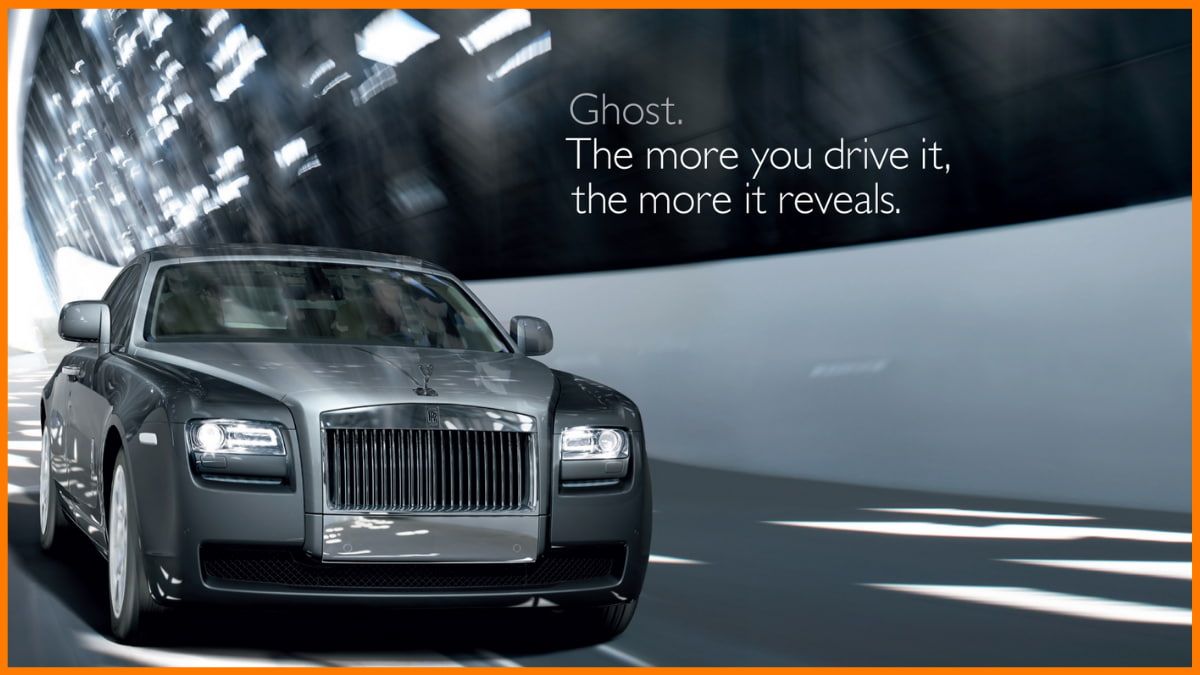
    We are certain none of you would have seen this extravagant carmaker selling itself noisy to the crowd. It receives rewards from its standing among its well-off customer base. There is a quality of selectiveness that encompasses the brand name when just a modest bunch will claim it and obviously, a pride that it transmits.

    Indeed, even without customary promotions, Rolls-Royce beat a 107-year-old deals record in 2012.


    This Article Will Make Your Newspaper Advertisement Amazing| Check this
    Newspaper advertisements is effective because by which readers are frequently look for ads. It is the form of promote the business by running the ads .


    Tupperware

    Tupperware Print Advertisement
    Tupperware Print Advertisement

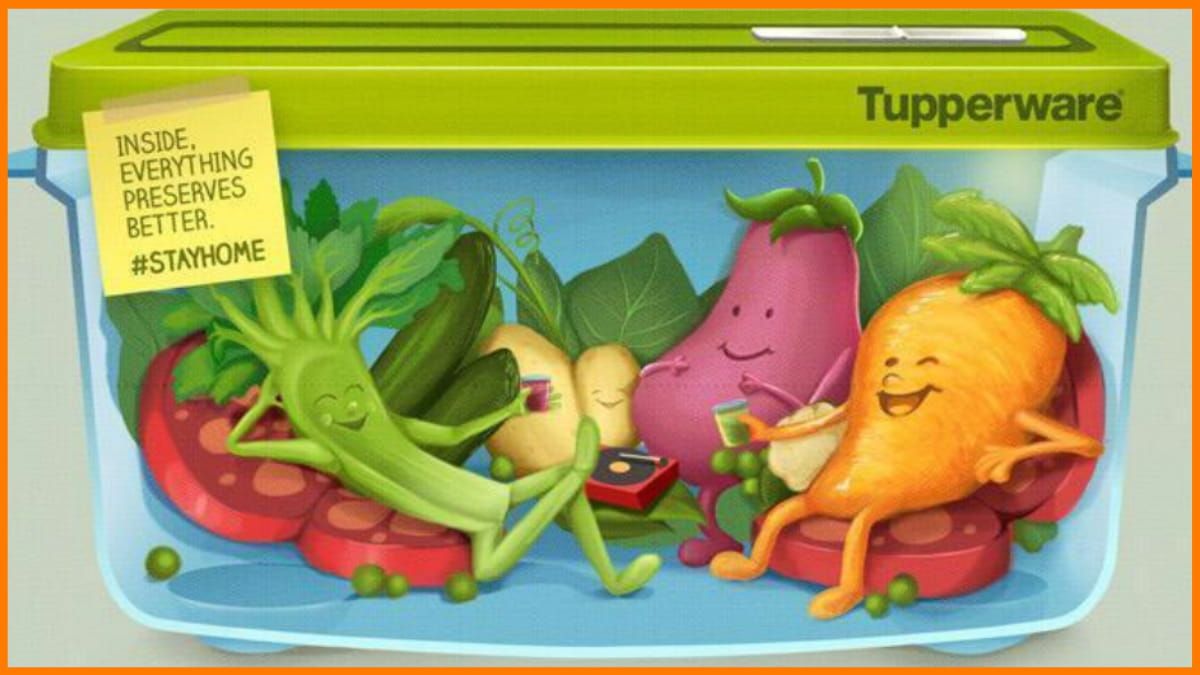
    Earl Tupper started selling family plastics and drastically changed the entire kitchenware market with his clever plans. Investigating an undiscovered market and picking direct selling over some other promoting strategy, aided Tupperware register a big achievement.

    Tupperware India, with a turnover surpassing Rs 100 crore,  looks at its sales team as the leading force as opposed to publicizing or some other limited-time movement.

    “Promoting through traditional media isn’t the system, however speculation on the business power is”, says Asha Gupta, General Manager, Tupperware India.

    “We don’t publicize through the traditional media since we accept that it is more beneficial to contribute to our solid deals power and vendors. We like to channel our assets in the outreach group and back it with limited-time offers. We need our group to be our mouthpiece.”, Asha says.

    Ferrero Rocher

    Ferrero Rocher Advertisement
    Ferrero Rocher Advertisement

    Ferrero Rocher has sold chocolates for than 11.4 Billion Euros and 61.4 Million Dollars in 2019. The company made its items accessible in 170 nations around the world. Ferrero offers its clients results of superior grade and heavenly taste.

    A significant component is that the result of the organization is of a similar taste all through the world. Moreover, the wrapping of the chocolate balls makes them more alluring and attractive.

    Ferrero Rocher centers around client connections to fulfill their needs as far as quality, taste, uniqueness, form, and development. This company rarely does any TV commercials and solely relies on digital promotion only.

    Ferrero believes the most ideal approach to grow its buyers is to be straightforward to them and to consistently continue to convey the USP of every item to the buyers.

    What makes these brands so unique?

    These brands believe in themselves. They let their products and services speak for them and keep their focus on the pain points of their buyers. These brands have made the most out of the digital boom and the new advances in the growth of digital. By using first-class digital strategies, these brands have met their reasonable goals.

    FAQs

    Why do some brands do not advertise?

    Successful companies use their products, reputations and stories to attract customers. Consumers buy from these brands because of the experiences and quality they offer.

    Which brands don’t advertise their products?

    Popular brands that don’t advertise their products are:

    • Rolls Royce
    • Tupperware
    • Ferrero Rocher
    • Zara
    • Lamborghini
    • Naturals Ice Cream

    What are the Indian brands that don’t advertise?

    Indian brands that are popular without advertising are:

    • Naturals Ice Cream
    • Tupperware
    • Old Monk
    • Shahnaz Husain