This article has been contributed by Aditi Bhosale Walunj, founder of Repos Energy.
Global warming poses an unprecedented threat to our planet, driven by the relentless emission of greenhouse gases resulting from fossil fuel consumption, deforestation, and limited access to clean energy. This crisis demands urgent action from all sectors of society to mitigate its far-reaching consequences. The continued reliance on fossil fuels exacerbates climate change, threatening ecosystems, economies, and livelihoods worldwide.
In recent years, there has been a growing recognition of the need to revolutionize fuel distribution worldwide, making clean energy readily accessible to consumers and facilitating a transition away from fossil fuels. Through innovative technology and products like doorstep fuel delivery services and advanced fuel distribution systems, initiatives are underway to pioneer a path towards a carbon-neutral future.
Doorstep Fuel Delivery
One promising innovation gaining momentum is doorstep fuel delivery. Enabled by technology, consumers can now order fuel with ease, reducing carbon emissions through efficient distribution while addressing inefficiencies such as dead mileage and fuel spillage. This not only enhances convenience but also contributes significantly to reducing the carbon footprint associated with traditional fuel distribution methods. By streamlining the delivery process, doorstep fuel delivery minimizes environmental impact and enhances energy accessibility for consumers.
Central to reshaping our energy infrastructure is the promotion of cleaner fuels. From renewable sources like solar and wind to alternative fuels such as hydrogen and biofuels, diversifying our energy mix is crucial. Investing in research, incentivizing adoption, and fostering innovation are essential steps in this direction. Moreover, increasing accessibility to cleaner fuels, especially in underserved regions, can have profound positive impacts on both the environment and public health. By transitioning away from fossil fuels and embracing cleaner alternatives, we can reduce greenhouse gas emissions and mitigate the adverse effects of climate change.
Towards a Sustainable Future
The transition to a sustainable energy future is not without challenges. Overcoming entrenched reliance on fossil fuels requires comprehensive policy reforms and strategic partnerships. Moreover, the high initial costs associated with renewable energy infrastructure pose significant barriers to adoption, particularly in developing countries. However, the momentum towards sustainability offers unprecedented opportunities for transformative change. Governments, businesses, and civil society must work together to create an enabling environment for renewable energy investment, innovation, and adoption. By prioritizing sustainability and investing in clean energy solutions, we can build a more resilient and prosperous future for all.
Opportunities for Innovation
Despite challenges, there are vast opportunities for innovation and collaboration. Rapid advancements in renewable energy technologies, coupled with growing global momentum towards sustainability, provide a fertile ground for transformative solutions. By harnessing innovation, entrepreneurship, and collective action, we can navigate towards a more resilient and sustainable future. Moreover, integrating renewable energy into existing infrastructure, such as transportation networks and urban planning, can further accelerate the transition towards a low-carbon economy. By leveraging technology and fostering collaboration, we can unlock the full potential of clean energy and drive positive change on a global scale.
Reshaping our energy infrastructure is an urgent imperative requiring collective action and unwavering commitment. By embracing innovative solutions, promoting cleaner fuels, and fostering collaboration across sectors, we can accelerate the transition towards a sustainable energy future.
In addition to these efforts, raising public awareness and education about the importance of sustainable energy practices is crucial. Empowering individuals with knowledge about renewable energy sources, energy conservation, and the impacts of their energy consumption can inspire behavioral changes that contribute to a more sustainable future. Educational programs, outreach initiatives, and community engagement efforts play a vital role in promoting widespread understanding and adoption of sustainable energy practices.
Moreover, supporting and incentivizing renewable energy research and development is essential for driving innovation and technological advancements in the clean energy sector. Investments in research institutions, academic partnerships, and private-sector collaborations can yield breakthroughs in renewable energy technologies, energy storage solutions, and energy efficiency measures. By fostering a culture of innovation and providing resources for cutting-edge research, we can accelerate the pace of clean energy development and deployment, leading to more sustainable and resilient energy systems.
Installed Energy Capacity in India as of February 2023, by Region
Clean Energy For All
Another critical aspect of the transition to a sustainable energy future is ensuring equitable access to clean energy solutions for all communities, including those marginalized or underserved. In many parts of the world, access to reliable and affordable energy services remains a significant challenge, limiting economic opportunities, hindering social development, and exacerbating energy poverty. Addressing energy access gaps requires targeted interventions, investments in infrastructure, and inclusive policies that prioritize the needs of vulnerable populations. By prioritizing equity and social inclusion in energy planning and decision-making processes, we can ensure that no one is left behind in the transition to clean energy.
In conclusion, the transition to a sustainable energy future is both an urgent imperative and a tremendous opportunity for positive change. By embracing innovative solutions, promoting cleaner fuels, fostering collaboration, raising public awareness, supporting international cooperation, investing in research and development, and ensuring equitable access to clean energy, we can accelerate progress towards a more sustainable, resilient, and prosperous world for present and future generations. The time for action is now, and together, we can build a brighter and more sustainable future for all.
“If you want to walk fast, walk alone. But if you want to walk far, walk together.” – Ratan Tata, Tata Group
Ratan Tata is a prolific investor and has made numerous investment in many Startups. His style of investment and funding are revered by many across the globe. And his investments are known to emerge as giants in their respective sectors with time. Ola Cabs is an example.
An investment from Ratan Tata gives a boost to startups in terms of publicity, acquiring finances, and brand-building. Here is a list of the startups that Ratan Tata has funded over the years. Consequently, the behemoth organization of Ratan tata – Tata Group has also infiltrated a number of markets such as telecom, software, groceries, and fashion.
Latest News
22 April, 2021 – Ratan Tata has recently made an undisclosed amount of investment in Mailit which is a Mumbai based logistics startup serving a lot of big corporates including Tata Motors, ICICI Bank, HDFC Bank, etc.
800+ stories, thousands of founders, and millions of visitors. Want to be the next?
StartupTalky is where founders, entrepreneurs, startups and businesses hang out and look up to for inspiration. If you have the means, we have the medium! Inviting founders and startups who are building sustainable solutions from ground zero! Startups who run the show, StartupTalky will let the world know!
The Recent investment by Ratan Tata was in 2021, as he invested in Mailit, a technology-driven mailroom management and logistics company. The terms of the investment are undisclosed but it comes at at a time when Mailit is planning to launch 500 mailrooms across India in addition to establishing fully mechanised warehouses and distribution centres in the next five years.
Tork Motors
Tork motors | Ratan Tata Investment
Tork Motors is a Pune-based electric motorcycle startup. Ratan Tata invested an undisclosed amount in Tork Motors in October 2019. He saw potential in the company and found the team to be commendable. Apart from Ratan Tata, Bharat Forge and Bhavish Aggarwal (Ola Cabs’ founder) have also invested in Tork Motors.
Snapdeal
Snapdeal | Ratan Tata Investment
Snapdeal is India’s first online marketplace for multiple categories. It has received funding from Ebay and Alibaba. Snapdeal was launched by Kunal Bahl and Rohit Bansal in February 2010. It has over 3 lakh sellers and hosts over 3 crore products across 800+ diverse categories from more than 1,25,000 regional, national, and international brands and retailers.
Ratan Tata made an investment in Snapdeal soon after Flipkart’s acquisition of Myntra. He bought 256 shares from the e-commerce venture’s angel investors. This move not only protected Snapdeal from losing market share but also prevented any potential attempt by Flipkart to monopolize the e-commerce segment.
Cure.fit is a health and fitness startup that has raised $170 million from investors like Accel Partners, Kalaari Capital, Chiratae Ventures, and Ratan Tata to date.
Cure.fit maintains a chain of fitness centers (under the ‘Cult.fit’ brand), a food delivery platform called ‘Eat.fit’, a chain of healthcare clinics called ‘Care.fit’, and the recently launched online mental-wellness platform called ‘Mind.fit’.
Paytm started out as a mobile recharging platform and later became an online marketplace for multiple categories. It became India’s first payment bank after receiving a license from the Reserve Bank of India (RBI). Ratan Tata Made an investment in Paytm by raising a funding of INR 1 crore in March 2015 for One97 Communications – the parent company of Paytm. This funding fetched him the position of a business advisor on One97 Communications’ board.
Paytm is now among the most successful digital payment companies with millions of subscribers. It thrived when the demonetization scheme was implemented in India in November 2018. At present, the company’s gross merchandise value (GMV) is over $1 billion.
Ola is India’s first home-grown cab aggregator service and one of the nine Indian unicorn startups valued at $5 billion. The app allows users to book a taxi on their smartphone at the best fares. Ola provides cab services across price segments that range from economy to luxury.
Ratan Tata funded Ola in July 2015, 5 years after the company began its operations in 2010. He invested INR 95 lakhs in the company in personal capacity. Ratan Tata made also an investment through his investment company – RNT Capital Advisors – of INR 400 crores in Ola.
Repos Energy
Repos Energy | Ratan Tata Investment
Aditi Bhosale Walunj and Chetan Walunj founded Repos Energy. Repos Energy is a Pune-based startup responsible for the doorstep delivery of fuel to industries. It works using cloud-based technology and IoT devices. Customers can order diesel on the Repos app. A Repos petrol pump operator then arrives at the customer’s location and completes the diesel delivery. Ratan Tata made an undisclosed amount of investment in this startup.
ClimaCell
Climacell | Ratan Tata Funded Startup
ClimaCell is an app developed by Rei Goffer, Shimon Elkabetz, and Itai Zlotnik that provides accurate weather forecast to alert people about upcoming floods. It uses day-to-day devices as environmental sensors. ClimaCell focuses on error-free weather predictions and has garnered a lot of attention.
Ratan Tata participated in ClimaCell’s seed round funding in September 2016. ClimaCell has acquired $70 million over three rounds of funding.
Abra
Abra Logo | Ratan Tata Investment
Ratan Tata has also made an investment in a Silicon Valley based bitcoin startup with American Express where he with American Express invested $12 million in Abra. People can store digital cash and send money to any smartphone using Abra’s app. Abra earns money when users buy or sell digital currency through its app.
CarDekho
CarDekho Logo | Ratan tata Funded Startups
CarDekho is India’s leading car search venture that helps users purchase the right cars. Ratan Tata invested an undisclosed amount in GirnarSoft – the parent company of CarDekho, BikeDekho, and PriceDekho portals.
The CarDekho app has rich automotive content that includes expert reviews, detailed specs and prices, comparisons, and the visuals of the different car brands and models available in India.
The company deals with many automobile manufacturers, more than 4000 car dealers, and numerous financial institutions to facilitate the purchase of vehicles. The CarDekho portal accounts for about 30% of the automobile manufacturers’ combined annual sales today.
Holachef
Hola Chef | Ratan tata Funded Startups
Holachef was founded by Saxena and Anil Gelra in 2014. Holachef connects expert chefs with consumers via its website and mobile app (available for both Android and iOS platforms). The platform offers a new menu everyday and delivers food in a state-of-the-art packaging. Holachef received an undisclosed amount of investment from Ratan Tata in September 2015.
Ola-owned food delivery firm Foodpanda has acquired Holachef.
FirstCry is a baby care e-commerce platform. FirstCry is owned by BrainBees Solutions. It follows an omni-channel strategy of selling through online and offline stores. Ratan Tata invested an undisclosed amount in this startup in January 2016.
Lenskart
Lenskart Logo | Ratan Tata Funded Startup
Lenskart is a popular online retailer for eyewear. It was also been added to the list of companies invested by Tata as it secured funding from Ratan Tata in April 2016; the amount is undisclosed.
Lenskart sells sunglasses, eye glasses, contact lenses, and more. The officials from Lenskart said that Ratan Tata’s role was more of a mentor and an advisor than a financial investor. Some of the investors in Lenskart are TPG Group, IDG Ventures India, and Unilazer Ventures founder Ronnie Screwvala.
NestAway
nestaway logo | Ratan Tata Funded Startups
NestAway allows users to find, book, and move-in to a rental home of their choice across Indian cities. NestAway’s aim is to provide better rental solutions with the help of design and technology. The company presently caters to more than 35,000 tenants and 16,000 owners, providing homes to over 7000 families in cities like Delhi, Gurgaon, Hyderabad, Pune, Mumbai, Bengaluru, and others. Ratan Tata invested an undisclosed amount in NestAway Technologies Pvt. Ltd. in December 2017.
Urban Ladder is an online furniture seller. Urban Ladder was founded by Ashish Goel and Rajiv Srivatsa in July 2012. It currently offers over 1,000 products across 25 furniture categories such as wardrobes, beds, sofas, dining tables, and coffee tables. The online retailer secured funding from Ratan Tata in November 2015.
UrbanCompany
Urban Company Logo
UrbanCompany, previously known as UrbanClap, is a local services marketplace that raised an undisclosed amount in funding from Ratan Tata in December 2015. It is also funded by Snapdeal founders Kunal Bahl and Rohit Bansal.
The UrbanCompany app allows the online booking of services such as plumbing, electric work, beauty treatments, and salon. UrbanCompany has successfully penetrated the services sector and bridged the gap between workers and consumers. People can now easily overcome the challenges of household hurdles, troubles, fixtures, and anything related through UrbanCompany.
GOQii
Goqii Logo | Ratan tata funded Startups
GOQii makes healthcare watches that are similar to smart watches. It also makes GOQii Stride, a device people can attach to their shoes and keep track of the number of steps, etc. GOQii’s platform provides tools for real-time personalized coaching, scheduling health check-ups, and securing information in a health locker. GOQii was founded in 2014 by Vishal Gondal. It joined the list of Ratan Tata-backed startups after he invested an undisclosed amount in October 2016.
This might come across as an interesting trivia—Ratan Tata is the first Indian to buy a stake in Xiaomiandhe has also made an undisclosed amount of investment in the company. Xiaomi is the world’s fourth largest smartphone manufacturer and is based out of China. The brand is very popular in India. It entered the Indian market in 2014. The Chinese tech giant sells smartphones, laptops, air purifiers, tablets, LED TVs, fitness bands and more.
Some senior executives from Xiaomi were quoted saying that they would seek Ratan Tata’s advice on how to expand globally.
Lybrate
Lybrate Logo | Ratan Tata Funded Startups
Lybrate was founded in 2013. It connects patients and doctors. Lybrate launched an online lab testing facility in May 2016. A patient’s sample is collected right from his or her home and the results are then shared online. Lybrate secured about INR 64.8 crores ($10.2 million) funding from Ratan Tata in July 2019.
Infinite Analytics is a U.S. and Mumbai-based startup founded by two MITians – Akash Bhatia and Purushotam Bolta. It became Microsoft Dynamics AX’s first global OEM partner four months after Ratan Tata has also made an investment in this startup in August 2015.
Infinite Analytics is a cloud-based big data startup that predicts consumer behavior based on information shared by users on social networking sites. Infinite Analytics analyses raw data, maps out a person’s social genome, and then gives personalized recommendations to consumer brands with online presence. This information, which is collected without breaking privacy laws, allows a retailer to identify and recommend products that will appeal to customers. Infinite Analytics has expanded its predictive analytics technology to verticals beyond retail and e-commerce.
CashKaro
Cashkaro Logo | Ratan Tata Funded Startups
CashKaro is a cashback and coupons website that provides 30% cashback to customers who shop on its affiliates’ platforms. These platforms include Amazon, Paytm, Jabong, and ShopClues. The Gurgaon-based company was founded by Swati and Rohan Bhargava in 2013 and raised an undisclosed amount in Series A funding from Ratan Tata in January 2016.
Cashkaro generates revenue by taking commission from retailers and sharing a portion of it with customers in the form of cashback. It is the largest cashback website in India with over 10 lakh registered users and has given net cashback of more than INR 30 crores.
DogSpot
Dogspot Logo | Ratan Tata funded Startups
DogSpot is a Gurgaon-based online pet care platform that handles about 60,000 orders on a monthly basis with an average basket size of INR 1,700. DogSpot also promotes pet-centric events, drives, and related content. The startup was founded in 2007 and is run by PetsGlam Services Pvt. Ltd.
Ratan Tata invested an undisclosed amount in his personal capacity in DogSpot in January 2016. Ronnie Screwvala also invested in DogSpot alongside Ratan Tata.
BlueStone
Bluestone Logo | Ratan Tata funded Startups
Bluestone.com is an online platform for purchasing jewelry. BlueStone was founded by Gaurav Singh Kushwaha in 2011. BlueStone is backed by Ratan Tata and has also received a funding from him in 2014. It offers over 5,000 jewelry designs and plans to scale to 30,000 designs in the next three years.
Zivame
Zivame Logo | Ratan Tata funded Startup
Bangalore-based Zivame was founded in 2011 by Richa Kar and Kapil Karekar. Zivame is an online platform for one’s lingerie needs. It has raised $48 million in four years. The startup gained popularity through its quirky campaigns and is a well-known name today. Zivame received funding from Ratan Tata in September 2015.
Generic Aadhaar
Generic Aadhaar | Ratan Tata funded Startup
Ratan Tata has invested undisclosed amount in Generic Aadhaar, a Maharashtra-based pharmaceutical startup. Arjun Deshpande founded Generic Aadhaar in 2018. Generic Aadhaar provides generic medicines from reputed pharmaceutical companies at discounted rates—up to 80% cheaper than the retail price. It offers a catalog comprising branded, generic, homeopathy, and Ayurveda medicines from government-approved manufacturing facilities.
Generic Aadhaar aims to partner with 1000 pharmacies through a franchisee model in the coming months and expand its reach to places like Tamil Nadu, Andhra Pradesh, New Delhi, Goa, Rajasthan, and Gujarat.
What are the names of some Ratan Tata funded startups?
Some startups funded by Ratan Tata are Ola cabs, Zivame, Paytm, Snapdeal, Xiaomi, Urban Ladder, UrbanCompany, Cash Karo, and Abra.
What sector does Ratan Tata like to fund in?
Ratan Tata does not prefer any specific sectors. He has funded startups in sectors ranging from e-commerce and real estate to electric mobility and food delivery.
Company Profile is an initiative by StartupTalky to publish verified information on different startups and organizations. The content in this post has been approved by the organization it is based on.
An average customer procuring fuel for their usage face multiple issues when it comes to storage, spillage, and transportation. Make-shift diesel carriers posed an enormous accident-liability and proved to be costly. With the advent of technology in the fuel industry, these issues are now being solved in cost-effective, environment effective, and most convenient ways possible. To this end, the startup ecosystem in the fuel industry has offered safer alternatives to procuring fuels.
To tackle these problems, Humsafar India offers doorstep diesel refueling services to industries that require diesel for static and heavy equipment and machinery. Read this article to know about Humsafar India, founders, products, business model, revenue model, startup challenges, funding, competitors, wiki, and future plans.
November 26, 2020 – Humsafar announced that it has tied up with Okara Group to launch doorstep diesel delivery services across cities in Maharashtra including Mumbai, Pune, Nagpur, Thane, Nashik. As part of the deal, it will provide technical and digital support to the new venture under the strategic alliance.
In a statement, Humsafar reported that it has received an order of 120 automated mobile fuel dispensing bowsers for Okara Fuelogics for diesel delivery. Okara Fuelogics will utilize the ‘Fuel Humsafar’ app for its orders.
Dilpreet Sadana, Co-founder and Technology Head at Humsafar said: “Our alliance with Okara Group is mainly to provide doorstep diesel delivery services in Maharashtra and to help entities like housing societies, industries as well as malls with a regular supply of diesel”.
Humsafar – About and How it Works
Humsafar, a consumer brand of Samridhi Highway Solutions Pvt Ltd, offers doorstep diesel refueling services to industries that require diesel for equipment. Humsafar’s solution promises convenience, easy-to-use technology, and cost-effective alternatives to traditional methods of diesel procurement. With the assurance of safety and zero wastage, it is leading last-mile delivery in diesel while enabling a safer environment for all.
The team’s vision for Humsafar is to make ‘last-mile connectivity’ efficient, convenient, and safe. Once the government legalized Doorstep Diesel Delivery (DDD) in 2017, the startup jumped at the opportunity to make a difference.
“As a fourth-generation fuel entrepreneur, I was eager to make the change from operating retail outlets to bringing in innovation into the fuel industry. Today, we are proud of the impact Humsafar has had in the lives of our customers”, says Sanya Goel, founder of Humsafar India.
Humsafar India
Humsafar – Target Market Size
The government of India amended the Petroleum Regulations to enable Doorstep Diesel Delivery for static equipment, as well as heavy machinery. Petroleum and Safety Organisation (PESO) consequently drafted protocols to be followed at the point of loading and unloading, means of safe transportation, and protocols to oversee and facilitate the process with adequate training.
Going by the recent announcements, the fuel industry is set to further liberalize the market and pave avenues for new market segments for Diesel, Petrol, and CNG door delivery. The demand for fuel per year is at 85 billion liters, out of which approximately 43% of the demand is for diesel. This demand poses a huge opportunity for the doorstep diesel delivery market in the country.
Currently, besides Oil Company Dealers who have top-loading gantry facilities, a few startups are actively operating in this sector. The segment has already proven to be a disrupter. Notwithstanding resistance at certain levels, the segment is set to see a large number of dealers enter and expand their reach.
MOPNG and Oil companies are also enabling the scale-up by easing up the sector and bringing in additional regulations in view of the flammable nature of the product. Startups can increase the scope and area of operations that will enable them to break even faster and generate revenues.
“I would always join my father at various retail outlets and observed that many rickshawala’s would come in with barrels, fill it up with diesel and then load it. My first thought was – why in this day and age, we still have to do such hard labour to load and unload diesel, a necessary commodity. Surely there has to be a better way. I couldn’t fathom the thought of effort and all sorts of safety violations that were involved in this process. This made me question the available alternatives at hand to find out that there were none. None that was legal anyway”, recalls Sanya while talking about the idea of Humsafar.
When Sanya began with her groundwork, she discovered a large pool of customers who were facing pilferage, safety, quality, and quantity issues when it came to transporting diesel from point A to point B. The answer that then lay before her was simple – a solution that can promise delivery with the assurance of safety, zero wastage, and cost-effectiveness.
“If I had to pick a Eureka moment, it would be the moment my father decided to support the idea. He always gave me the freedom to explore, come up with solutions and is always ready to give me a shot”, says Sanya Goel, owner of Humsafar.
While Sanya had her father’s support, the government too opened the sector for deliveries and that paved the way to this becoming a reality. The initial days were challenging and at times frustrating with revenues taking time to come in, ensuring good quality with limited resources, etc. But as they proceeded, they learned to perfect processes, streamline operations and ensure efficiency with whatever resources available.
Humsafar – Founders and Team
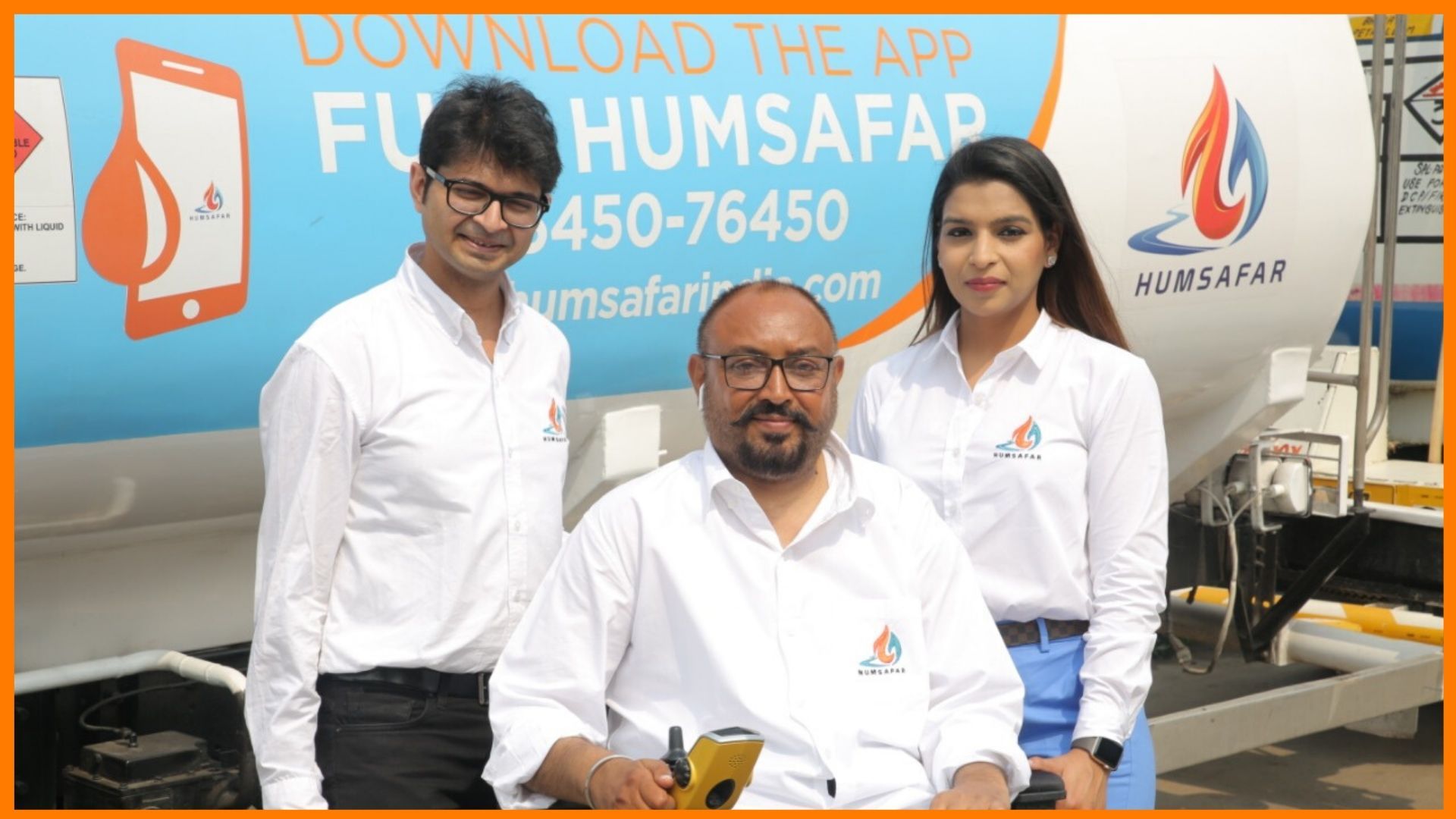
Sanya Goel, and her brother Mayank Agarwal are the Founders of Humsafar India.
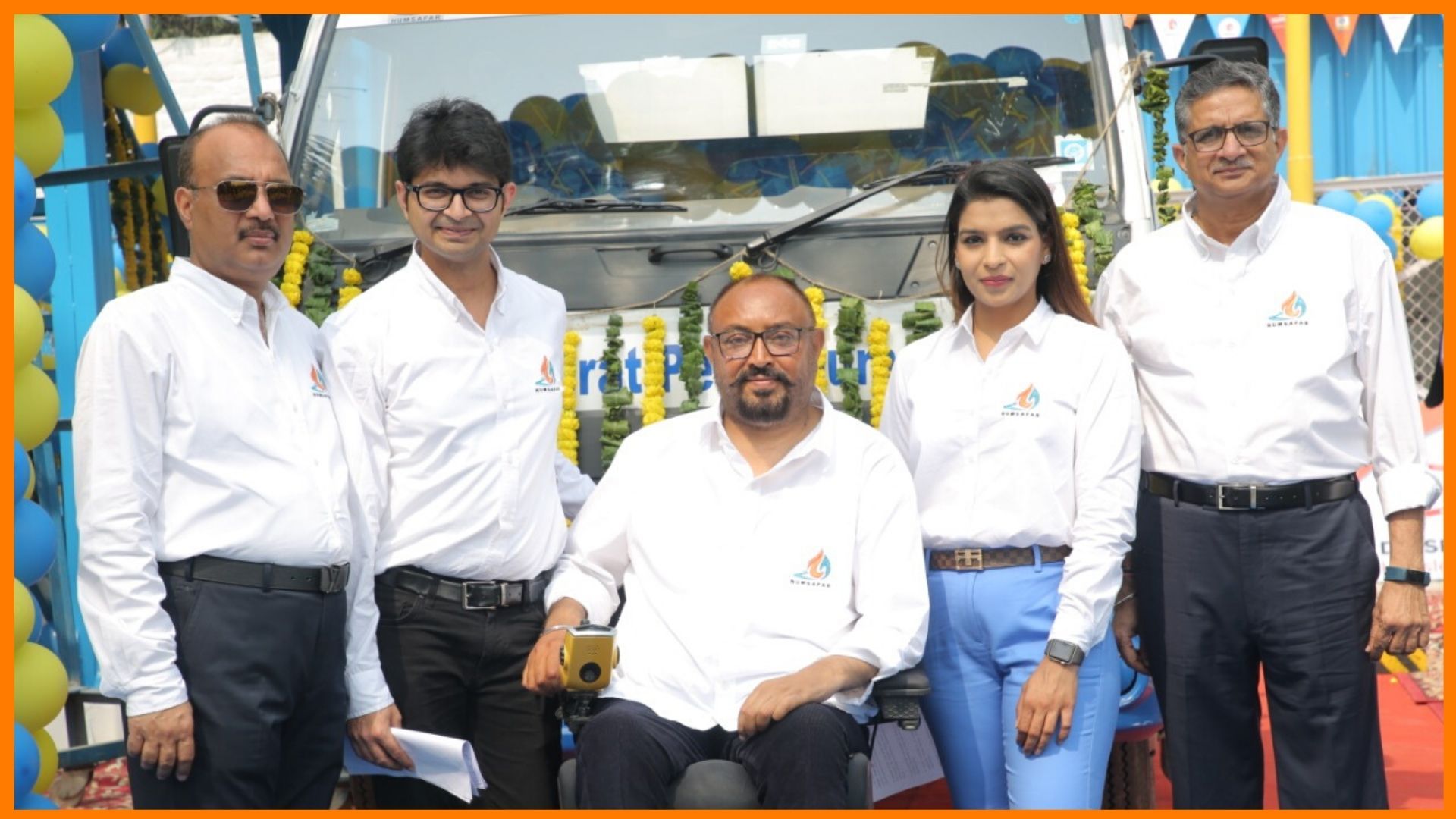
Mayank Agarwal, Dilpreet Sadana, and Sanya Goel
They also have two mentors, her father, Nishit Goel, and her uncle, Dilpreet Sadana. Yes, it’s all in the family.
Sanya Goel, Founder, and Director at Humsafar India – She is 27 years old and hold a Masters Degree in Innovation and Entrepreneurship from the University of Warwick. Sanya has a keen eye for detail, and in her team, she specializes in identifying and addressing the various needs of customers as well as overseeing easy-to-use UI development.
Mayank Agarwal, Co-founder of Humsafar India – Mayank comes from a Finance background and has been in the petrol pump business for about 7-8 years. He holds a Masters Degree in Finance and Business Administration from ICFAI and makes sure that the company stays financially strong.
Her father, Nishit Goel, is an entrepreneur too and is the “let’s-do-it man”. He is the company’s mentor. He loves new ideas and is always up for a challenge. Dilpreet Sardana, a mentor, is a tech wiz. He founded Truck Khoj back in 2002 before GPS systems were mainstream to help businesses track their trucks.
Besides the core team, Humsafar India also has a Corporate Marketing team, Field Marketing Executives who are foot soldiers, and Bowser crew who are like family. They also have a Tech Team, PR and Social Media team, and Fabrication Team working closely. The approximate team size of the startup is 50.
The company also has an advisory council consisting of experts from the Oil & Gas industry to guide the team in the right direction with their excellent knowledge and business acumen.
“Our work culture is very democratic. We all come from diverse backgrounds, our own set of expertise and knowledge and we respect that. With a flat structure, we all work together. There are no hierarchies here, except on paper. That’s the beauty of startups – it encourages discussions and everyone feels like they belong”, says Mayank Agarwal, founder of Humsafar India, talking about work culture.
Fuel Humsafar is a tech-based doorstep diesel delivery solution that caters to customers that require diesel for equipment that is difficult to take to a petrol pump. To this end, the company offers convenient, safe, and cost-effective solutions to cater to the needs of this industry.
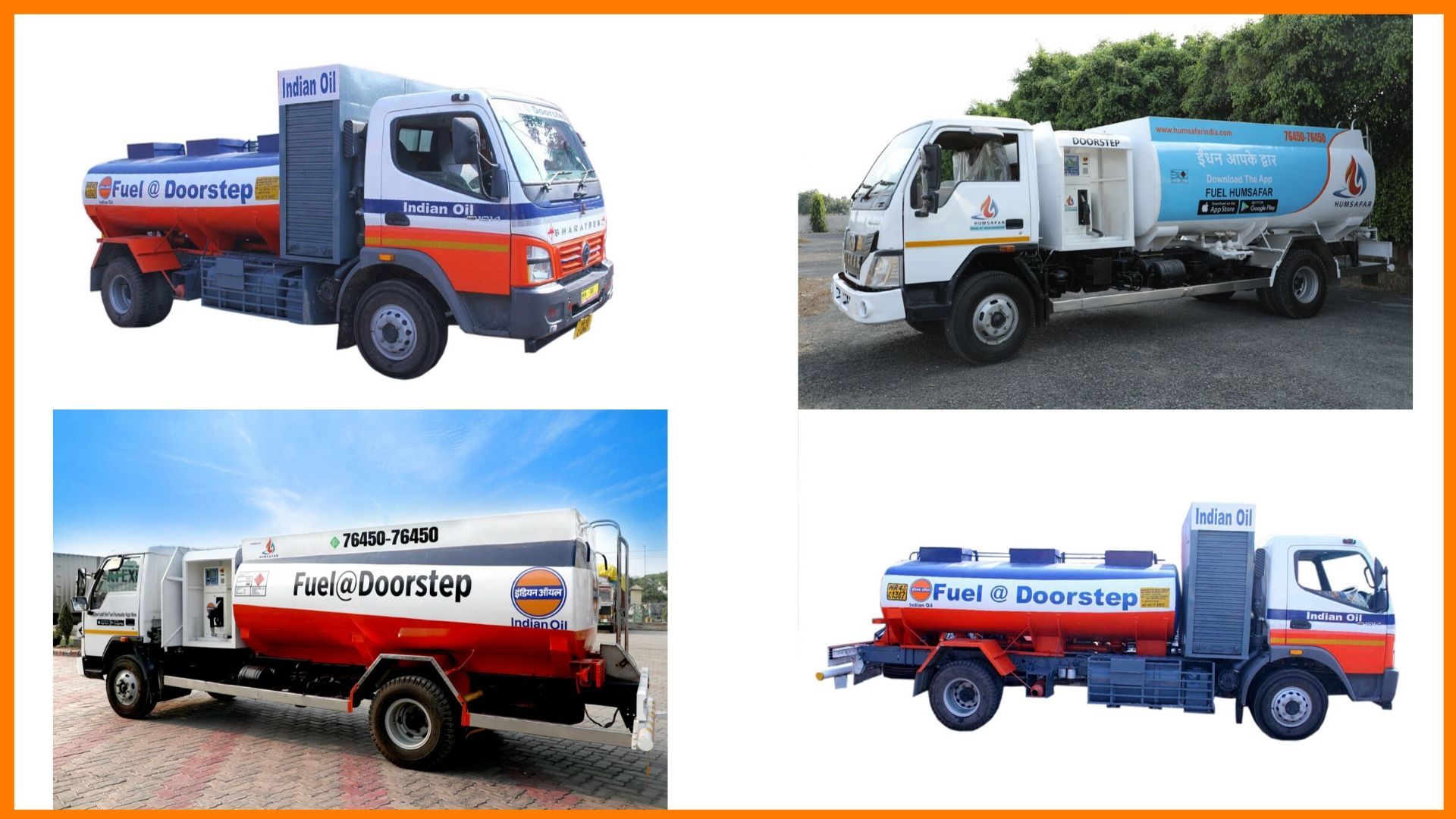
Humsafar India Delivery Trucks
Apart from directly catering to diesel delivery needs, it also provides a 360-degree solution for the market itself. The startup fabricates PESO approved Bowsers to enable other partners to deliver diesel in a safe, compliant manner. Apart from loading at petrol stations, they are also authorized to pick up diesel from oil terminals directly.
Humsafar initially started with Loyalty programs for retail outlets, moved to diesel delivery services, and eventually to Bowser Fabrication services. They’re also going to be venturing into the smaller volume segment, Jerry Cans, for 20 liters deliveries of diesel.
What sets the company apart is its ability to offer end-to-end solutions:
There is already time tested Petrol pump partners, their own bowsers, and the Fuel Humsafar app, which demonstrates the solid experience in the product – the company operates in every touchpoint of the ecosystem.
75-year legacy – This assurance of trust in the quality and quantity of diesel being delivered truly sets them apart. They are an established name in the industry, and customers believe in them.
Ability to deliver diesel swiftly – The company delivers diesel within 8 hours. They’re able to achieve this with the number of partner petrol stations they have along with a large number of Bowsers available at any given time in the area of operation.
Going beyond diesel delivery, the team is actively trying to bring about a behavioral change in the procurement method. They want everyone to stop using illegal, unsafe methods and shift to legal, safe alternatives. They’re building a safe ecosystem around us by also helping other retail outlets safely transport diesel.
The company offers convenient solutions with easy-to-use technology. It makes the entire procurement process straightforward and simple so that anyone, anywhere can use it anytime.
Humsafar – Business Model
Humsafar India works on three business models –
Diesel Door Delivery Services: The startup operates via the app ‘Fuel Humsafar’, available on both, Play Store and Apple Store. It primarily delivers diesel for static or heavy machinery in the B2B segment. Its customers include Hospitals, Farmers, Hotels, Construction sites, Schools, Factories, etc.
Technology: It has various partner retail outlets who in turn, offer Diesel Door delivery service of their own. To them, the company franchise the tech platform.
Bowser Fabrication Services: Going beyond the tech platform, Humsafar India also offers Bowser Fabrication services to ensure a safer environment for the transportation of diesel. The DDD industry is all set to boom and as many as 4000-5000 retail outlets are set to offer delivery services. To this end, ensuring diesel is transported in PESO compliant bowsers is the top priority. They have successfully fabricated over 47 bowsers in the last five months of the service introduction.
As described above, there are three distinct pillars for revenue inflow:
Diesel Door Delivery: Revenue in the DDD model comes in through the delivery charges associated with the service. They are now able to convert these casual customers into captive customers. Incidentally, this is also the most profitable market segment as it is very large, they do not require bulk volumes nor do they seek discounts/credits.
Technology: Petrol pump dealers join as Vendor partners in various locations all over the country, against a franchise fee. Besides, vendor partners pay a margin for new volumes brought in by the organization using their field Marketing team.
Humsafar brand of Bowsers Fabrication
Humsafar – Name, Tagline and Logo
“Back in 2016, we ran loyalty programmes for partner retail outlets to reward cash customers who bought diesel regularly from us. This loyalty programme was called Humsafar. The programme was a success, it helped create a network of customers and build trust among them”, says Sanya Goel, Humsafar founder.
When they ventured into the Diesel Door Delivery space, they chose to continue with Humsafar as the customers were already familiar with the brand. The name Humsafar came about to convey that we are with you in your journey.
Humsafar India Logo
Breaking down the logo, Humsafar is represented by fuel and a road. The road signifies both, the journey that one undertakes and more directly, a representation of doorstep delivery. The fuel drop consists of two parts, the blue stands for loyalty and companionship, and the orange indicates energy. As a whole, it represents Fuel that is loyal, energizing and with you during your journey.
As per the FranchiseIndia.com, Humsafar India Franchising Details are as follows:
Humsafar Franchising Expansion Locations in India:
Humsafar Franchising Expansion Locations
Distribution & Franchising Details:
Investment
Range of Rs.30 Lakh – Rs.50 Lakh
Franchise/Brand fee
Rs. 2,50,000
Royalty/Commission
33%
Anticipated ROI
50%
Payback period (channel partner)
1-2 years
Dealership term
5 years
The dealership term is renewable
Training details, field assistance, expert guidance etc., will be provided
You can get exclusive territorial right to a unit franchisee
Humsafar – User Acquisition and Growth
Humsafar reported revenue of Rs 22 million (2019-20). It has delivered nearly 5.5 million litres of fuel valued at Rs 325 million during the year.
It was a challenge to get customers to order diesel via an app. It required a behavior change and the team had to be patient while they built awareness around it. With steady communication about the benefits, the emphasis on legal means of diesel procurement and the dangers of illegal procurements had a positive effect on the target audience.
Once the customers experienced the app, there was no turning back. They loved how easy and convenient it was to use it and turned into active ambassadors. It’s an absolute delight when your customers accept and value your service.
The challenge post the initial 50 customers was to partner with retail outlets to expand the footprint. It required them to take the plunge and see the benefits themselves. They also used field marketing and social media marketing tools extensively to target specific geographic areas to build awareness and encourage trial.
The company is currently active in 12 states across the country including Delhi, Haryana, Punjab, and Rajasthan to name a few. They have fabricated over 47 bowsers in a short period of time and hope to expand their footprints to other areas soon.
Humsafar – Startup Challenges
The company’s biggest challenges have been the following –
To educate customers about the availability of safe, legal alternatives to diesel delivery services.
To remain competitively priced (they sell at MRP only).
To address these challenges, the team began actively communicating to customers about the benefits and convenience of shifting to legal, safe diesel delivery solutions and price-wise, they acquired customers in large numbers so that they can work on the economies of scale.
It is a bootstrapped startup. They might look for investments at a later stage when they achieve the scale they’ve set out to get.
Humsafar – Competitors
The market is relatively new. There are about seven to eight startups in different parts of the country in the space. Some of their competitors in the market are Repos, a Pune-based startup, and MyPetrolPump, a Bangalore-based startup. They’re doing very well in their respective markets.
Humsafar – Awards
The startups has been covered by India Today in their Coffee Table book for “Entrepreneurs under 30” for an organisation using tech in last-mile solutions, enabling accessibility to basic facilities.
Humsafar – Future Plans
The team has exciting plans for the future. At a macro level, they want to sustain the economies around work. They want to be among the top 3 diesel door delivery companies and lead the market evolution. They also want to work on the ‘last-mile delivery’ as a core capability and look outside of diesel deliveries too.
The company’s immediate plans include –
Onboarding more partner petrol stations to widen the area of operations
Expand services to other major cities
Work on franchise models of the business
Tap into new customer segments in a cost-effective manner
Continue to bring in cutting-edge technology into Bowser Fabrication and innovate across segments.
Sanya’s advice to the readers – “Have faith and most importantly, be patient. Don’t be in a mad rush for success. Begin by building brick by brick, perfecting your method as you go. Pursue excellence and growth will follow”.
 Alan Joseph