Tag: 🔍Insights

  • Startup Accelerator Business Model

    The role of startup accelerators is increasing in startup communities throughout the world. A startup accelerator is also known as a seed accelerator. It is a business program that supports startup companies through financing, mentorship and education. The accelerators have the potential to improve the outcomes of startups and to spill these benefits into the wider startup community. You must be wondering like What is an accelerator? How do startup accelerators work? How do startup accelerators make money? etc. Don’t worry, we are going to answer all these questions in this article.  

    History of Startup Accelerators
    Startup Accelerator Business Model
    Characteristics of An Accelerator Program
    How do Startup Accelerators Work?
    Process of An Accelerator Program
    Efficiency of Accelerators
    Frequently Added Questions – FAQs

    How Startup Accelerators Work

    History of Startup Accelerators

    Y Combinator was the first independent startup accelerator that was started in Cambridge in 2005. Later, Paul Graham moved this into Silicon Valley. After its success, startup accelerator programs started to grow swiftly across Europe and the United States. It includes Seedcamp (2007), Techstars (2006), Startupbootcamp (2010), Tech Wildcatters (2011), and Boomtown Boulder (2014).

    The popularity of startup accelerator programs increased in the US and Europe. Seedcamp, Startup Bootcamp, and Startup Wise Guys are the top-rated accelerator programs in Europe. In April 2012, Forbes presented an analysis of startup accelerators. According to that, there was a significant growth of corporate accelerator programs since 2010. Around one-third of startups received accelerator funding models through the accelerator program by 2015. Some large corporations have created their own accelerator programs. They focus on specific categories, but it follows similar principles.

    With the emergence of the COVID-19 pandemic, many accelerators such as Y Combinator, SOSV’s family of accelerators and BEAMSTART have shifted their approaches by running most of the programs and Demo Days online.


    What are Startup Accelerators and Are they worth it
    Many entrepreneurs have great ideas in their mind but fail to secure funding for their startups. Here come accelerators but Are accelerators worth it


    Startup Accelerator Business Model

    Startups need to submit an application to join an accelerator. Once the application is approved, the accelerator will give services and resources such as advising hours, shared coworking space, guest speakers, and a negotiated amount of capital. The average term period of a startup accelerator model is 3-4months. Also, the ownership of the startup should be around 3-8%. The help of an accelerator ends with a demo day or graduation after startups present their work and move forward independently.

    Startup Accelerator Business Model
    Startup Accelerator Business Model

    Biotech, tech hardware, and AI are the popular sectors of the startup accelerator business model. Also, so many brands have got support from accelerators. Play Tech Center and the Silicon Valley accelerator Plug have assisted PayPal, Google, and Zoosk to convert their ideas into businesses. Y Combinator is another popular accelerator. They released Dropbox, Airbnb, and Reddit. A startup accelerator named Techstars has sponsored more than 21 startups.

    Characteristics of An Accelerator Program

    Startup accelerators, also known as seed accelerators, are fixed-term, cohort-based programs that include mentorship and educational components and culminate in a public pitch event or demo day. These are the 4 factors that make accelerators unique from other startup institutions such as incubators, seed-stage venture capitalists and angel investors. Accelerators can give useful resources to organizations at all stages of development. But most accelerator programs are focusing on pre-revenue. To qualify as an accelerator requires a number of characteristics. The characteristics of a startup accelerator are given below.

    1. It is a fixed-term business program with a start and an end.

    2. It is a cohort of startups.

    3. It includes a group of advisors to support the startup.

    4. It is an educational program for the transferring of acquired knowledge.

    5. It is a selection process, so the cohort of startups is considered the best.


    Top 16 Startup Incubators & Accelerators in Delhi
    The role of Accelerators and Incubators in the journey of an early-stage ventureis commendable. From financial assistance to mentorship and guidance, theyprovide immense support in the varied phases of a business. Here, we bring toyou the list of various Startup Incubators and Accelerators in Del…


    How do Startup Accelerators Work?

    How do startup accelerators work?
    How do startup accelerators work?

    Accelerators provide two types of knowledge where mentors pass the tacit knowledge from what they have learned over the years and the acquired knowledge is transferred through training sessions, workshops, and other structured education. Startup accelerators offer acquired and tacit knowledge through the combination of structured education and mentors. It has efficiency for the transferring of the value it creates by forming a group of startups.

    The accelerator chooses the best startups from a large number of applicants and brings those startups together in such a way that corporations, investors, and others can meet them. It also chooses and brings a group of mentors who give knowledge, advice, and new contacts to startups for development. The accelerator provides a diverse network with a wide range of experience and knowledge.

    This group works as a class at a university that allows delivering one lesson to a group of startups at once instead of delivering lessons to individuals multiple times. It focuses on participants who form an ecosystem around the accelerator and provide an opportunity for them to meet a group of startups at once instead of finding and meeting them all individually.

    It is provided to overcome the lack of knowledge and networks of startups. Accelerators are mainly funded by corporations, government agencies, or investors to identify and support new innovations. The startups make returns in the form of investment returns, economic development, and new technologies.


    Top 21 Incubators & Accelerators in Mumbai
    We believe that every startup has a unique journey to pursue, which is based onthe idea that requires a right push in the right way. Regardless of the stage ofyour startup is in, it requires significant guidance to move forward and havesuccessful accomplishments. We have attempted to make a List …


    Process of An Accelerator Program

    An accelerator program mainly includes 6 processes:
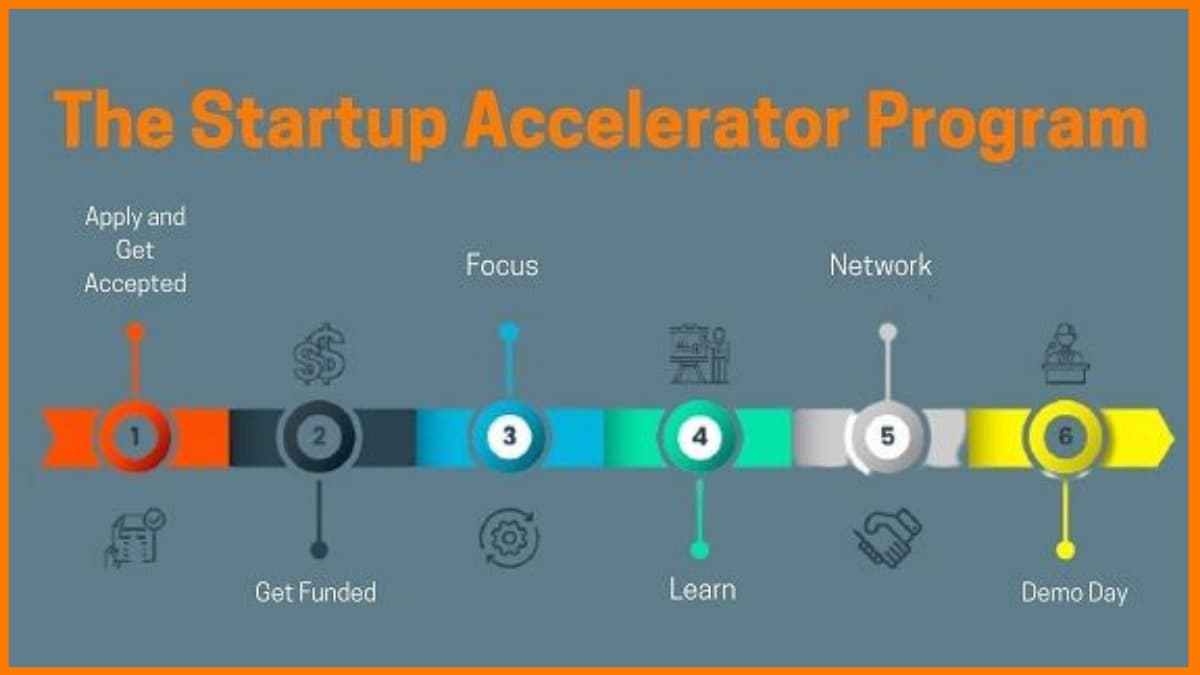
    Process of an accelerator program
    Process of an accelerator program

    Apply and Get Accepted

    After submitting applications, only 1% to 3%  of applicants get accepted from total applications. During this process, the startups can interact with the operator and discover more details about them. Startups don’t have an obligation to join and accept the program until they sign any paperwork.

    Get Funded

    Money is one of the major reasons that founding teams and entrepreneurs selecting the accelerator path. Accelerators provide seed money to the company that ranges from $10,000 to $120,000. Although some have recently withdrawn the amount of funding they provide, they point to funding as a major obstacle to success as that may affect future fundraising activities.

    Focus

    A big advantage of this system is that it focuses on entrepreneurs. According to the Harvard Business Review, they are being dragged into the process for 3 to 6 months. This is an intense time, and participants are forced to focus and make progress.

    Learn

    Learning is a big part of the process. It includes opportunities such as seminars, workshops, and mentorship opportunities wherein it covers topics relevant to starting a venture, pitching practice, and the legal aspect.

    Network

    Entrepreneurs have ample opportunities to network with potential investors and other industry support providers, during the acceleration period. These connections are very valuable.

    Demo Day

    The process ends in graduation or on a demo day, where every startup in the cohort presents and pitches. This is the place for proving the time and experience invested by startups. Founders of startups usually include 15 to 20 slides on their pitch decks as part of the presentation.

    Efficiency of Accelerators

    Accelerators bring the various groups of participants around their program and facilitate interactions between them very efficiently. They bring the best startups by running a selection process that includes an open and broad application process. The evaluation is done by respected individuals. The high quality of startup has an important value within the accelerator. It attracts investors.

    Another major attraction of accelerators is the mentors. A mentor provides networks and tacit knowledge to the cohort. It makes mentors an important part of accelerators. Failure to ensure that mentors receive appropriate remuneration for giving their knowledge and time can lead to mentors losing interest quickly or failing to engage. The way of gathering startups together into one space and deal with them quickly in a fixed-term program, creating the same efficiency as a university collecting students into classes.

    Efficiency of Startup Accelerator
    The efficiency of Startup Accelerator

    Mentors are able to address all startups simultaneously, so that knowledge is effectively transmitted. Accelerators can provide a way to survey and filter out many innovators, such as startups, academics, or individuals. By choosing the best from the applicants, the accelerator makes a validated cohort of startups that are valued by others, such as investors and mentors.

    The accelerator experience is fast, intense, and in-depth educational process aimed at shortening the years of worthwhile learning into a few months and accelerating the life cycle of innovative startup companies. A real accelerator has very specific identifiers. If you can access them, they can give you a lot of benefits. Not everything is created equal. There are so many differences that exist between the successes of the graduates.


    Top 10 Most Highest Valued Startups in the world
    There are over a billion successful startups in the world, every startup striveshard to be successful and reach the top, but only a few make it to the list ofmost valuable startups in the world. Being the most valuable startup is a perk in itself because the funding securedis much more compared…


    Frequently Added Questions – FAQs

    What happens in a startup accelerator?

    Startup accelerators periodically select a batch of companies, usually in the same early stages of their lifecycle. In return for a small portion of equity, they offer advice, investor connections, and mentorship.

    Is joining an accelerator worth it?

    Most startup accelerators provide seed money in exchange for equity in your startup. So, if you are someone who doesn’t want to dilute the equity at the initial stage, going for an accelerator program will be a bad idea. However, there are few accelerators programs that don’t take any equity in the startups.

    How do startup accelerators make money or how do accelerators make money?

    The accelerator would charge startups by offering desks for rent. In a way, the accelerator is actually offering similar services to a co-working space. Alternatively, accelerators make money through offerings of training and consultancy services for startups, in exchange for money or equity.

    What is a startup accelerator?

    A startup accelerator is an organization that offers mentorship, capital, and connections to investors and business partners. It is designed for selected startups with promising MVPs and founders, as a way to rapidly scale growth.

    What is the list of the best startup accelerators in India?

    The list of best startup accelerators are as follows:-

    • Cisco Launchpad.
    • GSF Accelerator.
    • Microsoft Accelerator.
    • Indian Angel Network.
    • iCreate.
    • Google Launchpad.
    • Amity Innovation Incubator.
    • Angel Prime.

    How do I start my own accelerator business?

    Step 1: Found your own company or at least work at a startup.

    Step 2: Participate in the community.

    Step 3: Talk about the community.

    Step 4: Invite the community in.

    Step 5: Create a common space.

    Step 6: Keep doing all of that stuff or even more, but faster.

    Step 7: Start an accelerator.

  • Mini Case Study of Porsche: The Real Luxury Cars

    Porsche’s brand name indicates high-quality and expensive cars. Porsche entered the market and positioned itself as an innovative automobile manufacturer. It is specialized in the manufacturing of sports cars, sedans and SUVs. A typical Porsche customer will be wealthy and adventurous.

    The Story of Porsche

    Company Highlights

    Company Porsche
    Headquarters Stuttgart, Germany
    Industry Automotive
    Founders Ferdinand Porsche
    Founded 1931
    Website www.porsche.com

    Porsche still keeps its brand value in the automobile industry. It indicates the management strategies that they adopted over the years. Porsche offers quality customer services. The loyalty of Porsche among customers allowed them to make important decisions in business operations. It made Porsche a unique automotive brand in the world.

    Porsche – Latest News
    Porsche – Current Situation in the Market
    Porsche – History
    Porsche – SWOT Analysis
    Porsche – Products
    Porsche – Car Price
    Porsche – Conclusion
    Porsche – FAQs

    Porsche – Latest News

    24 September 2021 – Porsche is planning to stop selling the combustion-engine Macan model by 2024. However, it is planning to develop 718 Cayman, Boxster electric vehicles by 2025.

    23 September 2021 – Porsche gave a sneak preview of the next generation of electric motors with the mission R concept. The car giant will turn its 718 lineups fully electric by 2025 and its design has been previewed by the mission R concept car.

    Porsche – Current Situation in the Market

    Porsche India’s sales grow 52 per cent in first-quarter 2021, luxury automaker records best quarterly figures in 7 years. US retail deliveries in the first three months of 2021 totalled 17,368 up 44.8 per cent from the same period a year earlier. In the first quarter of 2020, Porsche delivered 53,125 cars. Deliveries fell 5% compared to 2019 due to the Covid-19 crisis. The Cayenne is the most outsold model in the first quarter of 2020 and the Porsche 911 in the year 2021. It has 18,417 deliveries. Macan took the 2nd position with 15,547 deliveries.

    The Porsche 911 model series has 8,482 deliveries. It also has 16% increases when compared to the same period in the last year. Taycan is the first all-electric sports car of Porsche. It reached the market in late 2019. Taycan has 1,391 deliveries in the first quarter of 2020. In the first quarter of 2020, 14,098 Porsche cars were delivered to Chinese customers.

    China became the top market of Porsche with the most number of deliveries. The United States bagged the second position with 11,994 deliveries. In Germany, Porsche delivered 5,214 cars to customers. In the European market, a total of 16,787 vehicles was delivered. A total of 22,031 vehicles were delivered in the Asia-Pacific, Africa, and the Middle East regions.

    Porsche – History

    Ferdinand Porsche founded the company in 1931 with main offices in the centre of Stuttgart, Germany. Initially, the company offered motor vehicle development work and consulting, but didn’t build any car under its own name. One of the first assignments the new company received was from the German government to design a car for the people; that is, a Volkswagen. This resulted in the Volkswagen Beetle, one of the most successful car designs of all time. The Porsche 64 was developed in 1939 using many components from the Beetle.

    On 15 December 1945, Ferdinand was arrested for war crimes. During his 20-month imprisonment, Ferdinand Porsche’s son, Ferry Porsche, decided to build his own car, because he could not find an existing one that he wanted to buy. He also had to steer the company through some of its most difficult days until his father’s release in August 1947. The first model of what was to become the 356 were built in a small sawmill in GmĂźnd, Austria. The prototype car was shown to German auto dealers, and when pre-orders reached a set threshold, production (with the aluminium body) was begun by Porsche Konstruktionen GesmbH, founded by Ferry and Louise.

    Ferdinand Porsche developed his sports car prototype in March 1948. At the end of the year, he started a small-scale production with the help of Swiss financiers. Ferdinand died in 1951. After that Ferry officially took in-charge of the company. Porsche went through a financial crisis in 2008. Because of this, it was sold to Volkswagen.

    Porsche – SWOT Analysis

    Strengths of Porsche

    The strength of a company is what makes it stand alone in the crowd. Some of the strengths of Porsche are:

    • Reputation and Brand Image: Porsche developed a strong brand name which is one of their main strengths. The company has worked hard since its inception to ensure that all of its products have the highest quality. It is known for its heritage sports and luxury cars along with the automotive representation. The cars are preferred by high-end customers not only because of the price range but the machine power as well.
    • Brand Extension: Porsche offers 6 car models in India, including 2 cars in the SUV category, 1 car in the Sedan category, 3 cars in the Coupe category. The number of variations they offer makes them the brand with the highest brand extension opportunities.
    • Sports Base: Porsche is famous for its sports cars, like the 911. The 911 is a world-known machine that is on sale for the longest time because of the machine it consists of. Their base in the motor racing world is the strongest out of all the other brands because of the quality of the products they use.
    • Loyalty: Porsche’s biggest strength is its strong and loyal fan base. Apart from being a brand for high-end customers or luxury-based cars, Porsche is in talks with the simplest of minds too. The loyalty base is very high which keeps the brands’ position on top always.
    • Interior: The interior of the vehicle is comfortable. Also, Porsche has a traditional style. It provides high technical and visual standards. Although people called the company the luxury market, it was flexible to respond to changes in the market. The company has developed some of the most successful SUVs on the market.
    • Research & Development: The company is strong in research and development. Initially, it invested heavily in the research. As a result, the company was able to become a market leader in many areas. The history of the company shows a commitment to quality and continuous improvement.

    Weaknesses of Porsche

    • Expensive for Middle Class: The company has mainly focused on the production of luxury vehicles. This gave a higher price to all products. It was expensive for ordinary consumers. Many consumers cannot afford the car because they sell it at high prices. Ordinary consumers view the product as a luxury item. So before they make the decision to buy a Porsche car, they will give precedence to other vehicles.
    • Vehicle Size: Most of Porsche’s cars are small. So they aren’t suitable for all operations. And also most of the assembling processes are done in Finland instead of Germany. The company uses a Japanese transmission system in its vehicles which are considered a weakness of Porsche.

    Opportunities of Porsche

    • Entering a new market: The development of electric and hybrid cars will make good opportunities for the company. The company already manufactured an electric car named “Porsche Taycan” in 2019. The development of automatic and intelligent cars is another option. Entering a new market will create more opportunities.
    • Technology Driven: Technology has enabled manufacturers to make smart products. It allows car manufacturers to add more options to their cars. These features can help to prevent accidents or reduce the impact of accidents. It is a great opportunity to reach new markets. Porsche has the potential to expand its presence in emerging markets.

    Threats of Porsche

    Threats are something that can harm the company’s reputation or market value. Some of the threats for Porsche are:

    • Government Policies: Government policies in some countries might result in a restriction for the selling or running of Porsche Cars. So, fixing their issues while they manage the policies is the better option for the company.
    • Recession: Increase in the recession has led to a decrease in the number of people being able to afford such high-range cars produced by Porsche. Launching cars that can be purchased by the greater mass is another solution to the threat of losing customers.
    • Competition: With the increasing competition in the market and their biggest competitors being “Tesla”, they need to come up with better products for their existing customer base.

    Porsche – Products

    Porsche has focused on producing sports cars since its inception. It started with the manufacturing of the Porsche 356 based on the Volkswagen Beetle design. Porsche built a car named “Porsche 911” in 1964. It was outsold well and loved by everyone. After the success of 911, Porsche introduced 912, 924 and 928, etc. They continued the manufacturing of new sports cars in the market.

    Porsche 911 (1964) model
    Porsche 911 (1964) model

    The company presented a new model named “Boxster” in 1996. This was the first vehicle of Porsche that was designed as a roadster. After that, Porsche decided to manufacture other types of vehicles. It started with the manufacturing of an SUV. They manufactured an SUV named “Cayenne” in 2002. It was a luxury crossover SUV. It outsold more than the early models.

    They produced a model named “Carrera GT” in 2003. It has 8th position on the top sports cars of all time. They introduced Porsche Cayman in 2005. It was derived from 2nd and 3rd generation Boxter. They presented the Panamera sedan in 2009. It was their first four-door sedan.

    The Cayenne and Panamera models helped to expand the target market of the company. Both models attracted many female consumers who want the Porsche experience. In 2013, they introduced a model named “Porsche 918 Spyder”. It was a mid-engine plug-in hybrid supercar. In 2014, they manufactured a five-door luxury crossover SUV named “Porsche Macan”.

    In 2019, they released an electric vehicle named “Porsche Taycan”. The company has invested mainly in development and research to ensure all qualities. The models of Porsche were reliable and innovative. Also, it is one of the most luxurious brands in the world.

    Porsche – Car Price

    Porsche is a luxury car manufacturer serving specific customers. Porsche conducted a market study in 1946 to determine if consumers were willing to buy an expensive sports car. Since then, high expensive cars have been the focus of the company.

    Porsche continues to build high-quality and expensive cars for the people who are ready to pay for the brand name. Macan is the cheapest model of Porsche starts at Rs 69.98 Lakh and 911 is the most expensive model that starts at Rs 1.69 Crore.

    Porsche 911 is the most expensive model of Porsche.
    Porsche 911 is the most expensive model of Porsche.

    Porsche – Conclusion

    Porsche is a luxury car maker with high performance and the company focuses on continuous improvement of quality through technological advancement to maintain and improve the brand’s prestige. Having said that, the company maintains a focus on niche market segments and producing current models.

    Porsche – FAQs

    When it comes to luxury vehicles or sports cars, Porsche beats all other brands. It is popular because of its luxury, good driving experience, usability, and customer loyalty. It is built to be as good as they possibly can make it.

    Is Porsche the best car company?

    Porsche are incredible and reliable german cars. It shows the status and peak performance. It makes great cars that are well built, look good and drive well.

    Is Porsche better than Ferrari?

    Both are incredible machines but Ferrari is faster in speed, more luxurious and more expensive. Having said that, Porsche is more reliable, practical and has lower maintenance costs.

    Why is Porsche so expensive?

    The technical answer can be because of awesome performance, high quality, incredible driving experience, etc. but apart from that customer’s willingness to pay lets the company produces expensive cars.

  • The Pitfalls of Retail Investors in Direct Equity – By Sanjay Dangi

    Spokesperson: Mr. Sanjay Dangi (Director, Authum Investment and Infrastructure Ltd., & Financial investor to many startups). A Chartered Accountant & Company Secretary, Sanjay is a first-generation entrepreneur with an experience of more than 25 years in Investment Banking. He’s also an avid investor in early-to-growth stage companies and a philanthropist.

    In ancient Rome, a slave would hold a laurel wreath over the emperor’s head in public, whispering to him “Remember that you are mortal”. The successes of investing can sometimes make you feel like a triumphant emperor, especially when you have made big gains in a short period., Yet, whether you’re a rookie investing your first salary in the market, or a seasoned investor, it always pays to remember the dangers of the market from time to time. Here are a few big ones –

    1.The Short Term Does Not Pay

    Actually, it does. A few people may find that they bet on a stock when it was cheap, and it rose in a short time for them to make a handsome profit. They may call it wisdom or intelligence; I would simply call it their luck. My advice is simple: don’t invest in the stock market if you are fishing for short-term gains. You may be lucky once or twice, but the winds change unpredictably. The stock market pays when you invest for the long term. Over the years, it causes a tide that lifts all boats. Short-term losses will be washed out by long-term gains. The big geniuses you hear of (Warren Buffet, George Soros, Bernard Arnault) were never short-termers.


    List of the Best Stocks you Should Invest in 2021
    The share market is fluctuating. Here are some thoroughly studied stocks which will provide a good return in 2021.


    2. Brains, not Heart

    More boats have been sunk by the words “investor sentiment” than by any other factor in the market. I don’t think there are any other words that ought to be as far apart as these two. Investing has nothing to do with sentiment. “Exuberance”, when you invest in a bull market because everybody else is doing, is a great way to lose your head, and your money. “Panic”, when you pull out money in a bear market instead of staying invested, is your way to lose money even faster.

    No two investors have the same portfolio. So why should they make the same calls? If you choose your stock portfolio as per your capability, risk appetite and homework, you have no reason to fear if a trend is downward. Unless you’ve invested in the Kabul Stock Exchange, all market trends are temporary.

    3. Heed the Mutual Fund Disclaimer

    It’s a bit of a joke, the way investing caution is read out speedily at the end of a mutual fund ad. But it is correct nevertheless – past performance of a stock is no indicator of the future. A stock doing well now might crash sooner or later, either because it is over-valued (“exuberance”), the company’s fortunes have declined, there has been a scandal or scam, or what some economists call a Black Swan (read the book, it’s delightful). There’s no reason for you to invest in a stock just because it is doing well (or poorly) right now, in the hopes that it will keep rising, or rebound if it is falling. And that brings us to point #4.


    List of Top 22 Mutual Funds Startups in India
    This list of Mutual Fund Startups that we have compiled will help you make better Mutual Fund investment decisions. Keep yourself updated on which mutual funds to invest in


    4. Don’t Skip the Homework

    If you have taken #2 to heart, then this is the natural follow up. There is a reason that companies with publicly listed stocks are required to put out quarterly statements, annual reports, stock exchange filings, financial statements, shareholding reports and other documents in the public domain. That reason is you – and your financial interest. Please read these documents, and if you don’t know how to read them, there are many useful websites out there to explain, and many online courses nowadays. Look at the fundamentals: has the company been profitable, have its profits been rising or falling, does it have governance issues, does it have shady shareholding? All of these indicate whether the market will reward the stock or punish it.

    A personal tip: do all your calculations and make all your notes with pen and diary, or if you prefer, an Excel sheet. Never try to hold all the numbers in your head.

    5. Stay invested, but not unnecessarily

    You may own stock that is currently falling. The wise men may say that the storm will tide over, and if the company’s fundamentals are fine, the stock will eventually return to its original price. If the fundamentals are fine. Investors who held on to Kodak stock when the world turned to digital photography, believed in a fairy who never came. We are naturally risk-averse and sensitive to loss more than gain. Nevertheless, if you realize the company is not doing well and not likely to do well in the future, cut your losses.


    Which are the Safest Online Trading Apps in India 2021?
    The best and safest online trading apps are Zerodha Kite, Upstox PRO, Angel Broking, Motilal Oswal, 5Paisa, Binance, WazirX, Coinbase & more.


    6. Leave Heropanti to Tiger Shroff

    Markets may be dumb at times, but you are not smarter than the collective wisdom. There is little reason to ignore conventional wisdom (staying invested for the long term and doing your homework) and make risky investments in the hopes of making a big catch. Two-taka stocks are unlikely to rise unless there is a fundamental restructuring of the company, stocks on their way down might still go down, stocks on their way up might take a U-turn. This is of particular advice to seasoned investors, who have done well and think they can take bigger risks. I’ve been there, and trust me, it is not worth it. Yes, higher risk can lead to higher reward, but only if you hedge your investments. Make sure there are enough blue-chips in your portfolio in case your expected windfall turns into a damp squib.

    These were the basics, which bear refreshment from time to time. It pays to make a list of pitfalls and pin them to your trading desk, to remind yourself, just as the slaves of the Roman emperors did.

  • Practo- Business Model & Revenue Model | How Does Practo Make Money?

    Numerous technological innovations and advancement has made the world a smaller place. Irrespective of type of business, online services is booming. The demand of online service has taken over the healthcare industry as well. Online doctor consultation is rising popularity and growing with high speed after Covid Pandemic. There has been 500% increase in online doctor consultations in India in 2020.

    Practo is one of those online doctor consultation platform which has revolutionized the healthcare industry. Practo enables consumers to find the best doctors, book appointments, and consultations for better health care decisons and treatment. The bangalore based healthcare platforms has gained tremendous popularity. Here are insights of Practo’s Business model, its revenue model, and more to know about Practo.

    About Practo
    Services Provided by Practo
    Business Model of Practo
    Why Should Doctors Use Practo?
    Practo’s Customer Segments
    Key resources for Practo
    How Practo makes money?
    Acquisitions of Practo
    Revenue Model of Practo
    FAQs

    Practo Business Model | How Practo earns money?

    About Practo

    Practo is an Indian based company that is now established in about 15 countries. It is an application that works as a bridge between doctors and patients and is mainly focused on booking interactions with doctors. It was founded by 2 Indian B.Tech students, Shashank ND and Abhinav Lal. They aimed to come up with a way to save or keep reports and other medical prescriptions. Their idea was then put into action and they came up with an online platform where the patients can interact with the best online doctors, book appointments and so on.

    Services Provided by Practo

    Their major value proposition for patients was to make online healthcare search easier. The application must be able to help patients look for various medical help like doctors, hospitals, clinics, laboratories, check-up and scan bookings and so on. This must be done through the app or website and without any issue. They should be able to get a virtual doctor on demand.

    The next plan was Practo Plus, which is a subscription-based membership. This is to provide perfect 24/7 care.

    Practo not just helps book appointments but also consult a doctor online. This is a cost and time-saving attribute in the app. In this case, the communication can be through audio call, video call and also image sharing through the app. This can help the doctors diagnose and give necessary medical advice.

    Just like Google drive helps us save details and records for future use, Practo drive helps patients store the necessary medical records like test results, prescriptions, schedules, etc. This is highly secure and safe.

    Business Model of Practo

    Practo Logo
    Practo Logo

    The first thing that a business has to do is to figure out the major activities and value propositions and make a perfect, working business model. Practo, being a common platform for patients and doctors, they had to make sure there was proper value provided to both sides.

    Why Should Doctors Use Practo?

    Practo competitors
    Practo competitors

    Practo helps the doctors get more patients and grow their practice online. They can hence maintain a better relationship with the patients and also chat with them whenever necessary. A prescription can also be uploaded through the app. Follow-ups and other notifications can also be given by the doctors to the patients. They can also publish health-related articles and tips. Practo makes the entire system easier and efficient.

    Practo provides a complete tool for clinic management for doctors which helps in generating invoices, reminders, storage of bills and prescriptions, etc. On the whole, the online visibility of the clinic and the doctor grows with the use of Practo.

    Practo’s Customer Segments

    Practo has segmented their customers into 3. Which are:

    Practo's customer segment
    Practo’s customer segment

    Key resources for Practo

    The major resources that they use are the website, the app, their staffs and manpower and Information technology.

    Their major activities are:

    • Marketing and advertising, through which they promote their product and services. With the growing use of social media, they use those platforms to promote Practo.
    • This, being a technology-based app, their another major activity is to develop an easy to use software.
    • They also had to bring in and enhance the network between patients, doctors, labs, clinics and so on.

    They also have the perfect customer relationship management strategies. They provide 24/7 customer service through mails, chat and also phone calls and their automated services, like notification system and SMS services have helped them maintain customer relationships.


    HealthifyMe Success Story – Founders | Funding | Revenue | Business Model
    Company Profile is an initiative by StartupTalky to publish verified informationon different startups and organizations. The content in this post has been approved by the organization it is based on. Having a fit and healthy body is everyone’s dream, but it has somehow not beeneveryone’s cup of …


    How Practo makes money?

    Any company thinks of how to increase revenues and hence generate more profits. Practo also has its way to make huge revenue. We know that Practo has a few products and services and using this they generate the revenue.

    They initially started by taking a certain percentage of money for every booking that takes place. As they expanded, they found more opportunities to get better revenues.

    Practo charges the doctors and hospitals some money for getting listed in the app or the website. This also gives them some revenue. They are now expanding their domain and are now connecting bigger hospitals, labs and pharmacies and take commissions from all these. This is their basic revenue model. Over this, there are a few other ways by which they generate revenue.

    Acquisitions of Practo

    They get revenues through their acquisitions. Practo has acquired 4 companies.

    • QikWell: It is an online appointment booking software
    • FitHo: It is a disease prevention app
    • Genoo: A software development firm
    • InstaHealth: Hospital management software

    Market Growth Of Online Doctor Consultation During Lockdown
    Are you looking for Online Doctor Consultation? Consultation is available at your fingertip. The market growth has increased rapidly during the lockdown.


    Revenue Model of Practo

    Over the years, Practo has helped doctors reach a lot of patients and also helped them practice medicine.

    Just like there are search results on search engines, Practo has a search result. Doctors need to get on top of the list to be able to do more online consultations and hence earn more. Practo Profile sells premium listing and for this, the doctors have to pay some money. This is a part of their revenue.

    The next way of generating revenue is through Practo reach wherein, Practo provides ad spaces on their website and app. It is available in various sizes and the payment depends on various factors. Displaying ads on their website also gives them good revenue as we know that Practo has a lot of users.

    There is another division in Practo which is called as Practo Ray. This helps the doctors Manage the hospital or clinic. It is a PMS (Practice Management Software) for the doctors. For doctors to use this, they need to pay a fee, monthly. This is the largest source of revenue for Practo.

    Next comes Practo Plus. It is a subscription-based yearly healthcare plan for patients. It offers unlimited online doctor consultation and Practo gets some revenue from this too.

    Practo earns from medical deliveries too. Now that they have tie-ups with labs and pharmacies, they get some commission for bookings and also from delivering medicines to the patients. They also make the sale of medicines to drug stores and chemists.

    The main reason for Practo to be able to attract the customers is because they can cover the right audience. They know that there is no big point in covering famous doctors as they would have already established themselves and would not pay much for Practo and so, they started by approaching new doctors and clinics who will need to get patients. Also, there are not many competitors in the field as Practo has already attracted most doctors and patients and it is well established.

    FAQs

    What is the revenue of Practo?

    Practo has recorded a revenue of Rs 124.3 crore for the financial year ended March 31, 2019.

    How does Practo work?

    Practo offers a secure and encrypted platform for patients to connect with doctors online to interact at their own convenience.

    What is the valuation of Practo?

    Practo valuation stands at $904 Million (April, 2021).

    Who are the top competitors of Practo?

    The top 10 competitors of Practo are:

    • Lybrate
    • DocsApp
    • 1mg
    • Goqii
    • Portea
  • Top Best No-Code blockchain app development platforms

    Cryptocurrency is a digital or virtual form of currency that is secured through cryptography. Cryptocurrencies are not issued or regulated by any central authority or bank, hence making them immune to any international interference or manipulation. They are distributed over a wide network of computers and are regulated through Blockchains for record-keeping, tracking and maintaining their integrity.

    In other words, Cryptocurrency is a more secure method of making online payments through denominations in the form of virtual tokens. They are encrypted with various algorithms including elliptical curve encryption and public-private key pairs with various functions and specifications. With the success of Bitcoin, one of the most popular cryptocurrencies today, many new cryptocurrencies have emerged including Litecoin, Peercoin and Namecoin.

    What is Blockchain?

    A Blockchain holds the information of cryptocurrency transactions, and updates it regularly over 100 times a day, to keep the record fresh. Blockchain holds information in groups with limited storage capacities, and once these blocks are filled, they are attached to the previously existing chain of blocks, making it a Blockchain. Therefore, when a block is filled, it becomes part of a timeline with a timestamp and added to a chain of decentralized nature.

    In terms of security, a blockchain is extremely secure. Each block in the chain has a position referred to as its ‘height’, and once a block is assigned a particular height, the records become extremely difficult to alter.

    Since each block has a hash, the hash of the block preceding it, and a timestamp, altering a single copy of blockchain does no good. Moreover, it would take alteration of more than half of the Blockchain copies to steal any Bitcoins, which again cannot go unnoticed, making Cryptocurrencies extremely secure.

    What is a Blockchain Website?

    A Blockchain website helps you store, trade, and buy cryptocurrencies such as Bitcoin and Peercoin. You can monitor your current repository, cryptocurrency worth, and other real-time information with the help of a blockchain website. Some of the most popular Blockchain websites include blockchain.com, which currently stores the information of 65 million wallets, and has facilitated transactions worth $620 billion as of now.

    Although building a Blockchain website or an application is far from a trivial task, and a piece of extensive programming knowledge and skills would be a prerequisite, there are some platforms where you can build such websites without having to code.

    These platforms offer users an easy-to-use interface, preferably drag and drop, to add sections and segments of the website, and add all the functionalities to build and manage decentralized currencies and projects.

    Top No Code Blockchain website builders

    1. Abriged

    Abriged Website
    Abriged Website

    Abridged is a platform to build decentralized projects with efficient teamwork and collaboration, and that too without coding. It is an efficient and user-friendly blockchain application development platform, that facilitates the use of blockchain and crypto. Teams and organizations can even create advanced applications using Abridged, using its SDK. Abridged focuses on a design called Incremental Decentralization, meaning more centred on custodial fund ownership.

    Features Offered by Abridged

    • One of the best features of Abridged is that it does not require the user to have any coding skills, and the application can be built by a simple drag and drop interface.
    • The websites and applications built by Abridged are mobile-friendly, thus enabling users to operate the website or application even on their mobile phones.
    • Features and applications of Abridged can be used by any number of communities, individuals, and groups without any code.
    • The transactions of users using applications built by Abridged are seamless and fast, without having to face network delays.
    • Abridged applications can also be used to integrate with third-party applications and APIs.

    2. OpenST

    OpenST is a platform, that helps make cryptocurrency and the concept of Blockchain. The concept of decentralization is the basis of cryptocurrencies and their security and forms the fundamentals of Blockchain. Simply put, if you have the key, you own the data. OpenST hence works on Utility Tokens, Wallet Recovery, OST chain and OpenST platform. It uses the GitHub platform to make any changes to the existing code on any one of these platforms.

    Conclusion

    Cryptocurrency and Blockchain technology, however complicated, seems to be moving ahead with pace and is a promising one at that. Its secure nature and the fact that it isn’t influenced by government policies have the ability to make it big in the future of trade and commercial transactions. Also, having a firm grip on Blockchain technology may prove to be useful, and although the conventional method requires the users to know to code, the no-code platforms mentioned above are equally plausible.

    FAQs

    What is no-code web development?

    No-code development is a type of web development that allows non-programmers and programmers to create software using a graphical user interface, instead of writing code.

    How do you create a no-code platform?

    To build features in a nocode platform, all you have to do is – drag, drop, and assemble, as everything has already been developed or visually modelled.

    Is WordPress no-code?

    Not necessarily. In other words, building a WordPress site is mostly a code-free experience. However, if any changes are made to the structure, styling, or even padding on a template, coding will be required.

    Are no-code apps good?

    Yes, no-code apps are good, as it is easy to use and allows non-programmers to pump out apps or workflows quickly.

    What is a zero-code?

    Zero code is a tool that allows you to build software, web applications, smartphone apps, and more without having to know how to code. All you have to do is – drag, drop, and assemble, as everything has already been developed or visually modelled.

  • Difference Between Startup and Corporate Culture

    With many of us being at the junction of our career, from where we can see an ocean of opportunities ready to take us aboard, the options seem to be endless, you can choose to study further, explore your field, and interests, or you can step into the economy and be a part of an amazing corporate, or chose the ever-evolving startup work environment, you can also start building on your very own empire.

    The decision you make here has a great impact on your financial status, stability, the quality of experiences you’ll gain, the kind of organisation you choose to work with, is as crucial as the role you have there. Let us look at the – Difference between startup vs corporate culture.

    Startup Culture
    Corporate Culture
    Difference between Startup and Corporate with an example
    Benefits of Working in a Startup
    Benefits of Being in a Corporate
    FAQ

    Startup Culture

    The startup work culture offers you the freedom of being creative rather than robotic, which has flexibility in terms of timings and targets, smaller teams, and an environment that is at a more comfortable pace rather than the tight-collared corporate jobs.

    Corporate Culture

    Corporate companies have their own benefits, they mostly have a risk mitigated environment, mind you there’s always a plan B, a cushy office, concessions, healthcare plans for employees, wider quality exposure, and a sense of security that things are falling into a routine.

    Choosing any one of them might be your key to success, so you need to know where will you bloom and excel.

    Difference between Startup and Corporate with an example

    Let’s look at this from the scenarios of two people, Rahul and Divya. Rahul is an individual who has been a techie since the beginning of his college. He loves to code.

    Coming at Rahul’s personality traits, he’s someone who has always managed his life around a clock, has a timeline for everything in his life, getting a job means a financially stable life for him so that he can help his aging parents. Rather than risks, he believes in coordinated plans.

    Now let’s talk about Divya. She’s all about ideas, she’s an avid reader and aims to unfold life rather than cross it. Divya is a risk-taking person and she does not believe in a normal paced life. She loves challenges and values skills over knowledge. As the college is ending, Divya wishes to earn some money while continuing to discover her interests.

    The two people are a clear example of how the world consists of two different mentalities, with different priorities and expectations from life.


    Failed Startups In India | Why Indian Startups Are Not Successful
    Why do many Indian startups fail to soar high in the sky? The reasons are evident from this case study comprising 15 ill-fated Indian startups.


    Benefits of Working in a Startup

    An Innovative, Creative Space

    Startups pride in their innovative approach. It’s quite normal if your role in the organization keeps on changing frequently. This is particularly advantageous as you would gain the experience from all views, work in many people’s shoes, embrace the change, and there’s always a challenge awaiting you.

    Creative minds excel in a startup environment because it’s always ready to evolve, you can always put your suggestions forward, there’s always room for something new and inspiring. Out of the box thinking is what startups build upon.

    You’re Always Up For A Responsibility

    Startups are said to be synonymous with risk, being at a sapling stage, a startup demands a lot of risk-taking tactics, and employees who are willing to be a part of both success or failure.

    It offers you a high-pressure environment where even though, there’s always that one big mistake to rip it all down, but the team still gives 100%. It gives you the privilege to take on more responsibility than you thought you can handle.

    The Infamous Flexible Culture

    Startups mostly have a smaller team than a corporate, this increases the possibility of getting more than one role, rather you play with a variety of roles in different projects. This gives you unmatched exposure.

    The flexibility of a startup brings the opportunity to advance quickly. You climb a corporate ladder, but in a startup, you sprint. At a startup, it’s normal for someone to start merely as an intern role and quickly ascend to a senior-level one.

    Startups trust their employees on managing their own schedules, startup culture is breaking the paradox of fewer benefits with parental leave, more generous vacation time, and paid off days. Dropbox, even offer unlimited paid time off, understanding their employees respect their work and would not abuse their trust.

    Other than that there are often other more intangible benefits, like free lunches, nap pods, a bright office, flexible happy hours, casual dress code, and a more laid-back less tense work environment.

    Startups Work To Bring A Change

    Startups are driven by millennials who work on their own terms with a motive to see the change. Millennials aren’t content unless they notice the difference they aim to make.

    Even with limited words, they find room to give back to the world and including their employees in the process.


    5 Secret Rules To Stay Active After Work Hours For A Balanced Life
    Tips to Stay Active After Work HoursLife is too short and you have so much talent to showcase towards your work. It’s very difficult to explore everything in the short period of time, but you only get one life to live and make your dreams come true, so don’


    Benefits of Being in a Corporate

    The Much Needed Work-Life Balance of a Corporate Life

    Corporates have no midnight work calls, no impromptu brainstorming sessions, after that 9 pm deadline no one expects you to work until the next morning. The line between work and home is a blur in a startup. Lesser employees and limited resources push to demand a push on the clock.

    Considering the hourly pay system two identical jobs with the same salary—one at a startup working 60 hours per week and one at a corporation working 40 hours will result in a lower hourly rate at the startup since you are working more hours than you would at a corporation.

    You Prioritise Money Over Passion

    Giving you a reality check, Three out of four startups fail. Even if you work at that one, thriving startup, the benefits will reflect in your pocket at a later stage.

    Usually, Startups can’t offer competitive salaries due to the initial lack of funding and cash crunch. Health insurance or paid time off might be the benefits you might never experience.

    At a corporation, you can expect to have a competitive salary and benefits packages, with stability in an already tried and tested environment.

    Well Defined Responsibility

    One important point you need to know about startup vs corporate is unlike a startup, you won’t be expected to work on everyone’s behalf. You just have to finish the responsibility given to you. You’re not expected to have hands-on experience in working with everything, so just have to be exceptional in the role assigned to you. There’s a well-developed process for onboarding, which is timed to lead you up for success.

    The Experience Counts

    When you step into a corporate, there’s already a vault of knowledge ready to be explored. You can take timed and planned steps, there’s someone to tell you the shortcomings of your work. There’s always a scale to compare, rather than staying like a blind rat in the race.

    There’s a protocol for everything, you’ll find that there are many resources at your disposal: your colleagues have a wealth of knowledge, the bosses have years and years of experience.

    Abundance of Funds

    The biggest difference between startups and corporations has to be the number of funds. Startups are always tight on cash, corporations are about the profit, but  they can serve without a profit too.

    Corporations also spend on advertisements, multiple locations, talent hiring. While Startups have to be careful in every step they take while big corporations and there’s always a rebound plan.

    Essentially it’s about setting your priorities. Are you willing to be in a risk-taking environment, ready to accept a lower salary for the sake of the opportunity of seeking your passion? Is financial stability a priority right now? Do you want a settled, less creative more analytical life? All these questions might lead you to your safe haven.


    How to Build Best Company Culture – Things to Avoid
    When you begin an entrepreneurial journey or get a job in a startup, it feelslike you have got a great opportunity to showcase your skill-set and themethodology of work also shifts. This shifts due to the different cultureprevailing in different startups. Every organization whether it is big or s…


    FAQ

    What is a startup?

    Startups are companies that are focused on a single product or service that the founders want to bring to market.

    What is a corporate social responsibility?

    Corporate social responsibility refers to practices and policies undertaken by corporations that are intended to have a positive influence on the world.

    What is the Difference Between Startup Culture vs Corporate Culture?

    A startup environment is typically a fast-paced culture in which creativity and communication are valued. Startup culture is often perceived as being less formal than that of a corporate environment and usually puts less emphasis on hierarchy within teams.

    How do you build a strong culture?

    Six steps to help you build a strong culture:

    • Start with a purpose
    • Define a common language, values, and standards
    • Lead by example
    • Identify your (cultural) ambassadors
    • Be truthful and always communicate
    • Treat people right

    What is the difference between startup and company?

    A startup is a temporary organization designed to look for a business model that is repeatable and scalable. While a company is a permanent organisation designed to execute a business model that is repeatable and scalable.

    What is the difference between startup and corporate entrepreneurship?

    Corporate entrepreneurs don’t have the same autonomy as a startup entrepreneur, they have rules they have to follow and corporate guidelines. A startup entrepreneur, on the other hand, completely autonomous, at least when you first start the company.

  • Marketing Strategy of Tata Salt – How Tata Salt became India’s most Trusted Salt brand

    Salt is a commodity that is commonly used by everyone. There are a ton of different salt brands out there trying to sell to people. But it takes a lot of effort and clever marketing strategies to capture the market of such a common commodity. In this article, will be discussing exactly the strategies Tata implemented to become ‘Desh ka Namak’.

    Tata Salt is a subsidiary company of the Tata group. The immediate parent company of Tata Salt is Tata Chemicals. In 1983 the salt industry was unbranded and unprocessed salt was sold in the market. This is the time when Tata Salt decided to invade the market and sell their product. So, Let’s look at how Tata Salt became the most trusted salt brand in India.

    So Lets look at Marketing Strategies implemented by Tata Salt:

    Changed the word "Salt" to "Namak"
    Took Advantage by capturing a disorganized market
    Unleased the Tata Brand to Market their salt
    Improved their Product and then Marketed its Benefits
    Mary Kom was appointed as the Brand Ambassador for Tata Salt
    Patriotism
    Launched new Products
    FAQ

    Changed the word “Salt” to “Namak”

    Generally, other salt companies marketed their product by the word ‘Salt‘ in 1983. As the majority of the people in India are Hindi-speaking people. People get more connected when Hindi words are used. Apart from that salt is a commodity which one usually associates with one’s country.

    The marketing team of Tata Salt used this opportunity and devised a marketing strategy to connect with the audience. They, therefore, marketed the product with the jingle “Namak ho Tata ka, Tata Namak“. This jingle connected the common man in a great way. With the change of the word “salt” to “Namak”, people started to consider it as a more domestic product.

    Took Advantage by capturing a disorganized market

    In 1983, the salt industry was an unorganized sector. Generally, it was sold loose in the grocery store. There were no branded companies that sold salt. People in the business were either selling unprocessed or direct sea salt. Many times, the product was not up to the mark.

    The market research also showed that many people wanted a reliable salt brand. This is where Tata salt cashed in on the opportunity. Tata brand is seen to be the most reliable brand in India. So, Tata used the brand to capture the market. Using the respectable brand name of Tata they acquired a huge market share in the salt industry.


    Britannia Business Model | How does Britannia makes money?
    Britannia is one of the oldest companies in India best known for its biscuit products like Good Day, Marie etc. Here’s an insight into its business model.


    Unleased the Tata Brand to Market their salt

    Tata’s are hugely respected for their business ethics in India. It has made its mark in India where every common man in India has heard about Tata. This is where Tata salt has taken full advantage of its brand. They added the name of Tata before their salt so that the customer can rely on this product without a second thought.

    Improved their Product and then Marketed its Benefits

    In 1983, the salt market was very immature. There were many businessmen in this market but none of them was reliable. Most of them were selling unprocessed salt or direct sea salt. Tata’s identified this loophole and started working on it. They researched and found that they can improve their product to a great extent. They worked with the nutrition department of the Government of India.

    Tata Salt Marketing
    Tata Salt Marketing 

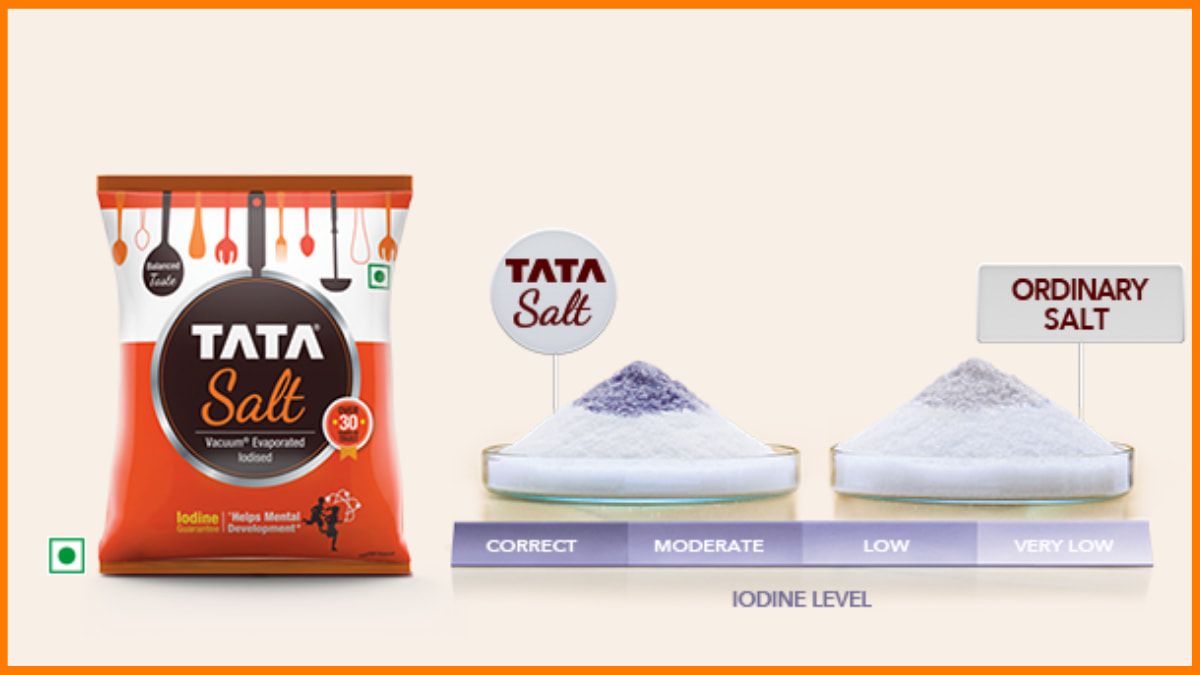
    While researching, they found out that Indian people were deficient in iodine. Therefore, they came up with an iodized salt product. This salt was going to be India’s first iodized salt. Tata not only improved the product but also marketed the nutrient value of Iodine to the common people. The increased nutrient value was taken very positively by people.

    Mary Kom was appointed as the Brand Ambassador for Tata Salt

    Mary Kom Endorsing Tata Salt
    Mary Kom Endorsing Tata Salt

    Tata group chose Mary Kom to represent them. Generally, brands used famous actors and actresses to brand themselves. But Tata over here made a unique choice. They decided to put forward an internationally renowned athlete to represent their company.  

    This also sent a message that Tata salt was used by the fittest people. This adhered to their trust in Tata salt. Mary Kom also was a national player and also symbolized national assets and triggered patriotic emotions in the customer.

    They used the tagline “Maine desk ka Namak khaya hai“. This tagline validated their product in terms of quality. Also, the tagline connected well with the sentiments of India. This also reminded the people that it was their own country’s commodity.


    Marketing Strategy of KitKat| How is KitKat dominating the chocolate market
    KitKat is known for its unique and creative marketing strategies. Here we have discussed how its marketing strategy helped it attain success.


    Patriotism

    Tata Salt - Desh Ka Namak
    Tata Salt – Desh Ka Namak

    People in India are very patriotic, their love towards their nation is commendable. Due to the swadeshi movement, people tend to promote the product which is native to their country.

    Tata’s were always seen as a company that represented India. When a product like salt came from Tata’s, it was hugely welcomed by the common people. They felt that they are getting a quality product at a reasonable price.

    They marketed their salt with the tagline ‘Desh ka Namak’. This tagline deeply connected a common man to the product. People also had a feeling that by buying this product, they are contributing to the country.

    Launched new Products

    Tata Salt Products
    Tata Salt Products

    Tata salts have now brought a number of new salt products. The products are Tata salt lite, Tata Salt Plus (double fortified salt). These salts are marketed based on the nutrient advancements. They marketed them on the base of a good reputation built previously. This way Tata salt is increasing its product base and thus increasing revenue.


    Lays Marketing Strategy | Promotion Strategy | Advertising
    Lays is the most popular potato chips brand worldwide. Here is an insight of Lays marketing strategy, promotion strategy, Swot analysis, & more.


    Conclusion

    Tata Salt employed many clever marketing strategies to become “Desh ka namak”. They fabricated several marketing strategies to build the most trusted salt brand. As it had set out when the salt industry was very unorganized, so they somewhat got the first-mover advantage. They took full advantage of their brand and many other things which were aligned in their favor. With this, we come to the very end of the article.

    FAQ

    When was Tata salt launched?

    Tata salt was launched in 1983 as the first national branded salt of India.

    Where is Tata salt produced?

    Tata salt products are produced in Mithapur facility, Gujrat.

    Who is the CEO of Tata Salt?

    R. Mukundan is the current CEO of Tata Salt.

  • China’s Evergrande Crisis: Real Estate Sector Sinking in Debt

    A crisis is any event or period that will lead, or may lead, to an unstable and dangerous situation affecting an individual, group, or all of society. Crises are negative changes in human or environmental affairs, especially when they occur abruptly, with little or no warning. – Wikipedia

    Ever since the inception of human life on the planet earth, or even before that time, We have faced Crisis. So much so that it is a part of life and we don’t deface the fact anymore. Crisis has taught us that we lack something, and we need to work more on the present systems to make things more liveable. Making us more decisive, it cures indecision. This is a kind of help in our constant journey of making things better. However, We humans are the dominant species in nature.

    Why, you may ask ? Because we have hacked evolution !

    Ours is the only species that has decided to actually become better or more efficient without waiting for the process of evolution to take place (that is always slow). So, we are the only animal who has hacked evolution. That makes us the most fast-paced living species than anyone. Does that mean we don’t have a crisis anymore? No, we get crises every now and then to showcase us that some things are just so fickle. A house of cards.

    We all are terrestrial mammals, we live on earth, land. Build houses and earn a living. Housing or real estate is a super demanded domain in this world. As population boosts we will want more and more houses, dwellings to accommodate people. Amongst the constantly rising demands for land, it is very imperative for all of us to make sure that land is distributed justifiably. To provide for the need that is round-the-clock. Not to mention, being such a big sector, Housing sector or real estate sector is not oblivious to shockwaves, you know CRISIS. Whenever a wave hits this epicentre, human lives move. It moves to that extent of magnitude which we cannot even measure on a Richter scale.

    China is the world’s most populous country on the globe. Most humans live there. Housing sector is as big as it gets. It has seen its share of crises in this magnanimous sector. A really big economy. It has seen his share of strides and waves of uncertainties on his pupils. Lets see an example for clarity.

    The Real Estate Bubble (2005-2011) in China
    EverGrande Crisis in China
    The Lehman Brothers Financial Crisis
    EverGrande’s Cash Crunch
    Decline in Contract Sales
    Evergrande Crisis Consequences
    Evergrande Crisis Effect on India
    FAQs

    China’s Evergrande Crisis

    The Real Estate Bubble (2005-2011) in China

    Real estate in China is developed and managed by public, private, and state-owned red chip enterprises. In the years leading up to the 2008 financial crisis, the real estate sector in China was growing so rapidly that the government implemented a series of policies—including raising the required down payment for some property purchases, and five 2007 interest rate increases- due to concerns of overheating. But after the crisis hit, these policies were quickly eliminated, and in some cases tightened.

    The Chinese property bubble (2005-2011) was a real estate bubble in residential and/or commercial real estate in China. The phenomenon has seen average housing prices in the country triple from 2005 to 2009. It deflated in 2013.

    Massive doesn’t even begin to describe the situation with China’s property market, but that’s somewhat expected with a population of 1.4 billion people.

    And as the chart below shows, the bubble keeps on getting bigger!

    China Real Estate Bubble
    China Real Estate Bubble

    Well we know that this thing is of the past. This was a crisis and China hopefully learned some things from it. That’s why storms come, to make us more stable. This article is not about the past but for the future. This point in time, we are gonna see another crisis. Maybe more tense than the past. Maybe a more lethal Than past. So, what is it this time ?

    EverGrande Crisis in China

    China’s second biggest real estate mogul EverGrande is facing a crisis. To be more precise the company is going through financial difficulties. It is having liquidity issues to pay back its lenders. To give you some context, China’s real estate market has been booming in the recent past and to capture the trend and grow, Evergrande had taken up so much debt that they are struggling to pay it off now. The magnitude of this upcoming crisis is such that, if it collapses, people will lose homes. Not only China’s economy but the global economy as a whole could be affected. Lets see what is the scene here,

    The Evergrande Group or the Evergrande Real Estate Group (previously Hengda Group) is the second largest property developer in China by sales, having developed projects in over 170 cities in China. It is ranked 122nd on the Fortune Global 500. It was founded in 1996 by Xu Jiayin. It sells apartments mostly to upper and middle-income dwellers. In 2018, it became the most valuable real estate company in the world. Evergrande Group owns 565 million square metres of development land and real estate projects in 22 cities, including Guangzhou. The company and Alibaba own 50 percent each in Guangzhou Football Club and Evergrande football school is the biggest football school in the world. In the year 2009, the company filed for an IPO, An Initial Public Offering to get public

    As of September 2021, the company is at risk of defaulting on its debt. An estimated 1,500,000 customers could lose deposits on Evergrande homes that have yet to be built.

    “I think ultimately the Chinese authorities will step in to make sure at least the wider financial system doesn’t run into a crisis,”. “If you’re a property developer you’re facing a few bleak months ahead. The key distinction I think is policymakers will allow property developers to suffer considerable pain, but they’ll step in to make sure the banking system is okay.” – Mark Williams, chief Asia economist at Capital Economics.

    Kotak tweeted, the threat over China’s second-largest real estate developer reminded him of Infrastructure Leasing & Financial Services (IL&FS). Last year in September, the infra leasing and financial services company wasn’t able to pay its debt due to shortage of funds. The financial services market felt the tremors, and led to a liquidity crisis. However, the government came to its rescue and hand-picked nominees to replace the board in October. It had extended Kotak’s term as non-executive chairman of the debt-ridden group by one year.

    Lauding the government’s swift decision-making, the 62-year-old veteran banker said the Indian leaders provided calm to financial markets. “The government-appointed board estimates 61% recovery at IL&FS. Evergrande bonds in China trading, approximately 25 cents to a dollar,” he wrote.

    The Lehman Brothers Financial Crisis

    Lehman Brothers Holdings Inc. was a global financial services firm founded in 1847. Before filing for bankruptcy in 2008, Lehman was the fourth-largest investment bank in the United States (behind Goldman Sachs, Morgan Stanley, and Merrill), with about 25,000 employees worldwide. It was doing business in investment banking, equity and fixed-income sales and trading (especially U.S. Treasury securities), research, investment management, private equity, and private banking. Lehman was operational for 158 years from its founding in 1850 until 2008.

    The bankruptcy of Lehman Brothers on September 15, 2008 was the climax of the subprime mortgage crisis. After the financial services firm was notified of a pending credit downgrade due to its heavy position in subprime mortgages, the Federal Reserve summoned several banks to negotiate financing for its reorganisation. These discussions failed, and Lehman filed a Chapter 11 petition that remains the largest bankruptcy filing in U.S. history, involving more than US$600 billion in assets.

    The bankruptcy triggered a 4.5% one-day drop in the Dow Jones Industrial Average, then the largest decline since the September 11, 2001 attacks. It singled out a limit to the government’s ability to manage the crisis and prompted a general financial panic. Money market mutual funds, a key source of credit, saw mass withdrawal demands to avoid losses, and the interbank lending market tightened, threatening banks with imminent failure. The government and the Federal Reserve system responded with several emergency measures to contain the panic.

    Radhika Gupta (MD and CEO of Edelweiss) said in a public notice that the real estate sector is highly regulated, given the large role it plays in the Chinese economy. In synopsis, the fund managers(at Edelweiss) do not think that the sector is facing systematic risk(Risk inherent to the entire market). The government is prioritising this issue and rapid regulations are expected. She also advised that investors with a long term horizon should stay patient as fund managers at Edelweiss see a transitory volatility.

    Tweeted as a part of a disclaimer, the Edelweiss Greater China Equity Offshore Fund was at its highest risk on the Riskometer.


    Why is North Korea Facing its Worst Financial Crisis?
    North Korea is suffering one of the worst possible economic breakdowns that occurred in its 73-year old history. What led to such a crisis? Check out here!


    EverGrande’s Cash Crunch

    Dear Shareholders, I am pleased to present the reports of China Evergrande Group (“Evergrande” or the “Company”) and its subsidiaries (the “Group”) for the year ended 31 December 2020. The Group’s turnover and gross profit for the year amounted to RMB507.2 billion and RMB122.6 billion respectively. Net profit was RMB31.4 billion. Core business profit was RMB30.13 billion. In order to repay the trust and support of shareholders, the Board recommended the payment of a final dividend of RMB0.152 per share for the year 2020, which will be distributed upon approval at the general meeting of the group. – Prof Hui Ka Yan (Chairman of the Board of the Group, Chairman of the real estate group)

    This is quoted from the annual report of 2020 of the company. It paid a dividend. The company was saying it out loud and clearly, that we are fine, Everything is fine, we are paying dividends, Take your profits share, shareholders. Well now we see the whole big picture, Loud and clear.

    Evergrande founder and Chairman Hui Ka Yan continued his precipitous drop in Bloomberg’s wealth ranking as the company’s shares fell to their lowest in a decade. His fortune now stands at $7.3 billion, down from a peak of $42 billion in 2017.

    Smothered by a $300 billion liabilities burden that has crushed its credit rating, share prices and reputation among a once-adoring public. Throughout last week, the concourse outside Evergrande’s mirrored offices in the southeastern city of Shenzhen was occupied by unpaid contractors, angry sales agents and investors scenes echoed across a country where prolonged protest is rarely tolerated.

    Now, as default appears all but inevitable, fears are abounding of a contagion within the Chinese property market — and far beyond.


    Why did China ban Cryptocurrencies Transactions and How it Affected the market?
    China has recently banned cryptocurrency transactions. Lets Find out why did it banned cryptocurrency transactions and how will it affect the market?


    Decline in Contract Sales

    The month of September is typically when real estate companies in China record higher contract sales of properties. However, the ongoing negative media reports concerning the Group have dampened the confidence of potential property purchasers in the Group. The Company expects a significant continuing decline in contract sales in September, thereby resulting in the continuous deterioration of cash collection by the Group which would in turn place tremendous pressure on the Group’s cash flow and liquidity.

    Here is a little excerpt of previous financial statement to back the downward trend in operations of the company.

    Balance Sheet Excerpt of last year.

    As disclosed in the Operating Statistics Announcements, the contract sales of properties of the Group in each of June, July and August 2021 amounted to RMB71.63 billion, RMB43.78 billion and RMB38.08 billion, respectively, which showed a decreasing trend.

    Announcements and Notices by Evergrande (14 September,2021)
    The Real estate giant also mentioned in a recent public open notice that –

    • No material progress on sales of interests in members of the Group
    • The disposal of the Company’s office building in Hong Kong has not been completed within the expected timetable

    The Problems:

    • The company has $300 Billion debt to bondholders
    • Property sales declining for months and will continue
    • Company owes $103 billion to construction companies and other business creditors
    • Banks are not ready to refinance
    • Company wants to repay debt in the form of property and parking spaces
    • China’s Government has imposed limits on the amount of real estate borrowings, which caused bondholders to withdraw their money
    • EverGrande now needs to pay interest of $83.5 Million on bonds now, with a grace period of 30 days

    Here’s how to start a real estate business in India | Startuptalky
    Here is how to start a real estate business in India which is considered as a one of the most lucrative business in India…


    Evergrande Crisis Consequences

    • China stock markets and Global markets, mainly in the US is reacting negatively to the news.
    • Stock markets globally sank on Monday as investors weighed the risk of a spillover from Evergrande’s debt. Bitcoin dropped 5.4 percent this week to $45,025
    • China’s property market is majorly affected and we see the 2008 financial crisis all over again.
    • Evergrande bondholders might sell their other investments too to keep their money as cash at the moment. This might cause market correction
    • In an effort to flatten the crisis curve, China’s central bank boosted its gross injection of short-term cash into the financial system after concern over a debt crisis at China Evergrande Group roiled global markets. The People’s Bank of China pumped 120 billion yuan ($18.6 billion) into the banking system through reverse repurchase agreements, resulting in a net injection of 90 billion yuan.
    Injecting funds to flatten curve.
    • China bails out the company indirectly by asking borrowers(state owned banks mainly) to take the property and parking spaces and waive off the debt.

    Evergrande Crisis Effect on India

    • Sensex and Nifty are at great heights and thus are more volatile to corrections.
    • Short term corrections may happen
    • Over a medium term, India can benefit from the situation because the Chinese crisis cause increased money flow into the Indian markets
    • This crisis can put the rupee under pressure. If Evergrande is allowed to default, the market could see a massive sell-off with significant contagion risks for global financial markets – HDFC bank economist’s report.
    • If one single company that owes $304 billion can develop financial exposure to hundreds of lenders, millions of investors in bonds and stocks, and hundreds of thousands of homebuyers, Then we cannot be sure of big corporations anymore in china.
    • Indian steel still sees a strong spine as evergrande goes to a cash crunch.
    Improvement In indian steel sector
    • Shailendra Kumar, Chief Investment Officer at Narnolia Financial Advisors feels till now Evergrande issue looks localised and Chinese policymakers should be able to handle it using steps like restructuring. He believes the Indian economy and Indian equity market is set for exciting times ahead. “While the global trend of digitalization is a megatrend favouring the Indian economy, domestically, formalization is another megatrend adding further positivity to Indian equities,” he said.

    So, what shall happen tomorrow, for sure we can’t predict it to a nice accuracy, But we can surely see that what we are facing is risk, Uncertainty or maybe the silence before a storm. Let’s call it a crisis.

    FAQs

    What is Evergrande crisis?

    Evergrande is an enormous company embedded across China’s financial system and economy, that relies mainly on real estate.

    What does Evergrande do?

    Evergrande Group is an investment holding company in China. It is involved in real estate business. Evergrande group does development, investment, and management of real estate properties.

    Who is the founder of Evergrande Group?

    Xu Jiayin (Hui Ka Yan) has founded Evergrande Group, headquartered at Shenzhen, Guangdong, in 1996.

  • Why are most Indian Startups suddenly going Public in 2021?

    At one point while growing a startup, every startup founder must have dreamed of is applying for an IPO. Who doesn’t wants some extra funding to grow their startup?. The Indian startup industry is growing at a fast pace. And Many startups are buckling up to apply for the IPO. But why now? Why are so many startups going public in 2021?. Let’s find out

    If you are just as curious to know, follow the article

    What is a Startup?
    What is an IPO?
    Following factors you can consider before going Public
    Why are Startups going public in 2021?
    Pros and Cons of Registering for an IPO
    What happened When Zomato went public?
    List of startups that have opted for IPOs in India
    FAQ

    What is a Startup?

    So, you hear this word floating in and out of conversations, much to an extent these days.

    • Startups are usually founded by one or more entrepreneurs and their company is in its initial stages of business.
    • These entrepreneurs involved in building startups believe that there is a demand for a certain product or a service and want to make it better by developing it.
    • The funding for these usually involves getting money from family or friends.
    • Startups need capital, so they are also on a lookout for backers to invest in them.

    What is an IPO?

    IPO stands for Initial Public Offering

    • Companies need capital, so they raise it in the forms of IPO and shares from public investors.
    • People have a point of view that stock prices increase after an IPO.

    Following factors you can consider before going Public

    • There is a buzz in the market about your Startup.
    • The company has been financially strong for the last three years and is making good profits.
    • You hear about your company quite often.
    • The company holds a strong vision.

    We are observing a trend here. Not only Indian tech startups are going public, but almost every startup is getting in the waiting list to go public in 2021.


    How Apple avoided Billions of Dollars of Taxes? | Apple Tax Avoidance Strategy
    Apple being the biggest tech company earns billions of dollars in revenue but it doesn’t pay billions in tax. How? Let’s understand how it avoided taxes.


    Why are Startups going public in 2021?

    Money circulation by Central Banks

    The Central banks are pumping new money into circulation in the hopes of tackling the aftermath the pandemic has left the economy in.

    Where is this cash ending up?

    The way for this money is paved to the path of the financial markets, mainly stocks. Now that means many of the giant institutions have plenty of money floating in so that they can invest in. Which leads us to another question: Where? These institutions now have the power to invest in IPOs.

    Startups like Zomato, Nykaa, PayTM, Delhivery, some of which have already been made public and some that are gearing to go public, have the intuition that they can catch the interest of these investors.

    It is becoming, a regular thing now for public valuations to overtake the private ones. Many people chip in, thinking that what they invest in will see growth in the future. The shares are rapidly growing, so if your startup is waiting to go public. There is no better chance and time than now to grab the opportunity.

    Possibilities of recovery

    The other part of the story is that many say that with stocks going up to the skies. With the investors and the Indian public pooling in money for the vision, your startup holds even if you have landed into the mess of running into loss. There is a chance of new money coming in. And the value of your startup will be much more than you expected.

    Registrations are easier than before thanks to SEBI (Securities and Exchange Board of India)

    The days of waiting are over and long gone. There are many ways to get listed on the IPO list faster. SEBI (Securities and Exchange Board of India) has made it easy for the startups to list themselves in India, introducing the Innovators Growth Platform, also making changes for them to get listed domestically.

    Delays due to the pandemic

    One of the other reasons is none other than the pandemic itself. It really shook up the world, bringing everything to a halt and slowing down many aspects of our lives. Seeing the stability and growth, the other startups are sure in a hurry to get themselves listed as soon as the pandemic did put a stop to the process. And it would not hurt to take advantage of the situation and accelerate it.

    Pros and Cons of Registering for an IPO

    Pros of registering for an IPO

    1. It helps in fundraising.
    2. Creates credibility and publicity.
    3. Having stocks as a means of payment.
    4. Reduced overall cost of capital.

    Cons of registering as an IPO

    1. There’s market pressure.
    2. Needs additional regulatory requirements.
    3. Potential loss of control.
    4. Transaction costs.

    What happened during the 1991 Financial crisis in India?(Case Study)
    1991 was one of the worst financial crisis of India. Lets revisit it and understand what led to the crisis and how was Indian economy revived.


    What happened When Zomato went public?

    • A big deal was made when Zomato went Public. It sent the internet into a frenzy.
    • The value of Zomato went from $5.4 billion, with the expected value of its stock to hit $7.5 billion.
    • People saw humongous potential in it as it is one of the fastest growing B2B segments in the food market.
    • It was backed by investors like the Ant Group, Info Edge, Ant Financial, Temasek, and more.
    • Tiger Global, Kora, Luxor, Fidelity (FMR), D1 Capital, Baillie Gifford, Mirae, and Stead view joined Zomato’s board.

    Ant Financial gains majority stake in Zomato
    The home-grown foodtech major has signed a definitive agreement with Alibaba-owned digital financial service platform – Alipay Singapore Pte Ltd. to undertake a primary fundraise of around $210 million.


    List of startups that have opted for IPOs in India

    • Zomato
    • BYJU’S
    • Delhivery
    • LIC
    • Policybazaar
    • Freshworks
    • Pepperfry
    • Flipkart
    • Nykaa
    • Bajaj Energy

    FAQ

    Which Indian startups went public in 2021?

    Policy Bazaar, Delhivery, Nykaa, Paytm and Zomato are few startups that went or are preparing to go public in 2021.

    How many unicorns are there in India in 2021?

    There are 53 unicorns in India as of June 2021.

    What is an IPO?

    IPO is a fundraising method where companies list their stocks in public to raise capital from public investors.

  • The Meme Era: How Meme Marketing Is Becoming The New Way To Brand Success?

    Welcome to the internet, Anything that your brain can think of can be found. We’ve got mountains of content and among these zillion ways to engage, A meme is the most recurring.

    So, what is a meme ? – Asked no one ever.

    Everyone knows it, everyone has seen it, Even if you are an anti social media advocate, you know it. Wikipedia says, The term ‘meme’ is a shortening (modeled on gene) of ‘mimeme’, which comes from Ancient Greek, meaning ‘imitated thing’. The word was coined by British evolutionary biologist Richard Dawkins in The Selfish Gene (1976) as a concept for discussion of evolutionary principles in explaining the spread of ideas and cultural phenomena.

    What is a Meme?
    How Memes Changed Marketing?
    Memes in The Exciting Future
    FAQs

    CRED Meme Marketing

    What is a Meme?

    A meme is an image, video, piece of text, etc., typically humorous in nature, that is copied and spread rapidly by internet users.

    Needless to mention that we live in a hyper hyper connected world. Yes, I used the word hyper twice, you know why. The medium is high technology penetration and the Internet. Believe it or not, a meme is one of the most shared items among all in the online world. These quirky texted images have high sharing value, that is they are highly contagious and can pierce nicely through the human brain. Now if you have questions like why ? Then my friend, you’re underestimating the power of humor. Humor is the best way to build rapport with fellow sapiens.

    Another interesting thought is that earlier the word ‘Viral’ wasn’t used as much. Also it was used in the context of medical field to identify bacteria or viruses that travel and transmit fast. Can you think of the fastest medium through which a virus can travel to spread ? Air, yes. It is the air-borne bacteria that travel the fastest. From that usage, we have come to a time when anything over the internet can go viral. The reason is hyper connectedness. Anything humorous can go viral. Internet is the new air, truly and metaphorically.

    Graph showing usage of the word ‘Trend’ over last 5 years (Via Google trends)

    How Memes Changed Marketing?

    Marketing is to present a company’s product in the best possible way. It can also be called catching people’s eyeballs. Now in the times when most, If not all the eyeballs are looking at the memes. It would be a smart move to catch memes first. That is exactly what companies are doing, they are placing their name on memes. They are doing marketing by way of memes.

    Modern problems require modern solutions.

    Combination of marketing and memes has led to the establishment of one of the quirkiest ways of marketing, MEME MARKETING. We see that anything weird or funny or weirdly funny can go viral and can turn many eyeballs to themselves. These memes are the new marketing tools because they have high sharing value.

    We can’t move forward in this direction without taking a few examples. The most famous example we can think of is that of Zomato. Their meme game is lit, that’s what millennials are calling. The company recently got public and customers love this brand for its relevant memes that they share on their social handles.

    Zomato Meme | Zomato Instagram Post
    Zomato Meme | Zomato Instagram Post

    This is their latest Instagram post. The subject is about Cristiano Ronaldo’s splendid performance and the underlying subject is zomato delivery boys(wearing red).

    Previously

    They made a tweet in 2019 that went immensely viral. It was liked thousands of times, had several thousands retweets and praised by the CEO Dipinder Goyal himself. It was,

    “Guys, kabhi kabhi ghar ka khana bhi kha lena chahiye”

    (Guys, Sometimes eat home cooked food for a change)

    Witty tweets like these from Zomato have been widely appreciated. This is a funny and smart way to trigger humor in people, communicating what the brand does conveniently to its customers. Thus improving consumer relations. Moreover it led to many responses from other brands as well, who joined the conversation by commenting with some similar slurs.

    Guys, kabhi kabhi raat ke 3 baje, phone side pe rakh ke so jana chahiye – Youtube India.

    Guys, kabhi kabhi cable pe bhi kuch dekh lena chahiye – Amazon Prime Video.

    Guys, kabhi kabhi ghar par bhi baithna chahiye! – Ixigo

    Another example may include the recent unicorn CRED. Cred has been making funny songs as their marketing campaigns. These jingles are so catchy that you might humm them sub consciously. Cred’s success credit goes to its engaging marketing strategy. Create a marketing strategy that engages your audiences and turns them into customers.

    CRED Meme Marketing

    What’s Better – Static Memes For Marketing Or Video Memes For Marketing?
    Memes may be funny, but meme-making is no joke! Memes have become almost a cultural language unique to the millennial crowd. Considering how trendy and in vogue they are, most brands are trying to get in on the meme-making scene. With meme marketing becoming the recent tool in brand promotions,


    Memes in The Exciting Future

    The future of this newly found genre of advertising/marketing is definitely exciting and obviously hilarious. They say that visual memes travel about 60000 times more than a normal plain text. faster than People, especially from Gen Z, love memes because they offer an entertaining analysis of everything. From your childhood trauma to the latest current affairs around the globe.

    And because pop culture is the cousin that marketing hangs out with, the former always influences the latter. Today’s customers go to the brands that make them laugh, that are relatable and bold.

    However there is also a dark side to these memes, They can be offensive. So a brand should cautiously test the waters gently first before jumping in this frenzy. So a meme is something of a relatable joke, That has to have humor. A meme without humor is like a joke that doesn’t make anyone laugh. You may get an A for the effort but if your work doesn’t make the reader go giggle, grin, or onto a relatable smile – you lose, And this happens more than you realise. That is not how you MEME.

    Use memes to trade good humorous exchanges with your customers and captivate them. Who knows—your meme might light up someone’s day!

    FAQs

    What is a meme?

    A meme is an image, video, piece of text, etc., typically humorous in nature, that is copied and spread rapidly by internet users.

    What does meme stands for?

    The term ‘meme’ is a shortening (modeled on gene) of ‘mimeme’, which comes from Ancient Greek, meaning ‘imitated thing’.

    What is meme based marketing?

    Meme Marketing is the art of creating any kind of brand narrative in the form of text, image, or video Memes and getting those memes shared on various Social Media platform for getting attention of customers.