Tag: customers

  • How Do SaaS Startups Make Money? | SaaS Revenue Model

    Software as a Service (or SaaS) is a new method for delivering software applications over the internet. It does not require any installation or maintenance of the software to avail of the services. The software is hosted by a third party and one can access it by paying a subscription fee.

    The benefits of the SaaS model are clear. It provides lower costs, lower commitment risk, and a try-before-you-buy model, which gives customers a remarkable opportunity to assess a product before making a purchase. Indeed, the benefit is so clear that a 2017 study conducted by BetterCloud found that 86% of organizations estimate that 80% of their business apps will be delivered through the SaaS model by 2022.

    Growth chart of SaaS business apps in companies
    Growth chart of SaaS business apps in companies

    In 2022, the SaaS market valuation is at $186.6 billion and has an annual growth rate of around 18%. It is projected to grow to $700 billion by 2030.

    For software businesses, on the other hand, the SaaS model presented an entirely new way to build, distribute, market, sell, and support a software product. It affects every single part of a software operation. But the most significant change that the SaaS model brought — the one at the root of all the other changes — was the SaaS revenue model. The Software as a Service (SaaS) revenue model is associated with regular, ongoing payments over a defined period, in exchange for using a software application or other tool.

    About SaaS
    SaaS Revenue Model & Its Phases
    Phase 1: The Initial Sale
    Phase 2: Retention Revenue
    Phase 3: Expansion Revenue
    How to build a great SaaS revenue operation

    Software As A Service
    Software As A Service

    About SaaS

    SaaS is referred to as a software distribution model in which a cloud provider hosts applications and makes them available to end-users over the internet. In this model, an independent software vendor may contact a third-party cloud provider to host the application.

    SaaS is one of the categories of cloud computing that include infrastructure as a service (IaaS), and platform as a service (PaaS). SaaS applications are mostly used by IT professionals, business users, and personal users. Products ranging from entertainment services, like Netflix, to advanced IT tools come under SaaS. SaaS products are mostly marketed to B2B and B2C customers.

    As per recent McKinsey & Company study, technology industry analysts have predicted further growth in the SaaS market, and expect to see the market for SaaS products close to $200 billion by the year 2024.

    All About SaaS

    SaaS Revenue Model & Its Phases

    Before SaaS, the software revenue model was transactional and all that mattered was the initial sale of the software product. Big, fancy salesmen sold long-term deals for one, two, or even five million dollars a pop. Done. Hands dusted, gong rung, contract signed — all the revenue that was going to come from that deal had been generated.
    Enter the SaaS revenue model. It swapped the single point of revenue with three essential phases: Initial sale → Retention → Expansion

    SaaS Revenue Model
    SaaS Revenue Model

    There are three phases of the SaaS Revenue Model as listed below.

    • Phase 1: The Initial Sale
    • Phase 2: Retention Revenue
    • Phase 3: Expansion Revenue

    Phase 1: The Initial Sale

    It still exists! And it’s still an essential part of the SaaS revenue model. “Closing” an initial sale includes everything from a simple self-serve upgrade to an annual contract shepherded by an inside salesperson.

    If you play this phase well and show strong initial sales growth, you’ll get somewhere with your SaaS business. You’ll probably be able to raise some money, maybe even have a mini-brand — excellent! But these days, an initial sale brings in far less revenue than in the traditional SaaS revenue model. It’s still extremely important — you need a flow of new customers — but you also need to move on too.


    Best SaaS Marketing Agencies to hire for 2021
    SaaS Marketing Agencies can help you in automating and scaling up your marketingresults. If you are reading this article then you probably have raised somemoney to grow your Software as a Service business or platform and are nowlooking forward to increasing your customer base. Software applicati…


    Phase 2: Retention Revenue

    “You mean we have to keep them happy? Forever??” – Early SaaS pioneer

    Quite so, Mr. Early SaaS Pioneer. There’s a new (SaaS) revenue model in town. Most early players, however, maintain the sales-first mentality even though they’re selling much smaller, month-to-month deals. They’re celebrating the initial sale disproportionately which is not correct for SaaS.

    On the other hand, some SaaS companies quickly realized the importance of retention. Indeed, they saw that an initial sale didn’t matter much if a new account was canceled three, six — even 12 months later. They realized they couldn’t sustain growth if they churned the customers they brought in. These people know how to play the game of SaaS.

    Today’s SaaS pros realize that retention is the biggest revenue opportunity in SaaS. An initial sale might get you $500 in the bank when you convert that deal. But retention, retention will bring in that amount times the number of months the account stays active. And why? Here’s some fast math on that point:

    • 1 month (initial sale): $500
    • x 12 months = $6k
    • x 24 months = $12k
    • x 36 months = $24k

    Indeed, the revenue opportunity from retention is exponentially larger than the initial sale. Execute well in this second phase, my friend, and you will build a solid, sustainable SaaS business. Excellent! But wait — if you want to build a great SaaS business, crush the competition, and have a shot at an IPO, you’ll have to master the third phase of the SaaS revenue model: Expansion.

    Phase 3: Expansion Revenue

    Often overlooked, always important — this is where the true secret to SaaS growth lies. Savvy SaaS teams quickly realized that they could drive revenue growth by expanding existing accounts. Upsells, cross-sells, and any other sales that could generate additional revenue from existing customers became SaaS staples. And it worked earlier, mainly because the opportunity for second-order revenue was huge.

    Calculating expansion revenue growth rate
    Calculating expansion revenue growth rate

    You understand the realities of the three phases of SaaS revenue. Excellent! But that’s only half the battle. The other half is executing against it. You’ll need to shift the way you look at adoption, customer service, sales, and marketing. Thanks to the SaaS model, the operations of software businesses are changing.

    Customer relationships: In the SaaS revenue model, customer relationships are based on the ongoing delivery of customer value.

    Marketing issues related to the SaaS/subscription model: Marketing strategies focus on growing subscribers through lead generation, branding, goodwill activities, and other efforts to create interest in the product or service.

    Operational implications of the SaaS/subscription revenue model: Companies employing the SaaS/subscription revenue model should focus primarily on delivering cost-effective customer value.

    Financial and strategic implications: In most cases, successful SaaS/subscription companies build up their subscriber base over a long period. In the interim, they require financing to develop delivery capacity as well as to support efforts to increase the user base.

    Key metrics: SaaS/subscription companies consider key metrics to be customer retention and net new growth in subscriber numbers.

    Modalities: While SaaS/subscriptions are most commonly thought of as single sales to individual subscribers, the SaaS/subscription model also works with bulk sales. Rather than selling one subscriber one subscription, a company can sell subscriptions in larger increments for a reduced per-user rate.

    Costs and benefits of the SaaS/subscription model: The SaaS/subscription revenue model usually works best when a company is servicing ongoing and continuous customer needs. This means that customer relationships may span several years. It is often challenging to convince new customers to commit to long-term contracts, especially in the case of companies offering novel products or services.


    Ultimate List of SaaS Product Review Sites
    Product reviews can help you in a number of ways and even be crucial in yoursales process. The fact is, 90% of consumers read online reviews[/indian-review-sites-new-upcoming-trend/] before even visiting a business.Similarly, 77% of B2B buyers conduct their own research before talking tosalespeo…


    How to build a great SaaS revenue operation

    To build a great SaaS revenue operation, there are three truths teams must accept:

    1. SaaS revenue goes well beyond an initial sale. There are three essential phases of revenue and a SaaS business must execute well in all three phases to become great.
    2. Building a management structure that provides continuity and strategic consistency across these three phases of revenue will ensure the best shot at success.
    3. Product engagement is the key to winning the game of SaaS. Great SaaS operations understand this and find a way to bring this data to their team in the most actionable way possible. Great SaaS revenue models seamlessly integrate product engagement insights into every part of their customer-facing operations.

    Conclusion

    A good SaaS model provides lower costs, and lower commitment risk, and a try-before-you-buy model gives customers a remarkable opportunity to assess a product before making a purchase. For software businesses, on the other hand, the SaaS model presents an entirely new way to build, distribute, market, sell, and support a software product.

    Now that you know about the revenue model of SaaS, let’s get on board and start executing them in your business.

    FAQs

    What is SaaS?

    Software as a service (or SaaS) is a way of delivering applications over the Internet – as a service. Instead of installing and maintaining software, you simply access it via the Internet, freeing yourself from complex software and hardware management.

    What are the examples of SaaS?

    Examples of SaaS are – BigCommerce, Google Apps, Salesforce, Dropbox, MailChimp, ZenDesk, DocuSign, Slack, and Hubspot. PaaS Examples: AWS Elastic Beanstalk, Heroku, Windows Azure (mostly used as PaaS), Force.com, OpenShift, Apache Stratos, Magento Commerce Cloud.

    What are the three phases of the SaaS Revenue Model?

    The three phases of the SaaS Revenue Model are:-

    • Phase 1: The Initial Sale
    • Phase 2: Retention Revenue
    • Phase 3: Expansion Revenue

    Is Netflix a SaaS?

    Yes, Netflix is a SaaS that offers software to watch licensed videos. It follows a subscription-based model wherein the user can choose the suitable one as per its requirement.

    Is Facebook a SaaS?

    SaaS simply stands for “Software as a Service”. Facebook is a consumer network product, not technically SaaS, but there’s no other product that provides as many services as Facebook does.

    Are mobile apps SaaS?

    The new frontier for enterprise software as a service (SaaS) providers appears to be in mobile apps. While desktop platforms are still the backbone of any SaaS product, mobile apps are becoming increasingly important. Mobile apps and API connections are expected to add 0.71% growth to the SaaS Market Size.

  • Shopify Pages and Why They Are Important for Your Store?

    You may have seen a YouTube video about creating a Shopify online business. Or perhaps your homie keeps bringing up Shopify, and you’re too ashamed to inquire. Fortunately for you, we will explain what Shopify is, what it offers, the benefits and drawbacks of utilizing it, and much more. So let’s get started.

    You may create your store on the Shopify e-commerce platform both online and offline. Bloggers use WordPress. Shopify is used by shop owners. You can use Shopify POS to sell in person or online using your own website. This e-commerce website builder provides features for both novices and e-commerce professionals.

    What is Shopify?‌
    Shopify – About us Page
    Shopify – Homepage
    Shopify- Happy Customers Page
    Shopify – FAQ Page
    Shopify – Contact us Page
    Shopify – Policies Page
    Shopify – Collection Page
    Shopify – Product Pages
    Shopify – Blog Pages
    Other Shopify Pages
    Shopify – Homepage
    Why Use Shopify Pages?

    What is Shopify?‌

    Basically, Shopify itself is an e-commerce platform that also allows others to create and run their stores on it. It provides you with the foundation to run an e-commerce business. As you venture into the online selling space, you’re expected to open a storefront, showcase products, engage with customers, accept payments, and more. Shopify offers all the tools you need to manage each of those activities.

    People prefer to buy from well-known brands. A professional-looking Shopify website is among the simplest means of earning their trust. Your brand must be outfitted with a few core components. Aside from the main page & the merchandise page, each e-commerce site should have the mentioned pages. So let’s go through them one by one.

    Shopify – About us Page

    An Example- The above image shows the about us page of a Shopify store named Haus
    An Example- The above image shows the about us page of a Shopify store named Haus

    This page is crucial because when a customer walks into your shop but isn’t ready to purchase, they’ll visit this page to discover more about your company. It’s much about the firm, also known as our story. This page typically contains additional company information, who you are, your label, and the offerings.

    You’ll need a better overview of your company, including who you are & why you’ve established it. The more personalized you’re about us section is, the better. It would be fantastic if you could entail a pic or greet clip.

    The drawback is that cliched themes are often used, which are uninterested in the about page. You, however, are. You might like to add several fun effects and more elements to upsell, but Shopify does not provide these features right away. You must focus on specific themes which have the necessary personalization in place to modify if and when required.

    Shopify – Homepage

    An Example- Haus is a Shopify store with its homepage on view in above image
    An Example- Haus is a Shopify store with its homepage on view in above image

    It is the center of attraction for each and every customer. Irrespective of the customer’s mentality, the most essential page that has the highest probability of attracting a customer’s attention is the Homepage. This page can contain a door to all other pages and links. Shopify homepage is also the first page any customer will be introduced to.

    By knowing its importance, Shopify has provided a number of themes and customization options for Shopify users to get their desired results. The homepage allows the user to get the basic idea of products available in their ranges. It can also give other information like ongoing sales, links for other essential pages that customers can visit as a second step, etc.

    The above graph shows the different information that is required on the homepage as per the visitors in percentage
    The above graph shows the different information that is required on the homepage as per the visitors in percentage

    Shopify- Happy Customers Page

    It all comes down to social evidence. It’s a good way of making one feel safe about purchasing from you when they see some folks purchasing from you are pleased and sharing images of themselves.

    A satisfied customer is the best business strategy.
    A satisfied customer is the best business strategy.

    Shopify – FAQ Page

    An Example- The above-shown image is the FAQ page from Shopify store The Candi Factory
    An Example- The above-shown image is the FAQ page from Shopify store The Candi Factory

    Many folks will have concerns about shipments and refunds, so you can include all that in this segment then they can get answers without having to message support. It reduces the workload from responding to multiple emails regarding the same topic, but it is optional.

    Ensure it’s presented simply for visitors and that you can keep all the queries in bold text and all the solutions exactly as they are. If you’ve distinct queries, group them under a header so that it appears to be split into parts.

    Shopify – Contact us Page

    An Example- The above-image is from the contact us page of a Shopify store named The Candy Factory
    An Example- The above-image is from the contact us page of a Shopify store named The Candy Factory

    This page contains contact details such as phone numbers, email addresses, location data, social media URLs, and more. If they have concerns, they wish to learn whom to ask and where they can get answers. The more contact details you could give, the better. It’s basic, and every E-commerce website can include a simple inquiry form on that page alongside all other details.

    Shopify – Policies Page

    More shops should have a user agreement page and a privacy policy. These two are extremely crucial, particularly if you run ads. This page is critical if you’re running Facebook or Google ads. If Fb discovers that you don’t use one of these, they may forbid you to run ads. They’re required to run any Shopify store.

    Writing them will be more difficult because the verbiage will be slightly different. However, Shopify makes it extremely simple. It primarily has layouts created for policy sections, so you don’t get to do much legwork; read through the policy and make modifications that seem vital for your biz.

    Shopify – Collection Page

    An Example- The above image shows the collection page of a Shopify store named ZeroGravity
    An Example- The above image shows the collection page of a Shopify store named ZeroGravity

    This page one will give a clear insight to the customers about what products are available in the store. The main focus of this page is on visualizing different categories of the products as per each store. This page has to be added to provide easy access to customers for different category products.

    Apart from the category, this page also has to include different options mainly filtering options and a guide to other pages. This page can be customized as per the user’s preference, but with only one aim of providing a clear look at the page. This can avoid confusing the visitors and can also increase the chance of purchasing a product.

    Shopify – Product Pages

    The name itself shows the work of the page. But in reality, the actual work of the page is to showcase a product but in a different way. Product pages can help the customers to know about a single product in detail but can also help them with other information like similar products or products falling under the same category but within different price ranges.

    All these can be easily showcased by adding the Shopify product pages in the Shopify store. One can also consider adding these pages in order to simplify the store. As visiting a product page is like a third step after selecting the category to shop from.


    How to Write Product Descriptions for Your Ecommerce Store?
    A product description is a piece of information that describes the product’s features. It helps attract potential customers and thus, boosts sales.


    Shopify – Blog Pages

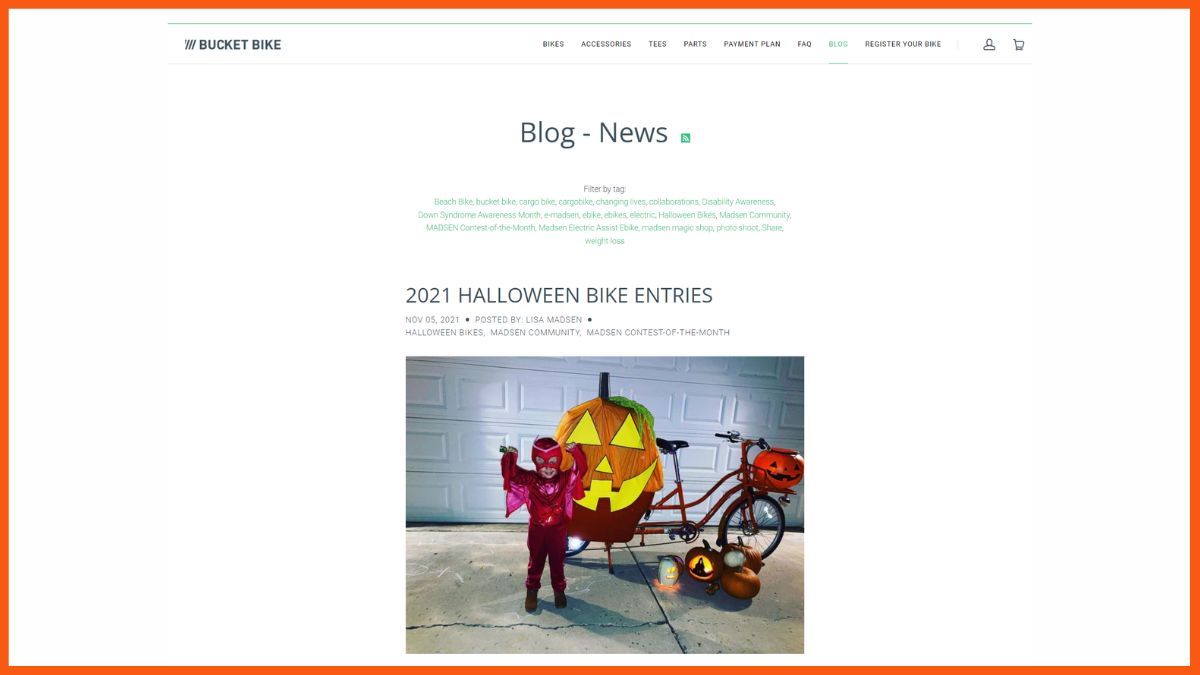
    An Example- The above image shows the blog page of a Shopify store Bucket Bike
    An Example- The above image shows the blog page of a Shopify store Bucket Bike

    The basic need for adding blog pages in your Shopify store is to increase organic traffic. Each store needs to be marketed in order to gain much popularity and sales. For the same reason adding a blog page can be a great idea.

    Shopify allows easy organization and management of Shopify blog pages. Shopify also allows a number of tools and options for the better management of the page. With all these services, adding a Shopify Blog page is a must for every store if they plan to attract customers by content marketing.

    Other Shopify Pages

    An Example- The above image shows an additional page of the payment plan from a Shopify store Bucket Bike
    An Example- The above image shows an additional page of the payment plan from a Shopify store Bucket Bike

    Multiple pages are essential to incorporate based on what you offer and your sector. You can also consider the following pages while you create your Shopify website.

    Members

    If you’ve more than one member working around the clock, creating a section with a picture of every staff, and their designation and impact on the company, can be a brilliant platform to thank your diligent staff and instill trust in your company. While I don’t advise “inventing” employees, there’s hardly anything inappropriate with highlighting anybody who contributes to the success of your business.

    Functionality

    If your marketing strategy includes any distinctive features, including a membership, it is an excellent spot to clarify your procedure. Other shops use this section to learn how their goods perform, mainly if they are distinctive or intricate. While this data is included on retail sites, creating a dedicated team can be very beneficial in terms of trust-building.

    Shipment

    If you’re trading tangible goods online, several folks will wish to learn how and when their orders will be supplied, so having a section that explains it can be useful.

    Special offers

    A consumer browsing for your brand with the words “special offers” or “vouchers” on a web browser is frequently a final hindrance to the payment page. As described here, some shops post links that cater to these lookups.

    Returns

    This column should likely be with the “should include” list, but because not all Ecommerce retailers are selling returnable goods, I include it here. Utilize it to clarify your return policy, and even when you don’t take back returns. You should also better articulate this policy.

    Why Use Shopify Pages?

    The process of adding pages on the Shopify store: Store setting-Online Store-Pages-Add Page
    The process of adding pages on the Shopify store: Store setting-Online Store-Pages-Add Page

    As previously stated, these sections create a favorable impression of your shop in the hearts of targeted consumers. Your shop can exude a proficient feel when high-quality illustrations are blended with perfect textual material, which, when blended with other aspects of your page, can greatly affect a transformation. It may also raise the effectiveness and notoriety of your webpage, which is generated by search engines.

    The real impact of performance and notoriety rating that are frequently ascertained by individuals assessing sites and deciding if they’ve well-thought-out material is debatable, as with several aspects of SEO. Given the resources needed to deliver creative substance, it’s easy to see how possessing high-quality sections on your page can become extremely relevant.

    Although if SEO experts don’t use the efficiency of these sections at all, it’s important to note the other perks, like gaining buyer trust. This means that possessing these sections won’t impact you either, as they offer useful, well-written material.

    Creating these types of intriguing sections inspires visitors to focus on them, and it’s a wonderful way of signaling to SERPs that your site has high-quality, pertinent goods and material.


    Top 10 Shopify Alternatives with amazing features
    Shopify is a popular platform for building e-commerce sites. Here is a list of Shopify alternatives to be considered in 2022.


    Conclusion

    As a virtual merchant, you must provide your clients with a personalized experience to which they can connect to persuade them to purchase from you. You can customize every aspect of your store with these Pages to focus on making it more user-friendly & consistent with your label. Create these pages in a way you wish to portray your brand to the potential and current customers. I hope this article was insightful to you.

    FAQs

    What are the pages in Shopify?

    In simple words, Shopify pages are the ones that will showcase the Shopify store details on the web page and through which a customer can interact with the store. They are web pages that give out information about the store and also allow the customers to visit the store in detail.

    What pages do you need on a Shopify store?

    The exact need for the Shopify store pages can differ for each individual. However, adding these five pages can complete the basic pattern of a store. They are the homepage, privacy policy page, product page, about us page, contact us page, and marketing page.

    Can we customize pages in Shopify?

    Yes, pages can be easily customized in Shopify.

  • Customer Acquisition Cost By Industry | How to Calculate CAC?

    I’m sure you know that your customer acquisition cost (CAC) is the price you pay to convert a lead into a customer. And for most companies, that’s a pretty huge expense. According to a 2017 CMO survey, businesses spend over 11% of their total company revenue on marketing. The CAC metric is important to two parties: companies and investors. The first party includes outside, early-stage investors who use it to analyse the scalability of new Internet technology companies. They can determine a company’s profitability by looking at the difference between how much money can be extracted from customers and the costs of extracting it.

    The other party interested in the metric is an internal operations or marketing specialist. They use it to optimize the return on their advertising investments. In other words, if the costs to extract money from customers can be reduced, the company’s profit margin improves and it makes a larger profit. In this article, you will get to know about some CAC benchmarks for different industries.

    How to Calculate your Customer Acquisition Cost?
    Customer Acquisition Costs by Industry
    Cost per Acquisition on Google ads
    Cost per Acquisition for Facebook Marketing
    Cost per Lead for B2B Marketing Channels

    Flaunt your startup with StartupTalky 

    800+ stories, thousands of founders, and millions of visitors. Want to be the next?

    StartupTalky is where founders, entrepreneurs, startups and businesses hang out and look up to for inspiration. If you have the means, we have the medium! Inviting founders and startups who are building sustainable solutions from ground zero! Startups who run the show, StartupTalky will let the world know!

    Request Feature at StartupTalky

    How to Calculate your Customer Acquisition Cost?

    LTV should be 3x CAC
    LTV should be 3x CAC

    Basically, the CAC can be calculated by simply dividing all the costs spent on acquiring more customers (marketing expenses) by the number of customers acquired in the period the money was spent. Consider a SaaS company that spent $125,000 on sales and marketing in a month, including salaries, commissions, ad spend and trial support. 50 new customers were signed up during the same month. In this case: CAC = $125,000/50 = $2,500.
    Congratulations! You’ve calculated your CAC.

    But here’s the thing: knowing your customer acquisition cost is fairly meaningless if you’re not comparing it to the lifetime value. You want to see a LTV three times higher than your CAC.

    Balance between CAC and LTV
    Balance between CAC and LTV

    A higher ratio than 3x means you could actually be growing faster if you invested in the right channels. Anything lower than 3x means you need to be exploring these options for either growing your LTV or lowering your CAC.

    How to calculate & Track Customer Acquisition Cost

    Customer Acquisition Costs by Industry

    Customer Acquisition Cost by Industries
    Customer Acquisition Cost by Industries

    Customer acquisition cost varies across industries due to a number of different factors — including, but not limited, to: Length of sales cycle, Purchase value, Purchase frequency, Customer lifespan, and Company maturity.
    Here’s a rundown of average customer acquisition cost by industry:

    • Travel: $7
    • Retail: $10
    • Consumer Goods: $22
    • Manufacturing: $83
    • Transportation: $98
    • Marketing Agency: $141
    • Financial: $175
    • Technology (Hardware): $182
    • Real Estate: $213
    • Banking/Insurance: $303
    • Telecom: $315
    • Technology (Software): $395.

    7 Best Chatbot SaaS Tools You Need To Know In 2021
    Here is a list of the most popular Chatbot SaaS Tools for your website and other platforms – Chatfuel, Chatbot, Botsify, Zendesk, and many more.


    Give your organic rankings the desired boost with the Help of 99Outreach SEO Services

    Why Choose Team 99Outreach?

    Guaranteed Satisfaction | In-house content creation | Team of experts

    Get Started

    Cost per Acquisition on Google ads

    CPA on Google ads
    CPA on Google ads

    To many, Google Ads is still the most effective ingredients in their digital marketing mix, allowing you to widen your reach and promote your product to millions of users. In terms of averages, CPA is lowest in the auto industry, which acquires new customers at only $33.52 a head, while the tech industry spends a whopping average of $133.52.

    Cost per Acquisition for Facebook Marketing

    CPA for Facebook Marketing
    CPA for Facebook Marketing

    In marketing circles, Facebook is considered the most important platform for both B2C and B2B businesses. In fact, the social platform already has 80 million business pages online – and numbers don’t seem to be slowing down. There are more stats, of course. 78% of Americans discover new products through Facebook and 30% of marketers believe it has the highest ROI of all digital ads. As for average cost per acquisition numbers, education gets a big bang for its buck by paying only $7.85 per customer, in contrast, of course with tech’s $55.21.


    11 Best Sales Intelligence Platform & Tools | Sales Solution
    Companies use sales intelligence software to improvise on the quality & quantity of sales leads. Check these 11 best sales intelligence solutions


    Cost per Lead for B2B Marketing Channels

    CPA for b2b channels
    CPA for b2b channels

    One of the most common B2B lead generation channels is email marketing. On average, a lead from email marketing costs $53. On the high end, a lead can cost around $72, and on the low end, around $33.

    If you’re a B2B business that targets medium to enterprise-level clients, LinkedIn advertising can be incredibly effective. On average, a lead from paid LinkedIn advertisements costs $75. On the high end, a lead can cost around $99, and on the low end, around $51.


    Top 5 Most Effective Marketing Channels for SaaS in 2021
    If you are looking to market your SaaS products in 2021, here are 5 most effective Marketing Channels for SaaS to get high quality leads.


    Conclusion

    A Good Customer Acquisition Cost varies by the industry and tactics used. But a good way to benchmark your CAC is by comparing it to Customer Lifetime Value (also known as LTV). It is said that an ideal LTV to CAC ratio is 3:1. We hope these cost per acquisition averages assist you in making better marketing decisions in 2020.

    FAQs

    What CAC means?

    Customer acquisition cost (CAC) is the cost incurred to acquire a new customer.

    What is considered a good CAC?

    A ratio of LTV/CAC greater than 3 is considered good.

    How do you predict CAC?

    CAC is calculated by dividing marketing expenses by the number of customers acquired in the period the money was spent.

    What is average customer acquisition cost by industry?

    Average customer acquisition based on industries are:

    • Travel: $7
    • Retail: $10
    • Consumer Goods: $22
    • Manufacturing: $83
    • Transportation: $98
    • Marketing Agency: $141
    • Financial: $175
    • Technology (Hardware): $182
    • Real Estate: $213
    • Banking/Insurance: $303
    • Telecom: $315
    • Technology (Software): $395
  • Here Are The Best Ways To Deal With Your Angry Customers

    No matter which business you are in, If you are working, there is a chance that you will have to face angry or dissatisfied customers. But many company representatives try to avoid the problem and just recite the “company policies” again and again, which is not what an angry customer wants to hear .

    The dialogue of an angry customer leads the employees to become so frustrated that they use an unapologetic tone in the place of regret. Then the customer will feel like no one is listening to him and also that the customer is being ignored. This will lead to the company’s bad image in the customer’s eyes which is a bad thing for the company.

    If you are thinking to handle this situation wisely and winning over your customer. Then you should read this article, below are the given tips on how to deal with angry customers and also on how to calm down an angry customer.

    Recognizing The Value of A Complaint
    Listen To Angry Customer
    Show Empathy
    Keep A Positive Tone of Voice
    Use The Customer’s Name
    Try to Build And Maintain Trust
    Don’t Take It Personally
    Avoid Negative Language
    Find The Solution
    Share The knowledge
    Frequently Asked Questions


    CultFit Eclipses Online Giants in RedSeer Survey on Customer Satisfaction
    Redseer Consulting has earlier conducted a survey on the impact of customerloyalty and satisfaction on the brand value of a company. The Consulting firmpublished the study revealing that the e-commerce giant Amazon and ride-hailingapp Uber have outshone their rivals, such as Flipkart and Ola, in …


    Recognizing The Value of A Complaint

    If you are dealing with an angry customer could be a great opportunity for you to turn the situation into a good situation. How you behave to the customer can make or break the perception of your company. Dealing with angry customers is hard, but instead of going away from the situation, you can use the situation to improve your product and build a great relationship between you and the customer.

    According to research, 91% of unhappy customers do not actually communicate to companies that they are not happy with the product. Complaints from angry consumers serve as new insights that can help improve the company’s performance.

    facts on angry customers
    facts on angry customers

    Listen To Angry Customer

    If you also want to handle an angry customer in an effective way. So how to calm down an angry customer? The very first thing you can do is use active listening. Active listening refers to concentrating on every part of what the customer is saying so it can be clear about why they are upset with the product. Most people do not listen with the intention to understand but they listen with the intention to reply.

    For diffusing angry customers, you should be present and give the customer your attention. Focus on the words that the customer is saying and avoid the anger behind their words. To show them that you are actively listening, repeat their complaint again and ask clarifying doubts. Try not to interrupt them, this can be the most effective to handle the situation. Listeninging to them carefully will also help you with what to say to an angry customer next.

    Apologize

    In winning your customer’s heart, an apology is a very must thing you should do to make them feel good. An apology for the problem they are having with your product. Dealing with an angry customer is hard, but you can start by acknowledging the mistake and letting the angry customer know that you are sorry for the problem that occurred.

    First thing one should know on how to handle angry customer is by offering your sincere apologies. A thorough apology shows the customer you care about the situation and their problem. Give them a brief explanation of what you have understood about the problem. Try to keep the explanation short.


    Examples of Great Customer Service by big companies like Amazon, Spotify, etc.
    Great customer service is one of the most important aspects of the business. Wehear a lot of stories and there occurs a huge amount of negative coverage aboutcompanies that deliver poor customer service, and we don’t hear a lot aboutcompanies who are doing it right. At this age, it is essential t…


    Show Empathy

    Showing empathy to your customers will help you guide your response to dealing with angry customers over the phone. Empathizing does not mean agreeing with whatever the customer is saying. It generally means you are understanding the customer’s situation.

    By this, you can know how the customer is feeling. And now you will be relating to their problem at a personal level. This will basically show them that you respect them and you are listening to them.

    Keep A Positive Tone of Voice

    While talking to that angry customer, do not let the frustration enter between you two. This will be better for your conversation with your angry customer. In many examples of angry customer situations the employees may use negative words to match their tone of voice. This is not how you deal with an angry customer, as it will mess up everything. It’s very easy to argue with someone, but it’s hard to keep calm and to understand the situation calmly. You need to use a more productive way of conversation while handling angry customers.

    Many employees don’t know how to calm down an angry customer. So before making your customers calm, you should maintain your calmness and take a moment to think about your answer. This can make the situation better than before. Think about your response to ensure any type of aggressive language. If you have enough time then take your time and come back to a better response. A small break will help you overcome the situation without any negative words.

    Use The Customer’s Name

    Using someone from their name can leave a strong impact on the person. So how would you handle an angry customer? The first thing you need to do is use the customer’s name will make them familiar with you. They will feel comfortable while interacting with you. This will lead you to a personalization level in the interaction. Using a name shows you care and you are a real person and also that you respect them. Try to use angry consumers name occasionally. Addressing them by their name too much can let you in a very awkward situation.


    FoodPanda (Ola) – Are you Listening to Your Customers? 🐼
    India is a market where our homegrown companies are competing fiercely withmultinational giants. For Ola [https://startuptalky.com/startup-story-ola/] there is Uber, for Flipkart there is Amazon and Swiggy is competing withubereats. One thing which greatly differentiate Indian companies from MNCs…


    Try to Build And Maintain Trust

    When a customer is angry with your company, it’s obvious that the trust between the company the customer has been damaged. Now it’s your task to rebuild and try to maintain the trust moving forward. If you have made a mistake, just acknowledge that and do not argue with angry customers on the phone.

    When handling an angry customer, make sure you have all the history of that customer. This will help you in communicating confidently and that you are capable of solving the problem. If your not sure on what to say to an angry customer you should start by being honest with the customer.

    Give them some behind the scenes view of things so that they can understand your situation too. Many examples of dealing with angry customers show that taking the responsibility for the mistake have calmed angry customers.

    How To Win Trust

    Don’t Take It Personally

    Always keep in mind that this is a part of your work and not your personal life. The customer is not complaining to you but to the company. Many angry customers scenarios show that had their expectations from the company, but are now they are feeling cheated by the company. If you will take it personally situation will go out of your hand. It will affect your overall quality of work and mental health.


    How much money do companies spend on Market Research?
    Big companies spend nearly 5-10% of their annual revenue on market research as it provides a deeper understanding of their customer and competitors.


    Avoid Negative Language

    If your company is the one who is handling an angry customer. Then your company team must know how to deal with angry customers face to face and should be skilful in the way they talk to the customers. Negative words and ways of talking will increase the anger of the customer and positive language will calm down the customer. Try to avoid languages that imply that the customer is accusing wrong. Using positive words will turn a worse situation into a good situation. Try to use words such as “yes”, “absolutely” etc.

    Find The Solution

    While handling your angry customer, the very main goal you have is to resolve their issue. Try to resolve it if something that you can do immediately to solve the problem. And if not, let them know that there is nothing you can do about it. And also you need time to solve the problem. Another important thing you must know on how to deal with angry customers is that you should give them an approx amount of time to which will take to solve the issue.

    Be honest with the customers, try to meet the time you gave to the customer. If not then let them know that you need more time than this. Doing this will enhance your relationship with the customer, while the dialogue of an angry customer will also change. If you can not solve the problem on your own, try to connect to your company’s senior members. Handling angry customers this way will help you to solve the problem very fast.

    You may have more experienced members in your customer service group that will help you in solving the issue very fast. The very most important thing you should do is let the angry customer know that you are trying to solve the issue, and it will be solved very soon.


    Everything You Need to Know About Toll-Free Service Providers
    #toll-free service #toll -free


    Share The knowledge

    If you will think carefully angry customers help us a lot in improving your company. They point out the root cause of their problem and help in improving your operational changes. It will be better if you keep the feedback from your angry customer. This way you can get help in diffusing angry customers and keeping the customers happy.

    Conclusion

    This is true that handling angry customers is a bit difficult task to do, but it’s not impossible. The main thing you can do only is to let the customer speak and you should communicate with them with respect and empathy.

    Try out these tips for handling angry customers or strategies for dealing with difficult customers. You will be able to turn a negative situation into a positive one. And also, you will build a better relationship between the company and the customer. Hopefully this article helped you understand on “how would you deal with an angry customer?”


    Success Story of Observe.AI – Voice AI for Customer Care
    With all the buzz about the modern technology with AI and VR that seem to betaking the world by surprise one after another, it has become imperative forcompanies to keep up with these trends and make the most of it. To sufficientlyprovide a solution to this, Akash Singh, Sharath Keshava Narayana,…


    Frequently Asked Questions

    How to Deal with Angry Customers?

    1. Remain calm.
    2. Practice active listening.
    3. Repeat back what your customers say.
    4. Thank them for bringing the issue to your attention.
    5. Explain the steps you’ll take to solve the problem.
    6. Set a time to follow up with them, if needed.
    7. Be sincere.
    8. Highlight the case’s priority.

    How to handle angry customer in difficult situations?

    1. Coping With Difficult Situations.
    2. Remember, Distress is Time Limited.
    3. Put the situation into perspective.
    4. Keep your thoughts Balanced and Truthful.
    5. Focus less on the stressor and more on Solving the Problem.
    6. Remember, You Are More Than This One Situation.
    7. Seek support from Family, Friends and/or Counselors.

    How to deal with an angry customer?

    • Stay calm.
    • Shift your mindset.
    • Acknowledge their distress.
    • Introduce yourself.
    • Learn about the person you are talking to.
    • Listen.
    • Repeat their concerns back to the customer.
    • Sympathize, empathize and apologize.

    What is the best strategy to use in dealing with angry customers?

    If the customer gets louder, speak slowly, in a low tone.  As you approach the situation with a calm, clear mind, unaffected by the customer’s anger, their anger will generally dissipate.

  • How To Reduce Customer Friction in Your Startup?

    Customer friction is caused when the customers feel hesitant to buy goods or services or are unhappy with your company. Friction is something that slows down the customers or they lose interest in your products and services. Friction arises because of numerous flaws in the product or design or delivery. This will lead to poor customer service. ‌‌

    An example of customer friction is that when you are a software company and the app developed by you is in trouble. The company’s website has chat-bots which instantly gives solution for the problems faced by the customers. A chatbot is a solution for customer friction which otherwise need the customers to make a call to the customer care who does not respond quickly. ‌‌

    According to the survey, 84% of customers say the experience a company provides is as important as its products and services. ‌‌

    Friction can be reduced when you make the business as easy as possible for the customers. This is when you will increase the customers and retain the existing customers.‌‌‌‌

    How to reduce customer friction?
    Conclusion
    FAQs

    How to Make Customers Loyal?

    How to reduce customer friction?

    Understand the customers’ need

    In the business, As a first step, understanding customer’s problem is important. Know who your buyer is and what they are looking for. When you identify the customer’s needs and understand what they are expecting from you, then you will reduce the customer friction and make their experiences will be more pleasing.


    How BNPL is Transforming Customer Purchasing Behavior
    BNPL (Buy Now Pay Later) is gaining popularity as a payment mode. Let’s see what Mr. Nityanand Sharma, Founder & CEO of Simpl has got to say on the BNPL Mechanism


    Happy employees create happy customers

    A business is successful when they have happy employees. It is the responsibility of a business to prepare their employees well so that they can clearly explain and brief it to the customers. This type of clear human interaction will reduce frictions. The employees will also know the skill to satisfy the customers with theirs needs. When the employees are made comfortable they in turn help in increase the business by understanding the customer’s needs. When the employees are happy, the customers are also happy. ‌‌

    Improve customer Interaction

    Improving Customer Interaction
    Improving Customer Interaction

    Lack of customer interaction is the major cause of customer friction. If you want your customers to invest more in your company or brand, then it is important to improve your company’s website, train your employees well as they represent your company’s pride and create informative posters. Whether it is online or offline, provide a helpful platform for your customers to directly interact with your products or services.‌‌

    Maintain quality design

    It is important to have a well-oriented and clutter-free website or an interface that will allow customers to show more interest in your company or brand. When you have a clear web design that equalizes the market standards, half of the friction is reduced. When a company provides many useful ways to stay connected with your product like pamphlets well-informed websites, et cetera this will ease the customer friction and increase your business. ‌‌

    Use persuasive content

    The content must be clear and to the point, where it is a website or social media or blog. Proper content will answer many of the questions of customers and they show more interest in your brand or product. There must be a clear call to action that will lead the customers to additional information or the opportunity to buy your products. ‌‌

    Answer the questions before they ask

    Having good communication with the customers is the best way to serve your customers well. Communication means having real-time notifications about the purchases, shipping and follow-ups to make sure that your customers are satisfied with your products or services. Also, place a FAQ section on your website which will help the customers to know more about your company and its products. ‌‌

    Taking the feedback

    When people buy your products, ask them for their valuable feedback. Feedback also give insights into the customer’s satisfaction. You can improve your weak points and serve your customers with the best quality of products. You can also make customers interview to understand their pain points and try to fill those gaps. In this way, you can remove the customer friction completely and focus on building your brand/company.


    Customer Testimonials | How to get Customer Testimonial?
    A customer testimonial is a recommendation from customers satisfied with your product & service. Read to Know how to get Customer Testimonials.


    Follow-up with the regular customers

    Regular customers are the best source to know about the hindrances created by any of your products/services. On this basis, you can improve the defective areas and reduce customer friction. If you follow up with these customers they will identify the changes exactly and also help to boost the word of mouth marketing.

    Conclusion

    Customer friction lowers your brand and also affects your business. Following the above strategies will help your company to have happier and loyal customers. When a company or business reduces the frictions, it will decrease your unnecessary investments in other things, increase the purchasing base for your customers.

    The digital world has eliminated the global barrier, thus it is important to make your process and information as simple as possible to reach out to a more customer base. Simplifying the content and website is very important as research says that- “78% of customers cancelled their orders/purchases because they were not happy with the company’s services”. So invest in good website design, train your employees well, attract more customers by reducing customer friction as ‘word of mouth marketing is still a KING’.

    FAQs

    What are the other frictions that reduce your customer base?

    The friction varies from business to business. Some of the common customer frictions are poor website quality, poor customer service, limited business hours, negative reviews, improper content and many more.

    What is the difference between customer friction and poor customer service?

    Customer friction is caused by flaws in the product or its process. This will reduce the customer base. Whereas poor customer service is a service that does not meet the customer’s needs. An increase in customer friction leads to poor customer service.

    How to improve customer satisfaction?

    There is a number of ways to track your customer needs and serve better. Few are taking feedback, conducting customer interviews, create customer journey maps etc.

    ‌‌

  • Neuromarketing For Startups: Guide To Grab Customers | Tools Used In Neuromarketing

    Long ago neuromarketing was limited to multinational companies with high budgets. But today any business irrespective of size and budget is capable of using human brain waves to increase the profit.

    Neuromarketing is also called consumer neuroscience. This helps in understanding the consumers’ behavior by reducing the uncertainties. Neuromarketing studies the human brains to manipulate their behavior. It was earlier considered as a frontier science but from the past few years it has reinforced the market with the capacity to boost the consumer base.

    Even after knowing its potential and some ground-breaking results, there lies numerous questions in the minds of people like, Is it worthy? How to implement it effectively? What are all the tools required? The solution lies in understanding the technology and knowing its utility even in the future.

    Neuromarketing sways the human brain by understanding the process behind it. It is now a buzzword as every business uses this science to influence consumers’ choice and understand their preferences.

    How to hook new customers by applying Neuromarketing?
    Tools Used in Neuromarketing
    Examples of Neuromarketing
    Conclusion
    FAQs

    About Neuromarketing

    How to hook new customers by applying Neuromarketing?

    Attract Customers using Neuromarketing
    Attract Customers using Neuromarketing
    • To promote a product or service just have content that taps the emotions of the customers’ so that your content goes viral. According to ‘Buzzsumo study’ 100 million and more content is driven by the emotions of people. It is observed that people tend to share more when they get emotionally connected with the content.
    • If you want to grab the attention of the consumers then it is advisable to place some important information or ads on the left side of the page. This is because a study says that consumers tend to read the webpages in the ‘E’ or ‘F’ manner.
    • To excite the customers use anchorings like pop up with some audios or videos through an alert sound. So that the buyers do not miss out on the offers. The word FREE also excites consumers to pay attention to that product or service.
    • Did you know that humans gravitate toward fear or danger. For example, if you put in the sales may end soon, Out of stock, limited offers and so on. It is driving your customers for an immediate action.
    • The Corporates can also concentrate on improving the webpage design, colour and other features which attracts the consumers to visit the site and also go through it.

    26 Unique Ways to Market Startups
    Marketing is the key to make your products, the talk of the town. Let us see all the 26 unique ways to market startups.


    Tools Used in Neuromarketing

    Tools used in neuromarketing
    Tools used in neuromarketing

    Neuromarketing is a science to understand the psychology of consumers’ buying activities and preferences. This consumer analysis can be made using Brain scanning and psychological tracking.

    The two foremost tools for scanning the brain are fMRI and EEG.

    • Functional Magnetic Resonance Imaging measures the changes happening in the brain’s blood flow to examine the consumers’ behavior.
    • Electroencephalogram is the only technique which measures the brain activities directly at the speed of cognition. The fMRI technique is expensive to use.

    Psychological tracking is a cost-effective tool, this measures eye movement and other activities.

    • Eye tracking is associated with visual attention along with the emotional response of the customers.
    • Facial tracking includes various aspects like heart rate, respiration rate and the skin conductivity.
    • Biometrics will measure the customers’ engagement with positive or negative responses.
    • Facial coding is used to measure facial expressions like fear, anger, happiness, surprise and so on.

    List of Top Facial Recognition Startups emerging in 2021
    Facial recognition technology is used for identification & verification in many Industries. Here is a list of top facial recognition companies.


    Examples of Neuromarketing

    • Paypal  – It used brain waves to understand that customers’ relied more on speed than safety and security. For this, Paypal implemented an effective ad campaign.
    • It is observed that customers’ brains work on various factors. Once a researcher’s team tested by serving Pepsi and coca-cola with fMRI technique. The response from the customers’ was plain and harmonious. On the other hand when they recognized the brand the brain started responding with various emotions and expressions.
    • Another team of researchers served the customers’ with three different wines with different price tags. Though the taste of the wines were the same but because of the different prices, the customers’ started thinking differently. The researchers could observe two different calculations before and after the prices were displayed. This experiment was again based on the fMRI tool.
    • Creating good web design will lead to quality improvement and trustworthiness. This was observed when customers were asked to rate a webpage on the quality and trustworthiness. Irrespective of time taken by different customers’ maximum of them were driven by good web design. The creative design will attract the customers and also increases the confidence within the customers’
    • Everyone of us likes to listen to stories, doesn’t it? The London University compared the audio and video for a combination of movies/ books and the result was only 15% of people showed the internet in the video part and there was shockingly more votes for audio/podcast. By listening to the audio the emotions of the customers’ rose.
    • Yahoo Yahoo wisely used neuromarketing technique that is EEG. It showed happy faces in enjoying mode in a 60 seconds TV Commercial. This was a ad campaign to stimulate audience across the world. The neuro test was successful as emotions and different thoughts attracted more audience into search engine.
    • Hyundai – This company too used EEG technique of neuroscience to examine its designs. Hyundai allowed audiences to get to know about their car prototypes. By this the company understood the choices of audiences and changed some external design according to audience preferences.

    Conclusion

    Neuromarketing is a fast flourishing technology to rocket our profits by analysing the brain’s response to various factors. It gives insights into consumers’ brains based on their preference and choices. Neuromarketing is a scientific dimension to the marketing and advertising part.

    FAQs

    How useful is Neuromarketing to understand consumer Insights?

    Neuromarketing helps to understand consumer’s emotions, behavior and cognitive states. This technology complements traditional marketing.

    What are the applications of Neuromarketing?

    The common applications are Branding, Advertising, product testing, packaging, Point of sale and many more.

    What are the techniques used in neuromarketing?

    Techniques used in Neuromarketing are:

    • Eye tracking
    • EEG or fMRI
    • Facial coding
    • Mind tricks
    • Sensory marketing.

    When was Neuromarketing introduced?

    The research in this field started back in the 1990s. Gerald Zaltman is the first person to begin the experiments associated with neuromarketing.

  • How to Generate Leads from LinkedIn?

    For many B2B SaaS businesses, LinkedIn is the place to be. If your product is used by enterprises, mid-market companies or even entrepreneurs or consultants, it’s very likely that your ideal customer is a regular user of LinkedIn. LinkedIn generates over 80% of B2B leads on social media. Moreover, 91% of executives consider LinkedIn a top platform for relevant and quality content as well as for B2B marketing and B2B sales opportunities.

    The reason LinkedIn works so well for B2B SaaS companies is because you’re not guessing who’s on the other end seeing your ads. The ability to see the industries, companies, and job titles of your audience is a huge advantage in the B2B space. At times you might be paying triple the price, but you’re also likely to be much more confident that the right person is seeing your ad.

    LinkedIn
    LinkedIn

    What is key for generating your B2B leads on social media is to be active. Spending the time to create a LinkedIn profile for your company, and simply letting it stand there on its lonesome, well, is simply time that you have wasted. You need to be active on your social media outlets, or potential leads will be instead noticing your active competitors.

    Few Tips to be Active on LinkedIn, and Generate More Leads
    Where B2B SaaS Companies go Wrong with LinkedIn Ads
    SaaS Companies Need to Keep in Mind with LinkedIn Ads
    How to Start a Pay-per-Click campaign on LinkedIn

    Few Tips to be Active on LinkedIn, and Generate More Leads

    • You know how you log in and you are notified on how many people have viewed your profile? Click on theirs. They will be notified that you have noticed them. Interest begets interest.
    • Send a message after viewing their profile. It could be as brief as “Hello, let’s talk about how we can help you.” Whatever you send, you’ve engaged with this potential customer, and thus turned them into a qualified lead.
    • Use your own personal profile and take advantage of LinkedIn Publishing Platform.
    Stay active on LinkedIn
    Stay active on LinkedIn
    • Write content that reflects your awareness and experiences in the B2B industry, and what has made your company successful. Writing tips and tricks for others to apply for their own success is also marketing your company to potential customers.
    • Using your own personal profile lends a face to your company’s name, and people are much more willing to buy from a person rather than a faceless brand.    

    Where B2B SaaS Companies go Wrong with LinkedIn Ads

    1. Budgeting: They don’t give LinkedIn ads enough of a budget to be successful.
    2. Targeting: They set up targeting that’s too specific (e.g. targeting a single job title).
    3. Content: They deliver content that doesn’t fit the mindset of their target customers when they’re using LinkedIn.

    “The costs of advertising on LinkedIn are too high to make it worth it.”
    This is a common misconception that companies make from a lack of testing. If you’re in the B2B space and you don’t at least test LinkedIn ads, you can’t know for sure that you’re using the optimal channel to drive leads. You might be missing out on a significant opportunity if LinkedIn is actually a good fit, but you simply don’t know because you’ve made the assumption that it won’t generate a return.


    Everything you need To know about Retarget Marketing| How Does Retargeting Works
    You might be able to attract a lot of traffic to your website. But unless youare just dependent upon the earning from advertisements on your website, thattraffic means nothing to you. If your visitor is not converting into yourcustomer, that traffic is just a group of people. But to convert those…


    SaaS Companies Need to Keep in Mind with LinkedIn Ads

    Budgeting

    LinkedIn requires more budget than other platforms to be successful. If you give it the same budget as your Google ads campaigns, you aren’t likely to see the equivalent amount of leads—but don’t assume that this means LinkedIn won’t work for you.
    When you look at the “bigger picture” of things, you may be getting fewer leads, but they’re generally better-quality leads. Your cost per acquisition at the end of the day can be the same, if not better. This is why evaluating lead quality (not just quantity) is an important factor with LinkedIn advertising.

    Targeting

    The common mistake with targeting is that companies get too specific. For example, if you decide you want to target landscape designers, you might tell LinkedIn to only show your ad to people with that job title. But what about “landscape architects”? Or “landscaping consultants”? There are so many cases where there is a wide variety of potential job titles that could fall into the category of your target customer.

    To cast a wide net, you should give LinkedIn a broad title to work with. This causes LinkedIn to show your ads to a range of job titles or levels of job seniority in a given space. You want to give LinkedIn a direction and a guardrail and see what results come in. Then you can see the job titles, industries, and company names of the LinkedIn users who are actually clicking and converting, and use that data to refine your targeting as you move forward.

    Budgeting, targeting and content.
    Budgeting, Targeting and Content

    Content

    The piece of content in your ad needs to match the mindset of your target customers when they’re using LinkedIn, who are mostly in a browsing or networking mindset (not a purchasing mindset). B2B marketers who get this wrong fall into the trap of thinking that because this is a professional social media network and people are on there for a business-related purpose, they can get “straight to business” by offering a trial or demo of their SaaS up front.

    If your SaaS requires a relatively small investment and you offer a free trial with no credit card, this approach of going straight for the offer can work. But in many cases, especially when your goal is demos and your SaaS require significant investment from a customer, a softer trust-building approach works better.

    How to Start a Pay-per-Click campaign on LinkedIn

    An excellent way to use LinkedIn ads is to promote your landing pages. By creating targeted ads around the pain points your content solves, you can generate many leads with paid LinkedIn ads, cost effectively. Setting up a LinkedIn advertising campaign is pretty simple. LinkedIn give you tips as you go along, and hold your hand throughout the process.

    Pay-per-click campaign
    Pay-per-click campaign

    It helps to be able to write great copy, and it’s a great idea to be constantly experimenting with new ad text, different target personas and images to see what works best. Start with a low budget, and increase it as you begin to generate results.

    Generally, it’s fairly under used. For high ticket B2B sales, LinkedIn ads should be able to deliver an excellent return on investment. LinkedIn has over 70 million registered users worldwide, of which 50% are business decision makers in their company.

    Recommendations to get your Targeting Right

    1. Create content that offers value and messaging that meets the target customer where they’re at (on LinkedIn)
    2. Design and develop a landing page funnel
    3. Set up follow up email automation
    4. Upload current customer data
    5. Upload target account list
    6. Monitoring LinkedIn ad performance and remarketing
    7. Target people who are most likely to use your product (or, in our case, initiate using it in the company).
    8. Add a short-personalized note to each invitation to improve your chances for success.
    9. Ask for a permission to send a link to the survey (or any other favor you want them to do) before you actually do it.
    10. Be ready to do your leads a favor in return (be it testing their product or helping them connect with some of your valuable contacts).
    11. Don’t forget about your existing connections. Start with your established network on LinkedIn before you go looking for new contacts — it usually requires less effort, yet results in a much higher conversion rate.

    Conclusion

    All in all, LinkedIn has been a very valuable resource in terms of lead generation. Moreover, connecting and communicating with people on LinkedIn not only expands your network and provides you with quite a few leads, but it also gives you priceless feedback that is crucial at the beta stage.
    So, get on LinkedIn now and start expanding your reach and let us know your experiences in the comments section below.


    How to Use LinkedIn for Marketing your Business in 2021?
    LinkedIn is widely used by people across the globe to seek job employment andis, therefore, home to several recruiters. LinkedIn can be used to makeconnections for generating leads, establishing partnerships, and creating betterbrand awareness. Using LinkedIn for marketing is an extremely impactf…


    FAQs

    What is LinkedIn?

    LinkedIn is a social network that focuses on professional networking and career development. You can use LinkedIn to display your resume, search for jobs, and enhance your professional reputation by posting updates and interacting with other people.

    How to convert leads on LinkedIn?

    • Turn your company page into a lead generation page
    • Create a Showcase page
    • Use Advanced Search
    • Save searches
    • Search Groups
    • Start groups
    • Publish content

    How to get business leads on LinkedIn?

    • Optimize your profile for connecting
    • Target the decision makers
    • Follow up with old leads before targeting new ones
    • Put lead generation on autopilot with content marketing
    • Stop harvesting cold leads
    • Craft a convincing opening message
    • Go premium

    How to Hire CTO – Finding The Right CTO For Your Startup
    This article was contributed by Roopa Kumar, Co-founder Purple Quarter. It wasn’t that long back when top-rated companies were vying with each other tohire the best CEO. Fast forward to the present economy where technologydominates, and one in which the CTO (Chief Technical Officer) has taken the…


  • Types of CRM

    What is a Customer Relationship Management System?
    What does a CRM System do?
    Why have a CRM System?
    Do I need a CRM System?
    Types of CRM:
    Operational CRM
    Analytical CRM
    Collaborative CRM

    What is a Customer Relationship Management System?

    A customer relationship management (CRM) system is an IT technology that allows you to manage the business relationships you have with your customers, service users and suppliers. Customer relationship management (CRM) is important in running a successful business. The better the relationship with your customers and suppliers, the easier it is to conduct business and generate revenue.

    In continuously growing competitive market, it is very much important for a business to share right information to the right person at the right time, otherwise business will lose its opportunities to sale products or services. Customer Relationship Management software is the only solution that can help business to communicate with prospects or customers properly. For any CRM application, primary goal is to enable an organization to understand customers’ need and behavior and provide better quality of service. It helps to retain existing customers and capture new opportunities by building a strong relationship between an organization and customers. CRM can analyze data and generate reports whenever required.


    Validate your SaaS idea before building MVP
    The best way to validate a SaaS [https://startuptalky.com/tag/saas/]idea before building anMVP is to have the problem that you are solving for. Especially in SaaS, becauseyou aren’t looking to create another entertainment platform, but instead solve abusiness need for a customer [https://startuptalky.com/tag/customer-satisfaction/…


    What does a CRM System do?

    CRM is a software or a tool that provides a central place for storing all your customer data and sharing it with other teams within your business. There, you can create records and track the history of all your interactions with the customers, including: phone calls, emails, meetings, presentations, service inquiries, leads, purchasing habits and preferences. As well as tracking contact history, in most CRM systems you can also:

    • add notes
    • schedule follow-ups
    • assign tasks to staff
    • generate reports and sales forecasting

    Why have a CRM System?

    Customer Relationship Management
    Customer Relationship Management

    With all your information collated in one place, it becomes easier to understand and anticipate the needs and behaviors of your customers. This, in turns, allows you to:

    1. Keep customer contact relevant, personal and up-to-date
    2. Modify your business to better serve your customers
    3. Identify new leads and sales opportunities
    4. Win new business

    In essence, CRM can help you to recognize the value of its customers and to capitalize on improved customer relations. The better you understand your customers, the more responsive you can be to their needs.


    How to Improve Landing Page Conversion?
    Landing Page is an opportunity for the company to tell the most important thingabout their products and services within a few seconds, and for a potentialclient – to make sure that it has hit “bulls eye”. Besides, it is a powerfultool for converting traffic and generating leads. The complexity of…


    Do I need a CRM System?

    Not all businesses need a full CRM system. If you typically have very few leads and no repeat business, the costs of an enterprise level CRM software may outweigh the benefits. Find tips to help you decide if your business needs a CRM system.

    Even the best CRM system will need to be properly managed, if you are to make the most of its features. Without good management, significant challenges can arise – such as creating duplicate records and accumulating vast amounts of incomplete, unnecessary or out-of-date data. It’s important to consider the potential drawbacks of CRM systems. Technology can greatly help you to optimize your CRM and make your service more efficient, cost-effective and reliable.

    Types of CRM:

    There are mainly three types of CRM applications – Operational, Analytical and Collaborative to perform all these activities.

    3 main types of CRM
    3 main types of CRM

    Operational CRM

    Operational CRM streamlines the business process that includes Sales Force automation, Marketing automation and Service automation. Main purpose of this type of CRM is to generate leads, convert them into contacts, capture all required details and provide service throughout customer life cycle.

    Operational CRM
    Operational CRM

    Sales Force Automation

    Sales automation helps an organization to automate sales process. Main purpose of sales automation is to set standard within organization to acquire new customers and deal with existing customers. It organizes information in such a way that the business can meet customers’ needs and increase sales more efficiently and effectively. It includes various CRM sales modules like lead management, contact management, Quote-to-Order management, sales forecasting.

    SFA is the application of technology to manage selling activities. It standardizes a sales cycle and common terminology for sales issues among all the sales employees of a business. It includes the following modules −

    Product Configuration − It enables salespersons or customers themselves to automatically design the product and decide the price for a customized product. It is based on if-then-else structure.
    Quotation and Proposal Management − The salesperson can generate a quotation of the product prices and proposal for the customer by entering details such as customer name, delivery requirements, product code, number of pieces, etc.
    Accounts Management − It manages inward entries, credit and debit amounts for various transactions, and stores transaction details as records.
    Sales team automation – An operational CRM can stop sales tasks from piling up or getting forgotten. Automatically assign tasks to your sales team based on customer actions or deal value.

    In this sales automation, an ActiveCampaign user chooses to assign a task based on the deal value.
    In this sales automation, an ActiveCampaign user chooses to assign a task based on the deal value.

    Lead Management − It lets the users qualify leads and assigns them to appropriate salespersons. Lead scoring helps you figure out: Which leads are the highest priority?, Who is most likely to become a customer? and Which leads will spend the most over time?
    Contact Management − It is enabled with the features such as customers’ contact details, salespersons’ calendar, and automatic dealing numbers. These all are stored in the form of computerized records. Using this application, a user can communicate effectively with the customers.
    Opportunity Management − It lets the users identify and follow leads from lead status to closure and beyond closure.

    Marketing Automation

    Main purpose of marketing automation is to find out the best way to offer products and approach potential customers. Major module in marketing automation is campaign management. It enables business to decide effective channel(s) (like emails, phone calls, face to face meeting, ads on social media) to reach up to potential customers.

    Marketing automation involves market segmentation, campaigns management, event-based marketing, and promotions. The campaign modules of Marketing Automation enable the marketing force to access customer-related data for designing, executing and evaluating targeted offers, and communications.

    What information can you use to automate?

    Information you can use to automate things
    Information you can use to automate things

    Event-based (trigger) marketing is all about messaging and presenting offers at a particular time. For example, a customer calls the customer care number and asks about the rate of interest for credit card payment. This event is read by CRM as the customer is comparing interest rates and can be diverted to another business for a better deal. In such cases, a customized offer is triggered to retain the customer.

    Service Automation

    Service automation enables business to retain customers by providing best quality of service and building strong relationship. It includes issue management to fix customers’ problems, customer call management to handle incoming/outgoing calls, service label management to monitor quality of service based on key performance indicators. Service automation involves service level management, resolving issues or cases, and addressing inbound communication. It involves diagnosing and solving the issues about product.

    Service automation
    Service Automation

    With the help of Interactive Voice Response (IVR) system, a customer can interact with business computers by entering appropriate menu options. Automatic call routing to the most capable employee can be done. Consumer products are serviced at retail outlets at the first contact. In case of equipment placed on field, the service expert may require product servicing manual, spare parts manual, or any other related support on laptop. That can be availed in service automation.

    Who should use an Operational CRM?

    You should choose an operational CRM if –

    1. You spend too much time trying to keep contact information organized
    2. You need a clear view of each customer’s activity and profile
    3. You manually assign each task and lead to your sales team
    4. You want to scale your email marketing efforts and grow your database
    5. If you want to save time on sales and marketing and keep everything in one place, consider an operational CRM.

    Analytical CRM

    Analytical CRM helps top management, marketing, sales and support personnel to determine the better way to serve customers. Data analysis is the main function of this type of CRM application. It analyzes customer data, coming from various touch points, to get better insights about current status of an organization. It helps top management to take better decision, marketing executives to understand the campaign effectiveness, sales executives to increase sales and support personnel to improve quality of support and build strong customer relationship.

    Operational CRM and Analytical CRM
    Operational CRM and Analytical CRM

    Features of Analytical CRM:

    • Gather customer’s information, coming from different channels and analyze data in a structured way
    • Help organization to set business methodology in Sales, Marketing and Support to improve customer relationship and loyalty
    • Improve the CRM system effectiveness and analyze key performance indicators, set by business

    The biggest benefit of an analytical CRM? It does the data gathering and analysis for you. Here’s how.

    1. Data mining. An analytical CRM serves as a data warehouse: it stores your data in one central, organized, easy-to-analyze database. Data mining uses statistical analysis to find patterns and relationships in your data. One common use of an analytical CRM is cluster analysis. With cluster analysis, you can segment your customer list based on: Age, State, Education level, Gender, Marital status, Past purchases and a whole lot more! This lets you target the right people with the right messages. Other common analyses include linear, logistic, and multiple regression. Analytical CRMs do the math for you, so you don’t have to create the world’s most complicated spreadsheet to identify sales trends.
    2. Cross-sell and upsell opportunities. Analytical CRMs gives you insight into your customers’ behaviour and past purchases. This gives you the perfect setup for cross-sell and upsell opportunities. Which customers want to buy which products? An analytical CRM can help you find patterns in purchase history – so you know exactly which people to target with upsells and cross-sells.
    3. Buyer persona building. When your CRM gathers and analyzes a new piece of customer data, you can build a more complete view of your customers. Understanding your customers’ wants, needs, and personalities can help you improve your marketing. When you personalize the customer experience with personas, your customers know you understand them. This can make a big difference in your bottom line.
    4. Sales forecasting. Analyzing data on your company’s past sales trends can help you predict future demand. Sales forecasting makes sure that you aren’t surprised by predictable long term trends.
    5. Attribution. Analytical CRMs help you figure out which touch points led someone to become a customer. This helps you figure out where your best customers come from – and how to sell to them better. Touch points include viewing or clicking on an ad, visiting your website, and any other interactions a potential customer has with your business.

    Challenges faced by SaaS Startups
    The SaaS [https://startuptalky.com/tag/saas/] business model has been making a lot oftraction over the last few years. Stratospheric success of many companies builtaround SaaS (like Dropbox [https://startuptalky.com/tag/dropbox/] or Slack) and seeminglyeffortless disruption of the existing market…


    Who should use an Analytical CRM?

    You should consider an analytical CRM if –

    1. You want to better understand why customers are (or aren’t) buying your products
    2. You want to gather more data about your target customer
    3. You want to build customer personas based on data
    4. You want to figure out which touchpoints drive the most revenue
    5. You spend too much time poring over spreadsheets — and not enough time selling
    6. You want to track your sales KPIs
    7. You want to improve your sales process or strategy based on business intelligence data

    Collaborative CRM

    Collaborative CRM, sometimes called as Strategic CRM, enables an organization to share customers’ information among various business units like sales team, marketing team, technical and support team. For example, feedback from a support team could be useful for marketing team to approach targeted customers with specific products or services. In real world, each business unit works as an independent group and rarely shares customers’ data with other teams that often causes business losses.

    Customer interaction - Collaborative CRM
    Customer interaction – Collaborative CRM

    Collaborative CRM helps to unite all groups to aim only one goal – use all information to improve the quality of customer service to gain loyalty and acquire new customers to increase sales.

    What are the features and benefits of a collaborative CRM?

    • Interaction management. Like an operational CRM, a collaborative CRM helps keep track of each interaction a customer has with your business. Every customer-facing team — sales, support, community management, vendors, and anyone else who so much as sends an email — has access to a log of customer interactions and team notes. Each team has information about your customers. A collaborative CRM helps break down silos and share that information across teams.
    • Relationship management. A collaborative CRM helps you manage relationships with your customers. When a new customer comes on board, your sales team shares that customer’s preferences, goals, and any other information on their contact profile. Keep all teams aligned and up to date before they interact with each customer. This gives people a better, more personalized experience across the board.
    • Document management. If your team needs access to a contract, technical documentation, or proposal, a collaborative CRM can help. CRMs with document management systems help keep every document from every team organized. You don’t have to search through your desk or pester your finance team to hunt down a pricing agreement — it’s all in one easy-to-navigate place.

    Who should use a Collaborative CRM?

    You should consider a collaborative CRM if –

    1. You need to improve communication between departments
    2. You want to focus on customer retention and loyalty
    3. Your customers often have specific preferences and needs
    4. You need to share customer information with vendors
    5. You want to organize and align customer-focused efforts across your business

    Conclusion

    Different types of CRM systems have different features and advantages. So before implementing CRM system, it is very much important for a business to decide future goal and strategy. Make sure that your new CRM checks these boxes:

    • Integrates with your existing technology
    • Gives you live, talk-to-actual-humans support
    • Makes it easy to migrate contacts and automations from a previous CRM (if you have one)
    • Creates less day-to-day work for your team — not more

    With all of the above met — no matter which type you choose — you’ll be well on your way to CRM bliss. Let us know about the CRM you use in the comments section below.

    FAQs

    What is CRM?

    A customer relationship management (CRM) system is an IT technology that allows you to manage the business relationships you have with your customers, service users and suppliers.

    What are some examples of CRM software?

    Top Rated CRM Products

    • Pipedrive. 8.5.
    • Salesforce.com. 8.3.
    • HubSpot CRM. 8.3.
    • Freshworks CRM (formerly Freshsales) 8.3.
    • Insightly. 8.2.

    How does CRM work?

    CRM solutions include functionalities that allow users to track customer and company interactions through various available channels. These channels include contact forms, emails, phone calls, and more. CRM software provides sales and marketing teams with a set of tools to manage the entire sales and marketing funnel, from lead qualification to opportunity management, forecasting, and deal closure. It enables customer service teams to manage customer requests and automate service operations by following pre-defined processes for customer care excellence.


    Bootstrapped SaaS Startups and Tips for Bootstrapping your Startup
    The concept of bootstrapping a business is nothing new. The term originates fromthe concept of “pulling yourself up by your own”. In the business world, theterm generally refers to: “Financing and growing your business without the needfor external assistance in the form of capital investment.” …


  • How Are Companies Leveraging Community To Connect And Engage With Their Customers?

    In the recent times of cut-throat competition among brands, community building has become an essential task for the companies to keep their customers engaged and keep the communication flow intact. More and more companies are turning to leveraging community to connect with their customers and interact with them in a less sales driven way.

    Community building also helps the companies with customer support and marketing. It also offers opportunities to understand the behaviour of your customers. Communities create shared experiences, when built on the same values. Many businesses have already understood the importance of customer communities.

    However, not all communities are the same. There are many different kinds. The one that you settle on will depend on your business, your audience and your resources. Thus, we interacted with top executives from different companies and they shared their views on ‘How are companies leveraging community to connect and engage with customers.


    Best Entrepreneurial Lessons from India’s Iconic Captain – MS Dhoni
    MS Dhoni is the most iconic captain that Indian Cricket has ever seen. A journeywhich started from being a ticket collector to India’s most successful captainis something every entrepreneur should try to imitate. Dhoni has his unique leadership [/tag/leadership/] skill that can be useful to any e…


    Akhand Swaroop Pandit- Founder and CEO, The Catalyst Group

    During disruptive situations like the ongoing COVID-19 pandemic, it is crucial to focus on business-critical initiatives. As a brand, you must continue to remain relevant, affable and approachable in such times to foster trust and dependency. The objective cannot be to leverage the ongoing crisis to attract newer customers; your actions have to be rooted in advising your customers, and ensuring brand recall among your existing customers and partners. Marketers play a critical role in enabling seamless engagement with customers, salesforce, partners and employees.

    While you can always plan ahead for contingencies, there are behavioural and attitudinal changes that are required to cope with such situations. Marketers have to be agile, quick, and fast thinkers to adapt to these situations. The existing product communication has to overhauled to make it more relevant, and one must realise that customers are adapting to the situation with you.

    At Catalyst Group we are using such techniques through providing quality online lectures on our YouTube channel and other social media platforms for free. This is to encourage the students and to make them comfortable with online learning which will be a definite requirement in the near future. Even during interaction with students who want to enroll for our courses, we provide expert advice and career counselling.

    This helps the students select courses that fits their requirement and skillset. Adventurism and experimentation has to take a back seat and concentrating on the development needs of the society as a whole must come into focus. Further on this, for our existing students, we are also providing free mental counselling sessions.
    While in the recent years digital has been the buzz word, every brand has been forced to transform their processes and operations to digital. Especially for the education sector which was always traditionally relied on physical interaction, it is important to make a quick transition to newer platforms, which in today’s age is digital.

    Most important of all, you have to be cognisant of the fact that the situation will normalise. So, prepare for that impending normalcy and how your brand will make that transition too.

    Mihir Shah- Co-Founder, YesssWorks Spaces Pvt. Ltd.

    Mihir Shah- Co-Founder, YesssWorks Spaces Pvt. Ltd.

    We have a very vibrant and engaged community of coworkers from diverse companies who have got to know each other through various events organized at YesssWorks. We introduced a Community Testing program wherein individuals can opt-in to support beta testing and provide valuable user feedback to startups looking to launch their products or services.


    5 Major Strategies for Community Building in Business
    Globalization processes have resulted in greater complexity, interdependence andlimited resources. Non-government organizations and corporations areincreasingly engaging each other in recognition that shareholder and societalvalue are intrinsically linked. For both sectors, these partnerships can…


    Companies have found this feedback immensely helpful in tweaking their products potentially saving time and money. We are now evaluating formal rollout of the Community Testing program across all YesssWorks hub by building tools into our tech platform to deploy product, garner feedback and interact directly with the community.

    Shivjeet Ghatge- CEO & Co-founder, StepSetGo

    It is very important to understand that in most cases it’s an individual that introduces a specific brand or product to a certain community. Whether an influencer, a peer, or a family member, the ability for that one person to successfully convert another, depends on two factors – one, the uniqueness or trendiness of the brand or product, and two, an actual positive display of proof-of-concept.  This was something that we experienced first hand with StepSetGo.

    When we opened our platform to the public, we started off by doing a small dipstick at the NMIMS college. I personally went to the college grounds, explained, and enrolled members onto the platform, and on that first day itself, we had about 200 users. Initially, a lot of individuals looked at us with absolute disbelief, that through simply earning SSG coins by walking they could potentially buy clothes, gadgets etc.

    However, the minute one user witnessed a member within their social circle actually reap the benefits of their walking rewards, a proof-of-concept was established and it created a ripple effect where we landed up gaining almost 55,000+ users everyday within out first quarter.

    Anshul Gupta- Co-founder of BOX8 (Poncho Hospitality Pvt Ltd) and MOJO Pizza

    The community that we largely focus on is our repeat customer audience. We do everything to pass on maximum value to them – whether it is providing 2X toppings on the pizzas, or delivering the orders within 30 minutes, or giving them the best discount offers.

    We listen to their feedback at every step through various channels. Our Brand Managers write to customers personally asking them about their experience, and go through every response. We have a dedicated team that constantly works on analyzing the feedback & making necessary changes.


    Top 10 Customer Support Solutions for Startups for 2020
    We all are familiar with business mantra, “Customer is King”. But what does itimply? It asserts the importance of customers, and their satisfaction for anybusiness. When it comes to startups, you need to go the extra mile to win customers and itundeniably starts with strengthening your customer …


    A large chunk of our orders come from repeat customers. Focusing on them helps us gain customer loyalty and word of mouth. Most of our customers have told us that they got to know about MOJO Pizza via their friends & family.

    Rohit Gera- Managing Director, Gera Developments

    Rohit Gera- Managing Director, Gera Developments

    We have been conducting on-ground workshops and events for our customers anchored in our goal to nurture communities. With celebrity academy tie-ups as part of our ChildCentric® Homes product segment, these have ranged from star-studded events with Shankar Mahadevan, Shiamak Davar, Mahesh Bhupathi, Bhaichung Bhutia to name a few, to concerts by Shankar Ehsaan and Loy to tailored learning and engagement workshops for children to launching our business engagement platform, LINT expanded as Learning Inspiration Networking Training, for our commercial project customers.

    We believe in going beyond just constructing homes and offices to building communities and nurturing ecosystems. Through the lockdown, while everyone was adhering to the lockdown guidelines, the monotony of the routine, we learnt, was becoming a dampener. To enliven the situation and give our customers’ families fun opportunities to bond over, we initiated virtual workshops with experts from our celebrity learning academies.

    This initiative is our way of telling our loyal customers that we are with them even in these difficult times. Excelling at customer service and giving them the best experiences, is at the core of our service philosophy. Businesses will go through changes so also customer engagement approaches, we must adapt quickly and embrace the new normal to be relevant and outdo.

    Sujay Kalele- Founder, Trurealty

    Sujay Kalele- Founder, Trurealty

    At TRU Realty, the concept of keeping our customers at the heart of all our activities has been etched in our very fabric. We put tremendous efforts in delighting our customers at each stage of the sales cycle and hence, have created many touchpoints for flawless experience with the help of AI, big data analytics and 24*7 access to TRU portal. Simultaneously, we strongly believe that communities have the potential to run businesses with lower risks and higher returns.

    An exhilarating experience coupled with risk free investment in a project can be the most sought-after proposition for customers. When we create a community of such delighted customers, we inevitably get accepted in their closed circles, and word of mouth and personal references lead to higher reliability and trustworthiness. Apart from customers, we also work with other stakeholders and create communities for them.

    We recently concluded an event for the Architects community (Design Competition) wherein approx. 1000 Architects registered with us.

  • Everything You Need to Know About Toll-Free Service Providers

    You have a business or a startup or maybe just handling your family store, then you must always think about customers. Business is everything about customers. So, why don’t do anything extra for them?

    Toll-free numbers are not that tough to get. And als o not that expensive too. However, it is the age of “everything for free”. Everyone has a free unlimited calling on their phones. But, giving toll-free number is not all about making it free. It is also about valuing your customers. Toll-free service providers make this job much easier. But there are so many service providers out there. You cannot just roll a dice and pick one up. You have to learn everything about this field. But we value your time, so here is everything in as brief as we could make it.

    Who Are Toll-Free Service Providers?

    To get the number registered and usable by your customers, there are companies that help you in this process. There are so many companies that do this. You can even choose an international company for this. In case, you don’t trust any companies, you can also go for companies like Tata Teleservices.

    Companies nowadays also provide additional services besides giving a toll-free number. Like cloud telecommunication, which is a service that lets you access your toll-free number from anywhere in the world along with SMS and WhatsApp support. While buying the plan, you have to let them know how many incoming calls do you expect. Also, how many of your people will be there to serve the calls.

    What Are Vanity Number?

    Ever received a message from our Hon’ble PM N. Modi from a number like “JG-PM Modi”. This same number is called a vanity number. You can customize them according to your needs. They are very helpful when you want to send bulk messages for promotion purposes. Remember those old-school phones? To type “Hi”, we used to press 4 two times and again 4 three times. This system works on the same concept.


    Also read: TruePush- Free Forever Push Notifications


    Tips To Choose A Toll-Free Service Providers

    While choosing your toll-free service provider, make sure you ask about the following things to the provider.

    How to choose toll free number service provider?
    How to choose toll free number service provider?

    ResOrg

    ResOrg stands for Responsible Organisation. It is the certification standard for toll-free number providers. Make sure whichever company you choose, they are ResOrg.

    Fail over Protection

    These all are a piece of machines. You cannot say when will they fail. So, in situations when the system fails, some companies give failover protection. When anything goes wrong, the primary network automatically switches to the redundant network. And no calls get missed.

    Additional Charges

    This is in every field nowadays. They say this product is free, you only have to pay for shipping and the shipping charges turn out to be more than the product’s price. Ask them about any additional charges and if possible record it.

    Portability

    Make sure you don’t forget this one. Ask them about the portability of their number. Do they offer it? If that toll-free service provider is Responsible Organisation, then there are strong chances they provide number portability.

    Reasons To Get A Toll Free Number

    This is 2020. Most of the people have unlimited call plans. You may ask, nobody cares about toll-free these days. Let’s burst your bubble.

    Reasons to get a toll free number
    Reasons to get a toll free number

    Easy To Remember

    Toll-free numbers are much easier to remember than any other ordinary numbers. If your number is short or if you have a vanity number, then people are more likely to call you.

    Looks More Professional

    These numbers make you look more professional in your market. People will think that you are very serious about your business, which is true. More professionalism means more sales, means more profit.

    Increase Satisfaction

    When the customers will have a separate line to get listened to from even a small store, they will be much more satisfied than anyone else. Customers want attention. So, toll-free numbers which are especially for them will give them attention.

    No Need Of Separate Department

    Nowadays, you don’t need a separate department for customer service. In fact, you don’t even need a separate business phone. You can do anything from your personal mobile phone. You can talk to them from anywhere. The technology is advanced so your business should be too.

    We think these reasons are enough to let you decide about it.


    Relevant read: Examples of Great Customer Service


    Which Toll-Free Service Providers Should You “Not” Go For?

    Although you already know that you should not go for any toll-free service providers who are not ResOrg, there are some more things to know. Getting a toll free number is not a game. You have to take it seriously. There are many fraud companies who provide toll-free numbers.

    You have to research well about each and every option. The best thing you can do before deciding the company is to search for the company on consumer complaint websites. Make sure there are no or fewer complaints about that company. Moreover, you can search about them on forums and social media like Quora where people share their own experience.

    One of the best examples of these types of companies is Sarv.com. Their website is damn amazing. But when we researched deeply about them, it turned out there were many complaints against them. Also, if there is a chat option available on any website, then don’t hesitate to use it. But don’t give them your details. When we asked about the services of Sarv.com on their chat option, they didn’t even know about their own potential. So, please read, research and observe companies before making your final decision.

    If you want some genuine names, then you can also go for companies like Tata Teleservices and Knowlarity. You can also opt for MyOperator. But, whichever you choose, just research well and if possible ask about it from the old users.

    Conclusion

    Toll-free service providers can be fraud or genuine, but a toll-free number will always be your best friend in the business. It will help you to grow your business. So, don’t think too much to have it in your office, or at your store. If you have customers, you will definitely need a toll free number.

    Any customer calls to customer care, mostly in emergency situations, and the emergency might be “no recharge”. I know, I’m talking to another level, but the truth is, toll-free numbers are really important. So, call toll free service providers now, and get the details.

    Comment on the use of toll-free in your business in the comment down below.