Blog

  • Top SEO Software to Boost Rankings

    SEO software includes all the tools that can be used, either individually or collectively, to optimize websites and content so that they are seen well in search engine result pages. Thrown into the mix are its innumerable benefits, particularly to website owners, marketers, and SEO professionals, such as keyword searches that would help in knowing the relevant search queries to target the right audience. 

    Rank tracking is the measure that allows one to consider the performance over time for the keywords that have been chosen to study the activities behind the SEO strategies. Auditing of sites includes the identification of all those errors that would create a hindrance in visibility such as broken links, slow upload times, and missing information in meta tags. Backlinking analysis rates the quality and quantity of backlinks to improve the authority of a site while on-page optimization gives actionable recommendations on making the relevance of individual web pages for specific keywords.

    Thus with all of these, all such features into just one single platform, allowing optimization and saving time. Making use of SEO software, one can use data for decisions to increase online visibility and increase organic traffic. Both beginner and expert-level, these tools can help boost the ranking potential of the site to have better results in search engines with long-term improvement.

    Tool Unique Strengths Standout Features Limitations
    Semrush Comprehensive all-in-one digital marketing suite covering SEO, PPC, content & social channels. Exhaustive site audits, competitive keyword & backlink analysis, integrated content & social tools. Relatively expensive; steep feature set can overwhelm beginners.
    Ahrefs Industry leader for backlink intelligence and backlink-driven research. Massive live link index, Site Explorer (backlinks & traffic), Content Explorer for top content discovery. No free trial; entry plans have feature limits for larger projects.
    Moz Pro Beginner-friendly experience with strong educational resources and community support. Robust Keyword Explorer, page optimization suggestions, helpful learning materials and forum. Can feel costly for very small businesses; some features have a learning curve.
    seoClarity Enterprise-grade platform built for large-scale, data-driven SEO operations. Custom dashboards & API access, multi-location rank tracking, advanced reporting and integrations. Complex UI for beginners; pricing and scale geared toward enterprises.
    Mangools Simple, budget-friendly option focused on approachable keyword & SERP tools for beginners/small teams. KWFinder, SERPWatcher, LinkMiner and a handy browser extension for quick metrics. Lacks deep technical-audit features and some advanced enterprise capabilities.

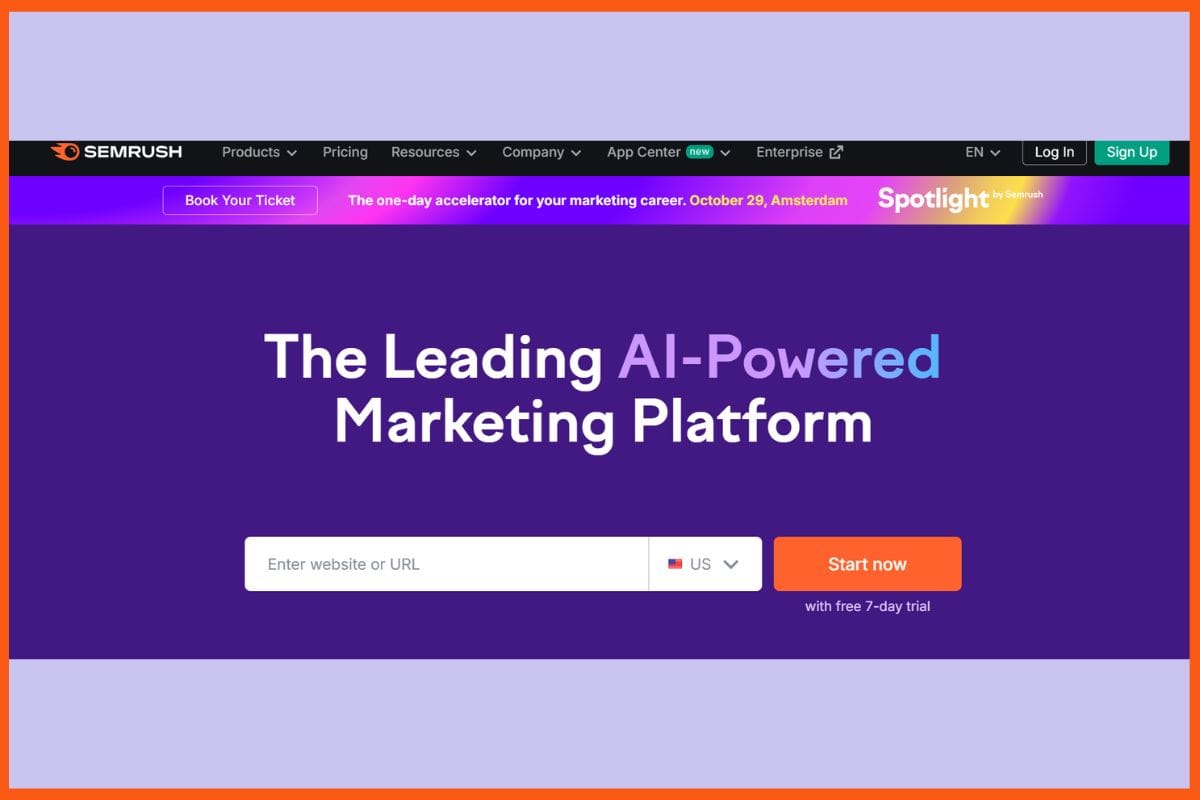
    Semrush

    WEBSITE semrush.com
    Rating 4.6
    Free Trial Yes
    Best For Digital marketers and SEO professionals seeking AI-powered SEO, content marketing, and competitive analysis tools.
    Semrush - Top SEO Software to Boost Rankings
    Semrush – Top SEO Software to Boost Rankings

    Semrush is supposed to be an excellent and very comprehensive toolbox for improving SEO, plus it is complemented by the other tools that give enhanced learning of the person in utilizing his or her online visibility to make better market data. It is a cannot-beat, complete set of functions that are perfectly fitted for small businesses or even larger companies with the very active need to improve sales through all channels of digital marketing, including SEO, PPC, content marketing, and Social Media. Within Semrush, marketers can find an impressive toolkit for improving campaign optimization, ranking, and making data-driven decisions.

    The site audit feature does exhaustive evaluations that one can get very detailed technical issues that affect a site’s search rankings. Competitive analysis tools show the settings of rival competitors in terms of their top keywords and backlink profiles. 

    Pros

    • Semrush has millions of domains and keywords as an excellent research tool.
    • Whereas it is quite comprehensive, many users find it pretty intuitive and easy to browse through.
    • The platform is continually adding new features to stay as fast-moving as digital marketing itself.

    Cons

    • Comparatively expensive relative to many other SEO tools and this deters small and startup businesses. 
    • It is user-friendly but may confuse and overwhelm beginners regarding all features.

    Pricing

    Plan Pricing
    Pro $139.95 / month
    Guru $249.95 / month
    Business $499.95 / month

    Ahrefs

    WEBSITE ahrefs.com
    Rating 4.6
    Free Trial Yes
    Best For SEO professionals and digital marketers needing AI-powered backlink analysis, keyword research, and site audit tools.
    Ahrefs - Top SEO Software to Boost Rankings
    Ahrefs – Top SEO Software to Boost Rankings

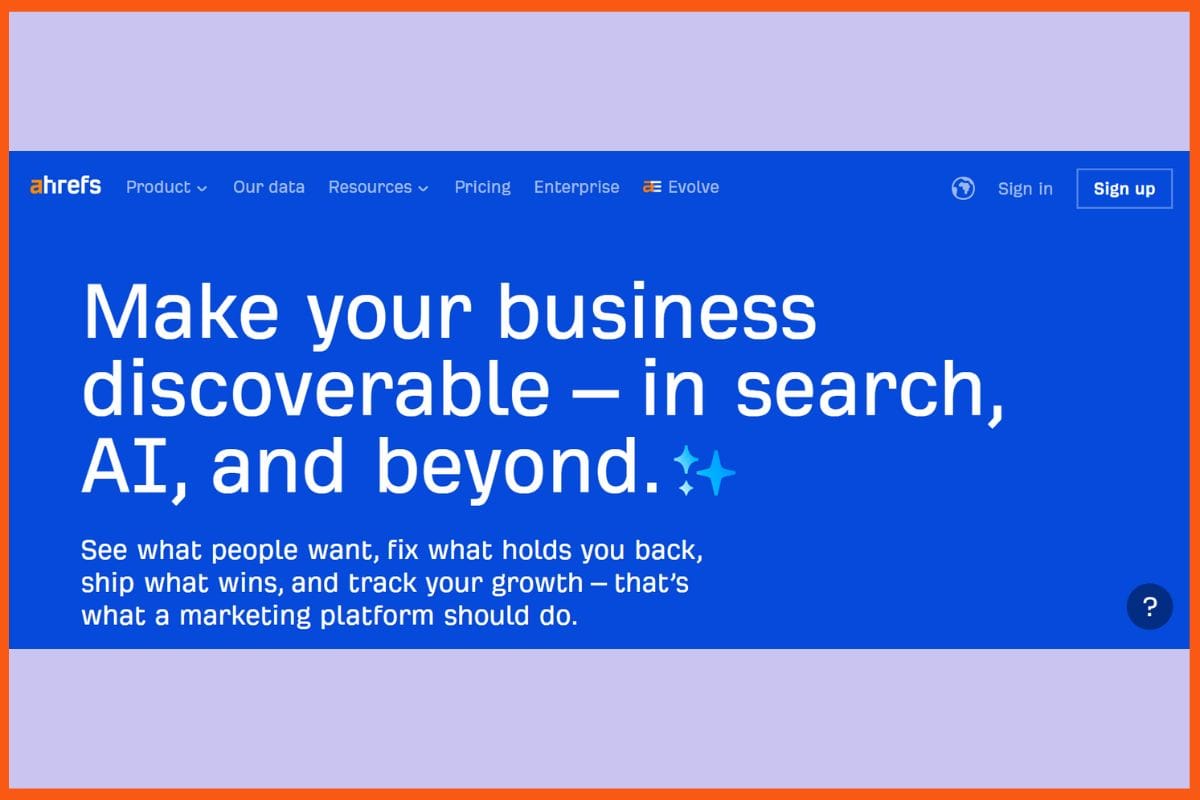
    Ahrefs is a versatile one-stop SEO platform that has gained immense popularity for all its powerful features that will help a website owner, marketer, or SEO professional optimize search engine rankings and improve organic traffic. Founded in 2011, Ahrefs has evolved from a specialized backlink analysis tool to a comprehensive search engine optimization professional, really making it an obligate instrument for digital marketers. 

    The Site Explorer analyses backlink profiles and SEO metrics providing important data on backlinks, referring domains, organic keywords, and traffic estimates. The keyword explorer reveals extensive and credible keyword research by search volume, difficulty, and click metrics. It even allows keyword analysis within over 100 countries. Furthermore, the internal audit tool of Ahrefs specified different technical SEO issues concerning broken links, crawl errors, and missing meta tags. Keyword rankings would also be monitored with the use of a rank tracker for a while, content explorer would also aid users in discovering the best-performing content in their niche by analyzing the performance metrics. 

    Pros

    • Ahref has one of the most extensive living link bases, offering vigorous data with which link management and keyword analysis can be performed.
    • The platform is intuitive enough to include novices as well as experienced ones. 
    • Frequent Updates give the tool the latest edge in the most current of all SEO trends and features.

    Cons

    • No Free Trial
    • Entry-Level Plan Limitations

    Pricing

    Plan Pricing
    Lite $129 / month
    Standard $249 / month
    Advanced $449 / month
    Enterprise $1,499 / month

    Best On-Page SEO Tools for Beginners in 2025
    New to SEO? Discover the top on-page SEO tools that help beginners optimize content, boost rankings, and improve website performance easily.


    Moz Pro

    WEBSITE moz.com/products/pro
    Rating 4.5
    Free Trial Yes
    Best For SEO professionals and marketers seeking AI-powered SEO analytics, keyword tracking, and site optimization tools.
    Moz Pro - Top SEO Software to Boost Rankings
    Moz Pro – Top SEO Software to Boost Rankings

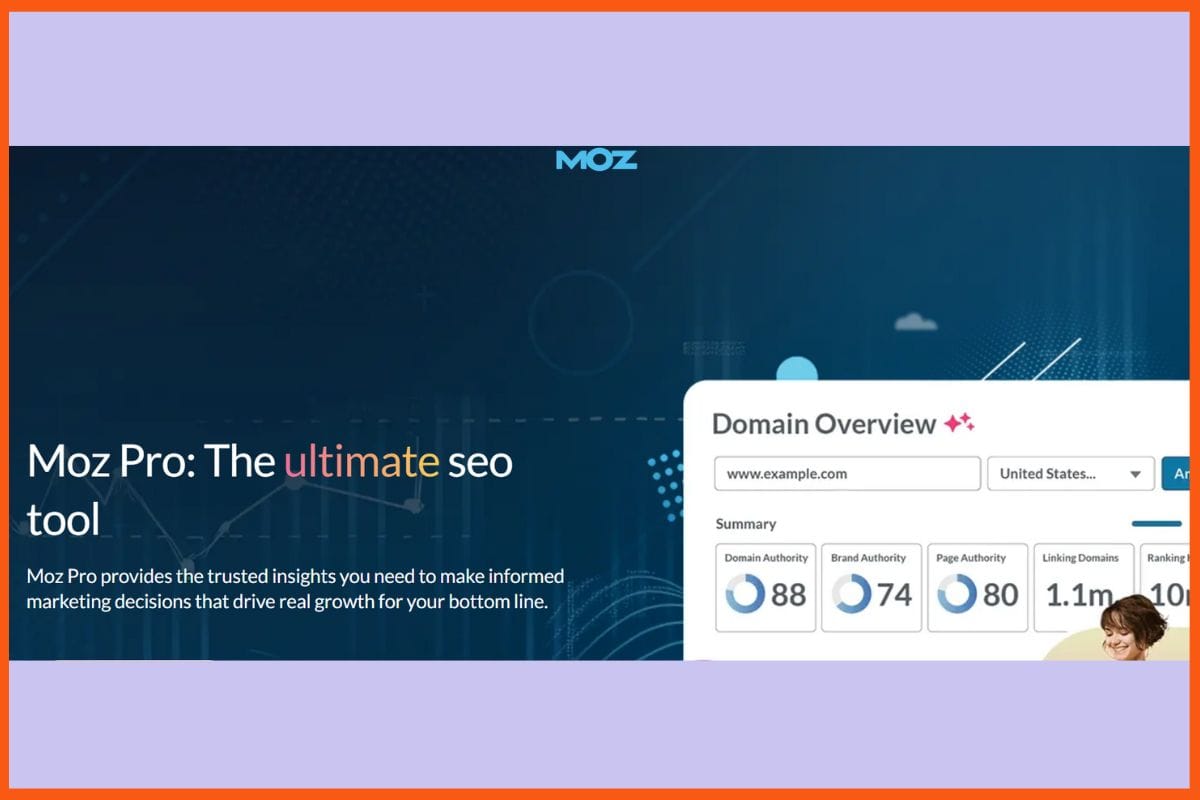
    For nearly nineteen years now, Moz Pro has earned marketers’ and SEO professionals’ trust because of the easy interfacing and amazing features it brings. Its main philosophy is to help perfect a person’s SEO strategy and provide an extensive set of tools that can easily increase a website’s performance and track progress. Moz Pro contains Keyword Explorer; this is a keyword research tool that gives access to more than 500 million keywords along with their search volumes, competition levels, and SERP results for the development and fine-tuning of users’ strategies. Additionally, the advanced rank-tracking feature tracks the positions of keywords over time to provide insights into performance trends. Backlink analysis tools help study link quality to the finding of opportunities and enable the management of backlinks more strategically. The website audit tool audits technical issues such as the crawling of non-existent pages. The Page Optimization option provides actionable suggestions to help improve page performance. That includes customized reporting and learning from educational material, which also includes video lessons and a community forum.

    Pros

    • Packages close to all major recommended SEO tools to make it a powerful choice for marketers.
    • Made easy, even for those not well versed in SEO techniques.
    • Materials are exhaustive in relieving the user’s subjectivity towards the tools.

    Cons

    • For small businesses, and especially individuals, Moz-Pro could be too costly.
    • A steep learning curve for new users might be overwhelming.

    Pricing

    Plan Pricing
    Starter $49 / month
    Standard $99 / month
    Medium $179 / month
    Large $299 / month

    14 Best Keyword Rank Tracking Tools for SEO (Free & Paid)
    Discover the top keyword rank tracking tools, both free and paid, to boost your SEO game. Track performance, monitor SERP changes, and stay ahead of competitors in 2025.


    seoClarity

    WEBSITE seoclarity.com
    Rating 4.4
    Free Trial Yes
    Best For Enterprise SEO teams and digital marketers using AI-powered SEO analytics, content optimization, and performance tracking tools.
    seoClarity - Top SEO Software to Boost Rankings
    seoClarity – Top SEO Software to Boost Rankings

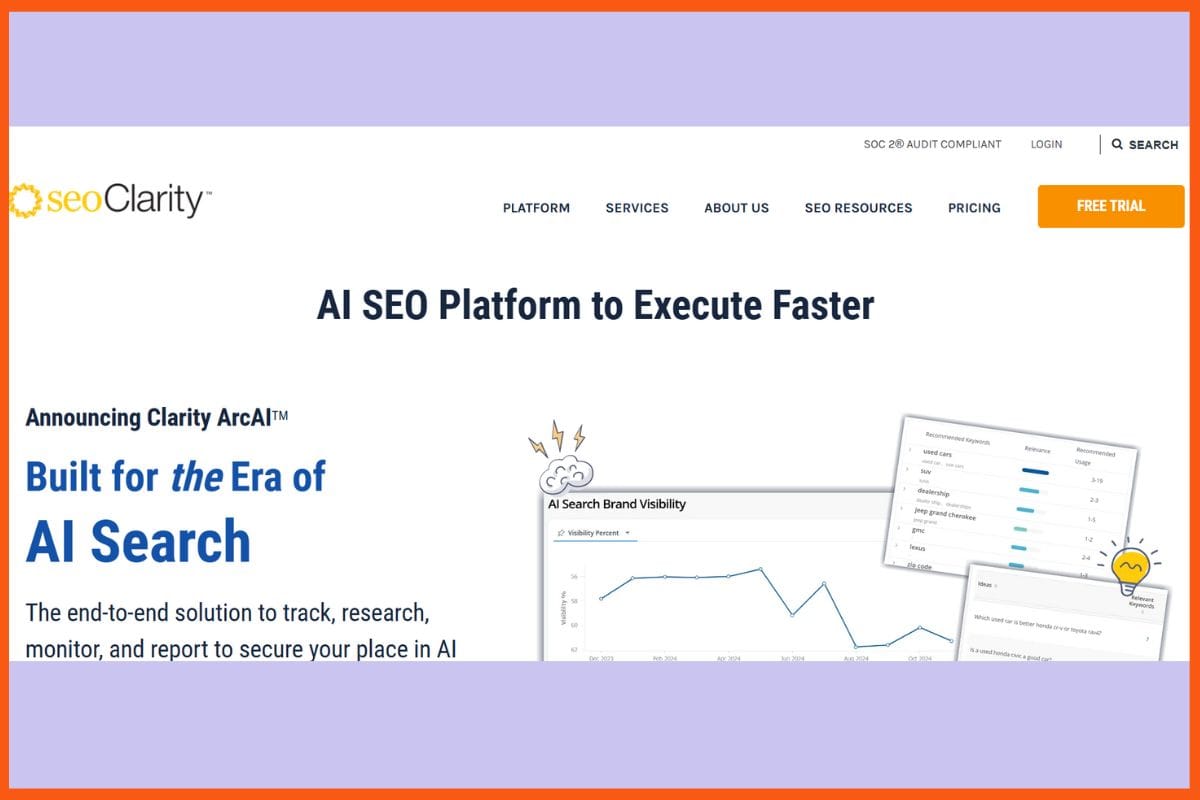
    seoClarity is an enterprise-grade SEO platform that provides all the relevant tools for maximizing the presence in search, tracking, and increasing organic driving. seoClarity has built complexities to allow it to be used in high-scale SEO campaigns; this means businesses have visibility and features available to optimize. It tracks rank on multiple search engines and locations, reviewing history to obtain visibility metrics. It’s content optimization tools edicts take actual advice from recommended practices and competitive analysis while rendering assistance through site audit capabilities to discover and fix technical SEO issues.

    Keyword research tools gain exposure to many comprehensive databases, which empower teams with appropriate search terms. Tools for competitive analysis show how keywords perform against competitors and the backlink profiles they currently hold; the link management functionality contributes towards enhancing domain authority. Additionally, there are custom-made dashboards and API access for seamless data tracking and integration. Other instruments include mobile and local SEO tools, plus alerting and notifications to alert concerning considerable significant performance changes.

    Pros

    • Covers all aspects of SEO, catering to complex requirements with its extensive toolset.  
    • Delivers actionable insights from extensive data to support informed decision-making.  
    • Enables users to customize reports, focusing on metrics aligned with their business objectives.  

    Cons

    • The platform’s extensive tools can be challenging to navigate for new users or those preferring a simpler interface.
    • The pricing may not be affordable for smaller businesses or startups when compared to alternative SEO tools.

    Mangools

    WEBSITE mangools.com
    Rating 4.5
    Free Trial Yes
    Best For SEO professionals and beginners seeking AI-powered keyword research, backlink analysis, and SEO tracking tools.

    Mangools provides very simple and easy-access SEO tools that are designed to be used by small businesses and individuals who intend to improve online visibility. Being simple and cheap, Mangools makes it appealing to visit users who wish to have their sites optimized without touching more complex advanced platforms. 

    Key features include KWFinder-a competent keyword search tool giving you results on search volume, difficulty, and relevance across many languages and countries. SERPWatcher can track the ranking of keywords over time and give you wonderful insights into their depth and trends of performance and visibility.

    SERPChecker allows for a fine-grained assessment of search engine results pages by providing metrics on top-ranked pages including backlink profiles, domain authority, etc. LinkMiner is dedicated to backlink analysis, allowing users to assess and thus improve their link-building efforts regarding understanding the quality of backlinks on their site or competitive sites. The SiteProfiler tool includes a much broader view of SEO metrics, such as domain authority and traffic estimates, thus allowing users to compare their performance with the competition and identify areas for improvement.

    Pros

    • User-friendly, allowing even those who are unfamiliar with technology to experience smooth navigation and utilize all the features of the application.
    • A very low competitive price structure compared to expensive premium tools like Semrush and Ahrefs.
    • Browser Extension: With this Mangools SEO extension, the users get to access all the key metrics completely from their browser without switching tabs.

    Cons

    • Lacks some advanced toolsets available in premium search engine optimization platforms. 

    Despite a suite of basic requirements, the software lacks technical audit functionality for SEO purposes.

    Pricing

    Plan Pricing
    Mangools Basic $22.43/month
    Mangools Premium $33.68/month
    Mangools Agency $67.42/month

    Conclusion

    Choosing the best SEO software is important for online visibility and organic traffic. There are different options such as Semrush, Ahrefs, Moz Pro, seoClarity, and Mangools. Semrush is a fairly comprehensive solution for SEO, PPC, and content marketing, while Ahrefs has become more of a go-to among experts interested mainly in backlink analysis and keyword research. Moz Pro is ideal for almost any size company since it emphasizes user-friendliness with features like thorough reporting. Businesses that require high-level enterprise capabilities with advanced features in technical SEO and tracking can tick seoClarity off their lists. Another beginner-friendly software, Mangools offers the basic tools at a friendly price without the usual complications attached. Then assess your objectives, budget, and level of expertise to pick the right tool for that edge in digital marketing.


    Top AI SEO Tools to Boost Your Rankings
    Discover the best AI SEO tools that enhance your search engine rankings and drive organic traffic to your website.


    FAQs

    What is SEO software?

    SEO software helps optimize websites for search engines by providing keyword research, site audits, backlink analysis, rank tracking, and content optimization.

    Can SEO software replace a professional SEO expert?

    SEO software provides valuable data and automation, but it cannot replace a professional’s strategy, creativity, and expertise.

    What are some Top SEO Software to Boost Rankings?

    Some Top SEO Software to Boost Rankings are:

    • Semrush
    • Ahrefs
    • Moz Pro
    • seoClarity
    • Mangools
  • Reliance AGM 2025 Highlights: Google, Meta, and Jio Building India’s AI Future?

    The world is moving fast towards AI, and so is Reliance. So many things are happening for Reliance. At the 48th Annual General Meeting (AGM), Reliance Industries (RIL) made some big announcements. Today (August 29) at the AGM conference, Mukesh Ambani spoke about them all via Video Conferencing (VC)/Other Audio-Visual Means (OAVM). And that brings us to some important questions. Will these announcements (tech advancements) push India’s tech any further? Is the AI momentum in India picking up its pace? Well, learn more.

    What’s Happening at Reliance?

    The company announced new digital products, AI services, and partnerships with Google and Meta. Meaning, Reliance is going beyond telecom to become a big tech leader in India. These key updates are, in a way, very crucial for India, and here they are.

    Jio Digital Twin System

    This is crucial for the country, as it will make India one of the fastest in broadband service:

    • Think of it like a virtual 3D India Map for telecom engineers (in telecom infrastructure), Reliance calls it a “living breathing” model.
    • Generally, for a broadband to be set up, the engineers need to physically check the area and then plan.
    • With this Jion Digital Twin System, the engineers can remotely check the network and activate the broadband. The process will now take less than 24 hours for users’ convenience.
    • The system constantly updates the data as new data rolls in.

    Jio AI Cloud 2.0

    Notably, Reliance already has Jio Cloud for storing data, but now has an upgrade called AI Cloud 2.0. Now it can help:

    • Jio users can now search and organize their files with voice commands in several Indian languages.
    • The 2.0 version will automatically categorise the users’ documents into bills, ID cards, receipts, and more.
    • With natural language, you can command if you want to find files, for instance, “Show me my PAN card or Aadhar, etc.
    • The new AI Create Hub will turn photos into reels, collages, or promotional videos. This feature comes in handy for content creators and small businesses (for their social media). 

    JioFrames (Smart Glasses)

    Reliance announced the launch of AI-powered smart glasses, which are one of a kind, perhaps the first to launch in India. In July 2025, Lenskart and Qualcomm announced a collaboration to come up with next-gen AI-powered smart glasses, but the launch or updates are yet to come. The JioFrames features include:

    • Works in multiple Indian languages.
    • It comes with Jio’s AI voice assistant.
    • One can click HD pictures, record high-quality videos, livestream directly, all while saving the files to Jio Cloud.

    The glasses provide real-time help as well:

    • Like it can summarize a book for you (as you read)
    • It can guide you in cooking (step by step)
    • It can be your travel guide with all the information you need on the go.
    • The glasses have built-in open-ear speakers, so you can take calls, listen to music, or play your favorite podcasts (again, this feature will not block the outside sounds, so you feel present yet in the mood).

    JioPC

    Many Indian families find it expensive to afford a laptop or a PC. Jio is bridging that gap. This service is also unique in nature as it turns any TV into a functioning computer. It works:

    • If you get a Jio set-up box, that will be it.  You don’t need a separate CPI for it because it runs on the cloud.
    • One can access any computing without buying a PC. It is especially designed for students, small businesses, and professionals who are looking for an effective PC alternative.
    • It comes with security and AI applications that make it fully functional as a PC. 

    Reliance Partnership With Google

    • Reliance announced that it is expanding its partnership with Google.
    • Google will create a big data center in India (a new Jamnagar Cloud Region).
    • This is huge as it will bring AI and cloud computing power to Indian users, and the goal is to make AI accessible for all (people and businesses) in India.

    In a pre-recorded video, the Google CEO, Sundar Pichai, said,

    “As Reliance’s largest public cloud partner, Google Cloud is not only powering the company’s mission-critical workloads, but we are also innovating with you on advanced AI initiatives. And with Reliance and the Jio ecosystem, we are excited to put AI into the hands of more people and businesses so they can do extraordinary things.” 

    Reliance Partnership With Meta

    Reliance also announced a partnership with Meta to bring its open-source Llama AI models to Indian businesses through Jio.

    “It is a key step forward towards ensuring that everyone has access to AI, and eventually, superintelligence. Meta and Reliance are going to deliver our open-source AI models to Indian businesses to help them fuel their work,” Mark Zuckerberg said. 

  • Daily Indian Funding Roundup & Key News – 29 August 2025: Vutto Raises $7M, Reliance Launches AI Unit with Google & Meta, Elevation’s $400M Fund & More

    India’s startup and business ecosystem continued to witness strong momentum on 29th August 2025, with fresh funding activity and major strategic moves shaping the landscape. From mobility and AI to late-stage venture funding, the day was marked by significant developments. While Vutto secured a $7 million Series A to strengthen its used two-wheeler marketplace, Elevation Capital unveiled a massive $400 million fund for IPO-bound startups. Meanwhile, Reliance joined forces with Google and Meta to foray deeper into AI, and Uniphore expanded its global AI automation capabilities through acquisitions.

    Daily Indian Funding Roundup – 29th August 2025

    Company Amount Round Lead investor(s) Sector
    Vutto $7 Mn Series A Orios Venture Partners, Touchstone, Alteria, Trifecta Used Two-Wheeler Marketplace

    Key Business News for 29th August 2025

    Vutto raised $7 million in Series A

    Vutto, a used two-wheeler marketplace, has raised $7 million in a Series A round led by Orios Venture Partners, with participation from Touchstone Partners, Alteria Capital, and Trifecta Capital. The funds will be used to expand its presence in existing cities, enhance technology offerings, and streamline financing options for buyers and sellers.

    Elevation Capital Launches $400 Mn Late-Stage Fund for IPO-Bound Startups

    Elevation Capital has announced the launch of a $400 million late-stage fund focused on investing in IPO-ready startups. With this fund, the venture capital firm aims to support high-growth companies preparing for public listings by providing capital to strengthen operations, scale aggressively, and enhance governance.

    Reliance Launches AI Unit with Google and Meta as Partners

    Reliance has launched a new artificial intelligence unit, bringing in Google and Meta as strategic partners. The initiative is aimed at developing AI-powered products and services for Indian users while also strengthening Reliance’s position in the fast-growing AI ecosystem. The move underscores Reliance’s ambition to dominate the digital and technology space in India.

    Uniphore Acquires Orby AI and Autonom8

    Uniphore, the conversational AI unicorn, has acquired Orby AI and Autonom8 to strengthen its AI automation and customer experience solutions. The acquisitions are expected to enhance Uniphore’s capabilities in intelligent automation, workflow orchestration, and enterprise AI adoption, enabling the company to serve global clients more efficiently.


    Daily Indian Funding Roundup and Key News: 28 August 2025
    From banking infrastructure and microfinance to pet care and gaming, startups secured fresh capital to scale operations and deepen market penetration. Here’s your quick roundup for top funding deals and key business news in India on date.


  • When to Internally Develop a System and When to Bring in a 3rd Party Tool

    This article has been contributed by Dalip Jaggi, co-founder of Revive Real Estate.

    It doesn’t matter what type of business you choose to operate without technology investments; it’s likely that it won’t be able to compete with modern competition. Because of this, most organizations heavily rely on a combination of in-house and cloud-based tools to help drive their business forward.

    However, as you begin to scale, there’s a good chance that those off-the-shelf applications that you use regularly may start to feel like they’re unable to keep up. While this may be subtle at first, over time, it can feel like your integrations don’t function as smoothly as they once did or that your systems are lacking in performance.

    When this inevitably happens, businesses are typically left with a couple of options: either continue to invest in new, more expensive third-party tools or create their own custom solution.

    When weighing this decision for your own business, there are a variety of considerations you’ll want to make before choosing one path over the other.

    Why are Third-Party Software Tools So Common?

    Most businesses want to maintain a certain amount of agility as they scale their operations. Cloud-based tools and systems are the perfect solution for this. Investing in solutions that are already developed and have straightforward features that businesses can use provides a highly accessible solution that most organizations can afford.

    Below are some of the primary reasons why third-party software tools are so common today:

    • Scalable Infrastructure: As businesses get larger, add more staff, and have more specific operational needs, it’s important that the tools they invest in are highly adaptable. Cloud-based tools and services let organizations quickly scale their infrastructure needs up or down based on their current requirements. This allows them to stay agile while gaining access to the critical resources they need to grow.
    • Budget-Friendly Implementations: Most organizations have a wide range of financial tasks they need to manage. Whether needing to execute payroll processes, manage their inventory, compile financial forecasts, or file their taxes, third-party tools can help make all these processes much easier to handle.
    • Improved Team Collaboration: Today, many businesses have adopted more flexible working arrangements for their employees, including fully-remote or hybrid scheduling. To facilitate this type of format, third-party solutions have become an invaluable investment that allows businesses to provide their remote employees with helpful communication and task management platforms. This enables teams to work more autonomously while still having direct access to important company resources and their management teams.

    How to Implement Financial Controls in a Growing Startup: Tools & Frameworks
    Learn effective tools, processes, and frameworks to implement strong financial controls in your startup. Ensure sustainable growth, prevent financial risks, and maintain transparency.


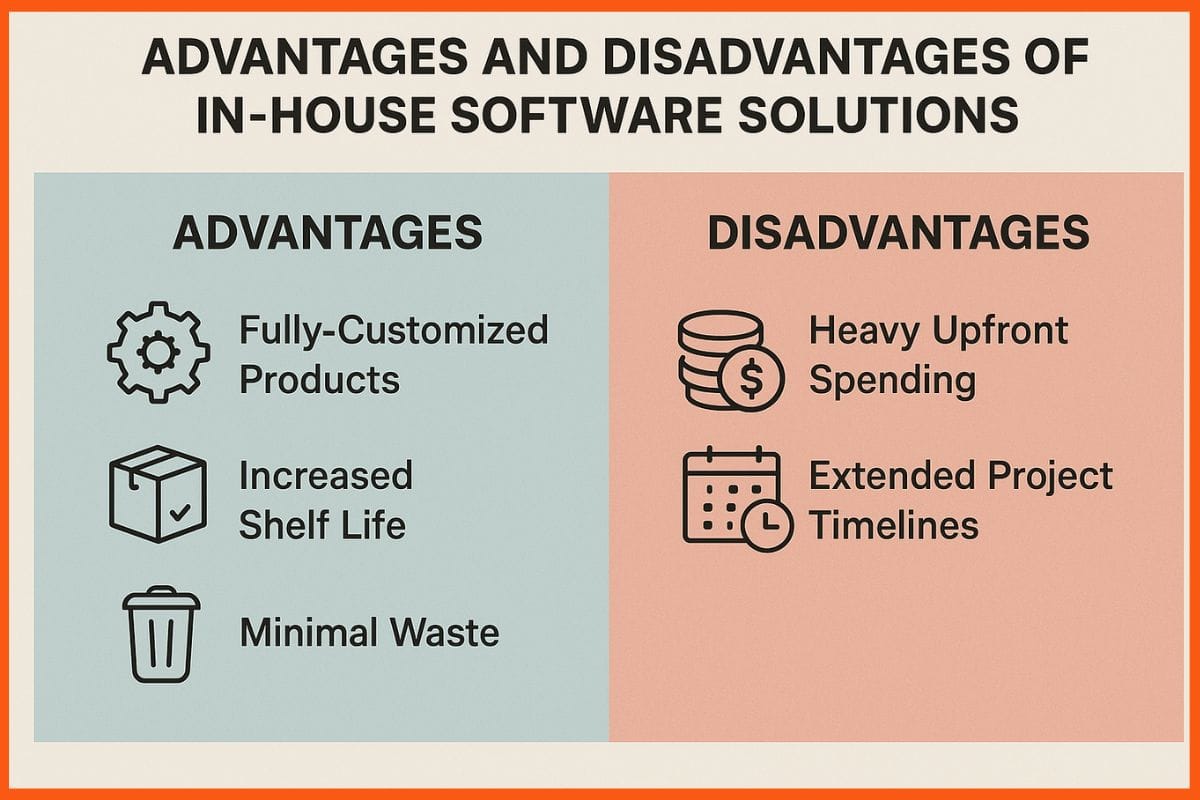
    Advantages and Disadvantages of In-House Software Solutions

    Advantages and Disadvantages of In-House Software Solutions
    Advantages and Disadvantages of In-House Software Solutions

    Although there may be a lot of advantages with third-party tools, at some point, it may become more beneficial for organizations to consider moving to an in-house software solution.

    However, as with any large business investment, there are some pros and cons worth considering about an in-house solution before deciding if it’s the right choice for your business.

    Advantages

    • Fully-Customized Products: Purchasing a custom in-house solution for your business is similar to completing a custom home renovation project, as opposed to moving into an already designed home. While a pre-built home or design space may have some features and still be enjoyable to be in, it may not be perfectly suited to you, and you’ll have to make some sacrifices on the look and feel of the space. Similarly, when designing a custom in-house software solution, you aren’t forced to have any features you don’t want or make sacrifices on the tools you really need to operate your business more efficiently.
    • Increased Shelf Life: When subscribing to various cloud-based services, businesses are often required to pay a monthly recurring subscription cost. While these costs may be nominal, over time they can add up and are the only way to gain access to all the features a business may need. 

    However, when building your own software solution, you’re able to have much more control over the long-term spending. This means the longer the application or system is used, the better the ROI for the business.

    • Minimal Waste: Most commercially accessible software on the market advertises that it includes a large range of features or benefits that “all” businesses can leverage. However, in most cases, very few businesses actually can benefit from this full range of features as they may be designed for only certain use cases. This means that many organizations actually pay a percentage of their subscription costs for features they never get to use.

    With a custom-built solution, this dynamic is much different. Since you have full control over what gets included in the development process and what gets skipped, it’s much more likely to design a solution that allows you to get full use and benefit from it.


    Startup Software Development Guide for Business Success
    In this article, we will discuss challenges to cope with and software for startups used during the development process, as well as tips for getting the best results.


    Disadvantages

    • Heavy Upfront Spending: Unfortunately, one of the biggest downsides of a custom-built software solution is its upfront costs. Just like when renovating a home, it can require a healthy budget upfront before you’re able to see any final results. Depending on how complex the project is, your initial costs may be anywhere between a few thousand to tens of thousands of dollars.
    • Extended Project Timelines: Another downside of taking on a custom software build project is the timelines for completion. This can range considerably depending on the type of solution you’re looking for, but in most cases, it could take several months before you have a final working product your teams can test and use.

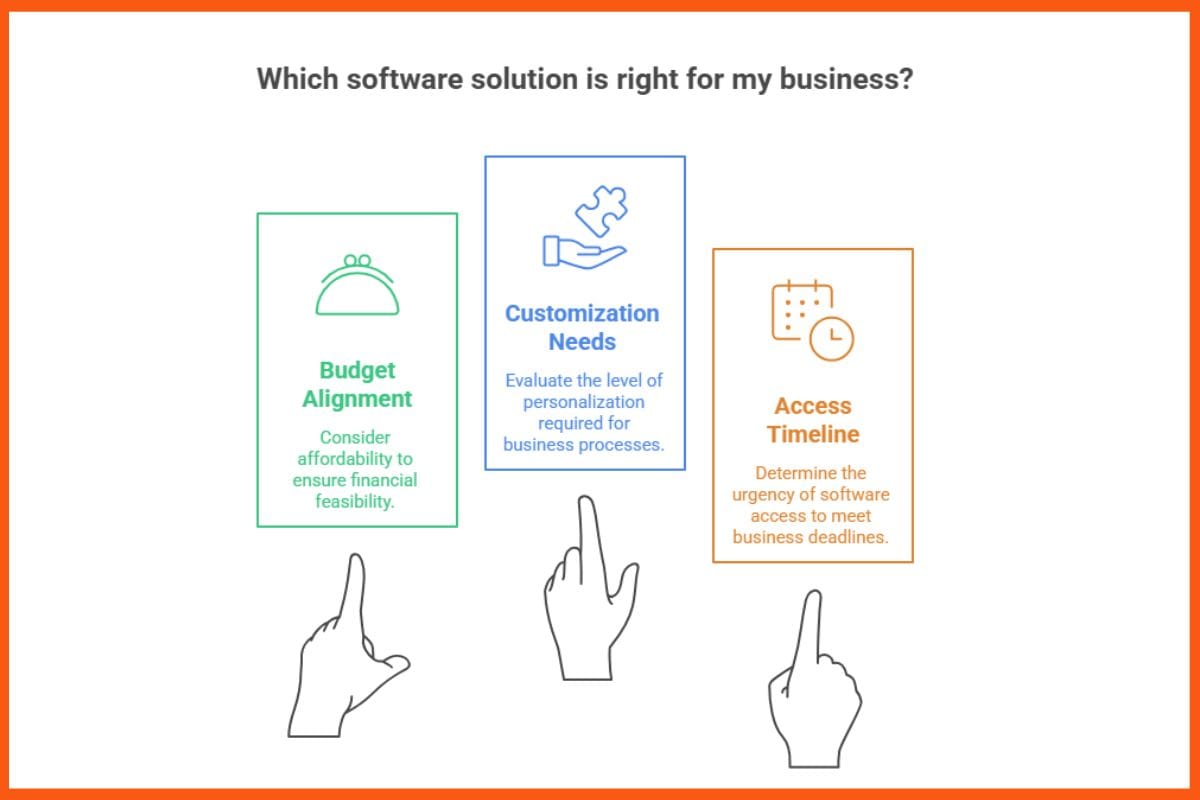
    Key Things to Consider When Deciding What Type of Solution is Right for You

    Which Software Solution is Right for my Business
    Which Software Solution is Right for my Business

    Before making the leap when deciding on the format for your next software solutions, here are a few questions you might want to ask yourself:

    • What are Your Budget Limitations? Before you decide if a custom project is feasible, you need a clear picture of what you can actually afford. Map out a budget that works for your business and then see which option can align with those numbers.
    • How Many Customization Options Do You Really Need? Depending on your business needs, you might find that a standard solution with minimal personalization is sufficient. But if your business needs to execute more complicated workflows or has highly specialized automation needs, then a custom-built tool may be the most logical path forward.
    • When Does Your Business Need Access? Keep in mind that custom software development is a significant, long-term commitment. If your team can afford to wait several months for a new tool, then building one might not be an issue. However, if you need to use the new software within days or weeks, a pre-existing third-party option is the more appropriate choice.

    Make The Right Choice For Your Business

    There’s really no right or wrong answer when choosing whether or not to purchase or build your next software solutions. By evaluating the pros and cons and measuring them against your own budgets and needs, you’ll make sure you choose a solution that brings the most benefits and value to your organization long-term.


    20 Best Project Management Tools For Startups in 2024
    Are you looking for the best project management tool? Here are the top 20 tools to help you manage your projects and team members effortlessly.


    Author Information


    Author Name: Dalip Jaggi

    Author Bio:

    Entrepreneur, technologist, and passionate business leader sum up the core of Dalip Jaggi, co-founder of Revive Real Estate, a PropTech company with a goal to democratize house flipping. Since its 2020 inception, Revive has become the smartest solution for homeowners across the nation to maximize their home’s value.

    Author Headshot:

  • The Rise of Sportstech in India and Its Future Opportunities

    This article has been contributed by Abhinav Sinha – Founder of SportsSkill.

    India’s SportsTech moment must be seen as part of the country’s wider digital transformation. If we want to improve results at the international level, we have to spot athletes early at the grassroots and give them proper guidance from the very beginning. Without technology, the system has clear limitations — and many gifted youngsters never even get started because access is out of reach.

    In the last decade, India has shown how digital can unlock opportunity. Affordable smartphones, low data costs, and public digital infrastructure have changed how people use banking, healthcare, and trade. Sport is now tapping into the same ecosystem.

    Take UPI, which has made small, seamless payments routine — whether for booking grounds, paying for training sessions, or buying tickets. Or Aadhaar-linked identities, which make athlete registration and verification quick and simple. Built on this digital backbone, SportsTech can finally give millions of kids the chance to participate, not just watch.

    The opportunity for India is clear: use technology not only to entertain fans, but to empower the next generation of players.

    Remote monitoring by coaches and scouts is made possible by cloud-based platforms. Effectively, sportstech is expanding not only because India is a sports-loving nation, but because digital rails that serve the broader economy now reach out to recreational and professional sporting activity. This integration makes India’s path unique in contrast to other economies, where sports tech has developed mainly as an extension of entertainment or fitness.

    Participation as the Prime Driver

    Worldwide, most investment in sports tech has gone into deepening athletic performance. Unfortunately, in India, the focus has been on fan experiences –streaming, betting, fantasy leagues, and interactive content—with fantasy sports platforms holding the lion’s share of market valuations.

    However, India’s larger opportunity lies in broadening participation. Our sports pyramid has been getting smaller for a long time. There is a small elite at the top and a thin middle tier below. This equation is starting to get back in balance thanks to technology. Booking ground, mobile fitness monitors, and distance coaching software online makes it easy for anyone to take part in organised activities in both huge cities and small communities. SportsTech can help millions of people go from being passive viewers to active players by making it easier and cheaper to get involved. This transformation has a huge impact on the health of the community, the health of the public, and the search for new talent. It indicates that participation, not watching, is the actual frontier for Indian sports.

    Scouting and Talent Pipelines

    A key challenge for Indian sport has been uneven talent discovery. A great number of athletes from small-town areas never reach the attention of federations or professional leagues until it is too late. Sportstech gives you the tools you need to fill this gap.  Federations can find talented players faster and more easily with apps that track performance, digital portfolios, and cloud-based databases for scouting. It is not merely an issue of equity. A data-driven talent pipeline also enhances the global competitiveness of domestic leagues and national teams. Nations that have invested in such systems, like Australia or the UK, have achieved long-term gains in Olympic and professional achievement. For India, embedding technology in scouting can determine if the growth of interest in non-cricket sports manifests as resilient international performance.


    How Technology is Shaping the Sports Industry and Business Growth
    Explore how AI technologies are shaping the sports industry and business growth from insights shared by Anubhav Srivastava, Head of AI at Stupa Sports Analytics.


    Capital Movements and Symmetries

    There has been a lot of investment in India’s sports IT market, but it hasn’t been even. Fantasy and fan-engagement applications pull the bulk of the cash, given their near-term monetisation potential. Ventures based on performance analytics, grassroots development, or coaching help struggle more to scale. This predilection towards gaming and fantasy platforms implies that funding can migrate disproportionately towards speculative or entertainment-based activities while the long-term enablers of India’s athletic ecosystem are neglected. For a sustainable future, there needs to be a more equitable investment policy. Policy incentives, impact-focused funding, and engagement with federations can channel resources toward training technology, infrastructure digitisation and athlete welfare. Without rebalancing in this way, the industry threatens to repeat the same structural problems that have traditionally restricted Indian sport.

    Regulation and Credibility

    The regulatory landscape will greatly influence the credibility of sportstech in India. Fantasy sports sites, for example, remain in a grey area in many states, raising questions regarding gambling and consumer protection. Athlete tracking and fan analytics privacy is another emerging issue. Clear, consistent frameworks are needed to ensure that innovation is not compromised by reputational risks. Across the world, sportstech has become legitimate, where regulators have made it clear, balancing consumer protection with innovation. India will require the same approach, especially with increasing cross-border investments and local companies looking for international partnerships. Transparency will foster good innovation and reassure investors and users.

    Convergence with Health and Education

    Sportstech in India’s long-term potential is its convergence with the neighbouring sectors. Health technology is a natural space for convergence. Tracking fitness, preventing injury, planning nutrition, and rehabilitating can all be provided by digital platforms, with sport being the gateway. This convergence opens the consumer base outside professional athletes or sports fans to encompass common citizens in pursuit of wellness. You could also look into schooling.   Schools typically have problems setting up organised physical activities since they don’t have enough coaches or facilities. Sportstech can fill those gaps through digital means, providing remote coaching, performance measurement and organised curricula. If well-integrated, sportstech can stand not only as an entertainment or elite sport industry, but as a health and education contributor to the nation.

    Rural Access and Inclusivity

    The potential of sports tech will remain untapped until it reaches beyond urban areas. Rural India is home to most of the nation’s youth but lacks access to facilities, equipment and coaching. Low-cost wearables, vernacular-language apps, and AI-based skill screening can facilitate bridging the gap. Collaborations between state governments, NGOs, and private companies could allow rural youth to access the same technological platforms currently available in the cities.

    Inclusivity will also need to cut across gender. Women athletes in India still have disproportionate access barriers to coaching and competition. To fix these differences, sports tech platforms that give women safe places to play, mentors, and opportunities to be seen can help.  How well the sector deals with these fundamental inequalities will partly determine its credibility.

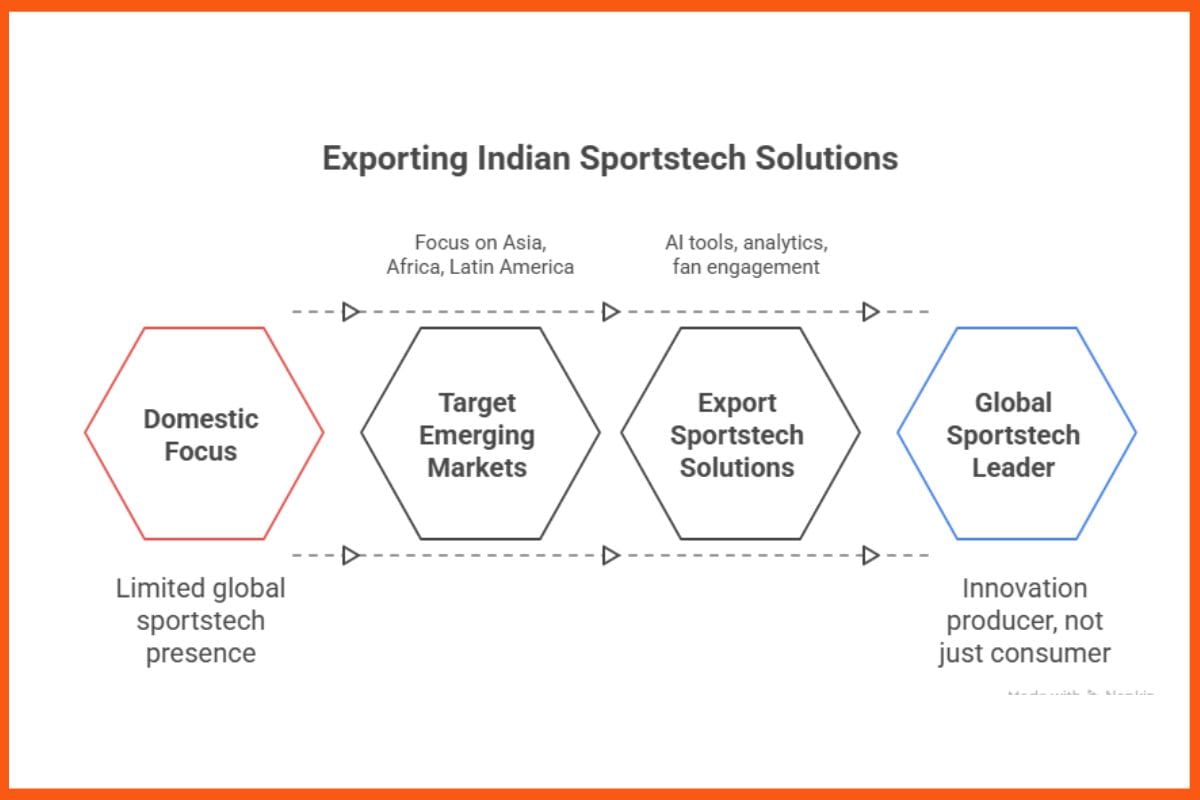
    The Global Window

    Exporting Indian Sportstech Solutions
    Exporting Indian Sportstech Solutions

    India’s sportstech narrative is not exclusively domestic change. As a technology hub with a huge youth demographic, India can export solutions to the world. Start-ups developing AI-driven performance tools, affordable analytics, or repeatable fan-engagement platforms may discover markets in Asia, Africa, and Latin America, where the same structural issues are present. Success in these markets would confirm India’s status as not only a consumer of international sport but also a sportstech innovation producer.

    Conclusion

    The evolution of sportstech in India is a significant turning point for the interaction between sport, society, and technology. What started off as a trend of fantasy sites and streaming services is now going into training, scouting, infrastructure and wellness. The possibilities are high, but so are the challenges. For the industry to reach its potential, three things have to come together: matching flows of investment that provide long-term development in tandem with commercial platforms; regulatory certainty that gains trust and safeguards consumers; and its focus on inclusivity, providing access across regions, genders, and socio-economic classes. On these terms, Sportstech could become the keystone of India’s sporting revolution and meaningfully add to the country’s digital economy.


    Why Do Companies Invest So Much in Sports Advertisements?
    Sports marketing is using the content of sports for marketing. One of the main reasons for brands to invest in it is to take advantage of the athletes’ popularity.


  • India’s GDP Soars 7.8% Growth in Q1 FY26, Beating All Estimates

    While Trump’s harsh 50% trade tariffs worry India, and the sourness with the U.S. continues, India’s GDP is taking flight. Yes! India’s economy saw faster growth than anticipated in the first quarter (April–June) this FY26 (2025–26). Notably, several analysts predicted only 6.5–7% growth, but to everyone’s surprise, India’s GDP rose. Now, what does this growth say? How many sectors did this really grow? Will this be enough to show the world (especially to the U.S. President Donald Trump) that India is indeed becoming a self-reliant country? Learn more details about this significant growth.

    India’s GDP Compared to Last Year

    • Last year (2024), in the same quarter (April-June), India’s GDP was 6.5% only.
    • In the last quarter of 2025 (January-March), India’s GDP growth rate was 7.4%.
    • Now in 2025 (April-June), India’s GDP saw 7.8%, meaning the growth exceeded the previous numbers and expectations.

    The GDP Numbers Look Like…

    • The Real GDP stands at ₹47.89 lakh crore in Q1 FY26 (vs ₹44.42 lakh crore in Q1 FY25 → 7.8% growth).
    • The Nominal GDP saw an 8.8% growth (Q1 FY26). 

    Gross Value Added (GVA)

    • GVA is essentially GDP (minus taxes and subsidies), which indicates the growth from the supply sectors in the country.
    • The Real GVA of India in Q1 FY26 is ₹44.64 lakh crore (vs ₹41.47 lakh crore in Q1 FY25 → 7.6% growth).
    • The Nominal GVA of India Q1 FY26 is ₹78.25 lakh crore (vs ₹71.95 lakh crore → 8.8% growth).

    Sector-Wise Performance

    Here’s a full breakdown of Sector-Wise Performance in India (Q1 FY26)

    • Agriculture & allied: 3.7% growth (this sector grew better than last year’s 1.5%)
    • Manufacturing: 7.7%
    • Construction: 7.6%
    • Mining & quarrying: -3.1% (saw a deep shrinkage)
    • Electricity, gas, water & utilities: 0.5% (almost flat but still considerable)
    • Services (tertiary sector): 9.3% (huge jump compared to last year, which was 6.8%)

    Spending and Investments (Demand Side)

    Government Final Consumption Expenditure (GFCE)

    • The Government spent more in this quarter, with growth jumping to 9.7% in nominal terms compared to last year’s 4.0%.

    Private Final Consumption Expenditure (PFCE)

    • Meaning, the regular household spending on goods and services, which grew only 7.0% much lower than last year’s 8.3%.

    Gross Fixed Capital Formation grew 7.8% better than last year’s 6.7%.

    According to the Press Information Bureau, it stated that “Buoyant growth in Services Sector has led Indian Economy registering Real GVA growth of 7.6% in Q1 of FY 2025-26.”

    With numerous trade discussions, political stances, and more, it will be interesting to see the growth numbers for this quarter (July-September) 2025.

  • Success or Self-Destruction? Lucy Guo’s 90-Hour Workweek Sparks Debate

    We would like to open the news article with a warning. It’s a routine that most health professionals say ‘no’ to. The article isn’t a recommendation but only news coverage. Lucy Guo is a self-made entrepreneur. She rose to fame after becoming the youngest self-made female billionaire ($1.3 billion net worth), just behind Taylor Swift ($1.6 billion net worth). It’s not uncommon for people to be curious about the daily routines of famous individuals.

    And just like that, Lucy Guo gave a long 90-hour workweek, especially for startup founders. Talking to CNBC, she said that most people waste time on “Scrolling or watching TV.” But ‘what’s wrong with relaxing?’ say mental health campaigners. Well, do you need that big workweek to be successful in tech? Learn more. 

    Who Is Lucy Guo?

    • Lucy Guo is the youngest self-made female billionaire (30 years old) who co-founded ScaleAI in 2016.
    • After a massive cash push from Meta, Lucy Guo’s net worth surged to $1.3 billion, just next to the famous pop star Taylor Swift.
    • According to The Hindu, Meta invested around $14.3 billion for a 49% stake in Scale AI in June 2025.
    • Although she left the company in 2018, she has her equity stakes. Apparently, she has been the CEO of Passes since 2022.

    Lucy Guo’s Lifestyle and Routine

    Well, Lucy Guo is known for her dedication not just to her business, but also to her lifestyle. Here’s what her 90-hour workweek looks like:

    • 5:30 am: She typically wakes up at 5:30 am.
    • Intense Workouts: She goes for a workout at Barry’s Bootcamp, which is a high-intensity fitness program.
    • No lunch: She basically skips her lunch because she doesn’t like an interruption in her work.
    • Work until midnight: She works until midnight again, that fall, on most of her days.
    • Socialising until 2 am: Following her work, she likes to socialize till 2 am.
    • Minimal sleep: And back to waking up at 5:30 am, let’s say she gets about 3 to 3.5 hours of sleep. 

    What Does Science Say About Lucy Guo’s Routine?

    According to the National Center for Biotechnology Information (an official website of the United States Government), if you don’t sleep for 7 hours, you’ll fall victim to:

    • Obesity 
    • Diabetes and impaired glucose tolerance
    • Cardiovascular disease and hypertension
    • Anxiety symptoms
    • Depressed mood

    According to her, she is being more productive than her peers, spending more time awake and working. But the studies clearly say otherwise.

    Lucy Guo’s Startup Work Philosophy

    • Lucy feels that the early stages of a company do require extreme effort (but still following the same schedule of over 12 hours every day is questionable to many).
    • Her work ethic aligns with the “996” work culture in China, which involves working from 9 am to 9 pm, six days a week.

    She said, “When you’re first starting your company, it’s near impossible to do it without doing that.”

    However, the mental health campaigners and experienced entrepreneurs caution people about burnout, exhaustion, and unsustainable work habits. What do you think?  

  • Top Government Subsidy and Loan Schemes for Startups & MSMEs in India

    Starting and growing a business in India is highly rewarding, but one challenge every entrepreneur faces is arranging adequate funds to keep things running smoothly. This is where India’s Micro, Small, and Medium Enterprises (MSMEs) step in as true game-changers. 

    With nearly 40 million MSMEs spread across both organized and unorganized sectors, they not only generate millions of jobs but also contribute close to 40% of the country’s GDP.

    The Indian government has introduced various subsidies and loan schemes that make it easier for business owners to secure funds, expand operations, and be competitive. From easing the pressure of high-interest loans to providing financial support for growth, these schemes aim to address real challenges like unemployment and limited access to credit.

    In this article, we will know some of the most government subsidy schemes in India. These initiatives can help entrepreneurs and small business owners turn their ideas into sustainable growth.

    Why Government Schemes Are Crucial for Startups and MSMEs?
    List of Major Government Subsidies to Boost Businesses in India

    Why Government Schemes Are Crucial for Startups and MSMEs?

    In the dynamic world of startups and Micro, Small, and Medium Enterprises (MSMEs), government schemes can often be the difference between survival and exponential growth. These initiatives are designed to empower entrepreneurs with resources that go beyond capital, offering a holistic support system to nurture innovation and competitiveness.

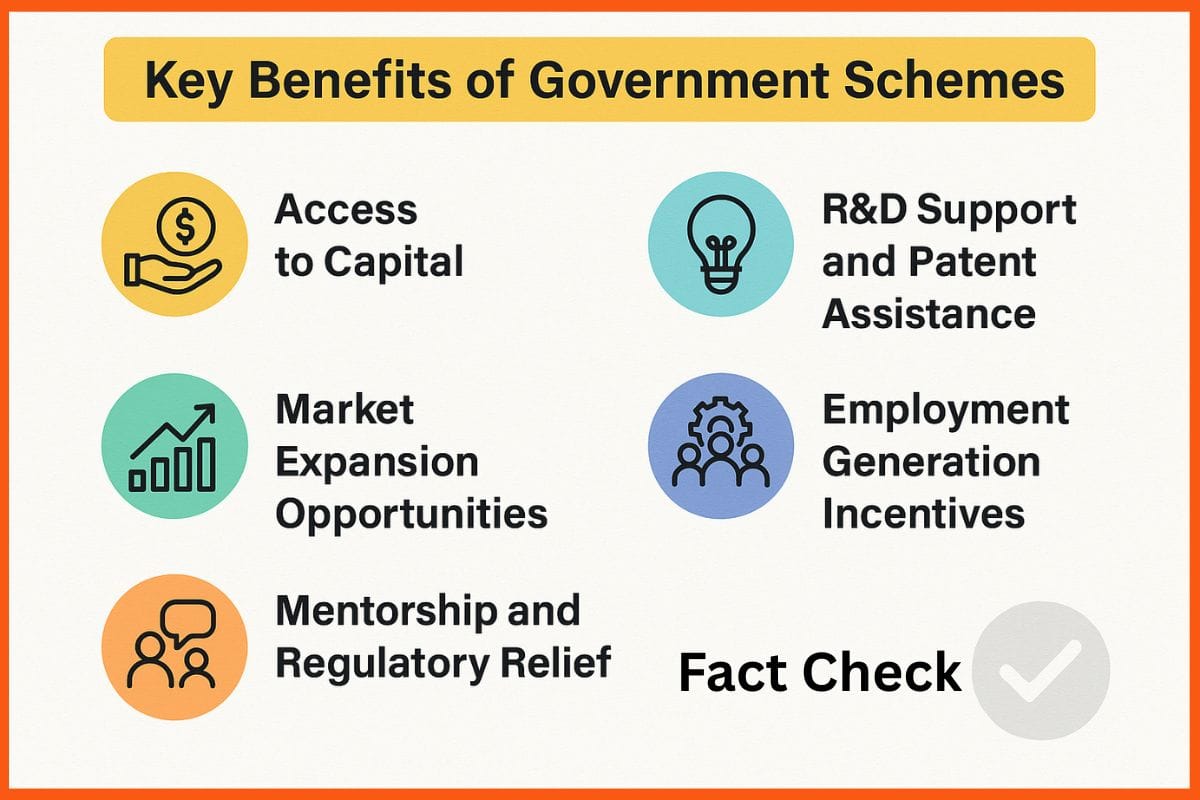
    Key Benefits of Government Schemes:

    Key Benefits of Government Schemes
    Key Benefits of Government Schemes
    • Access to Capital: Many schemes offer direct funding, low-interest loans, and credit guarantees, helping startups and MSMEs launch, expand, or pivot without the constant pressure of private financing.
    • Market Expansion Opportunities: Through initiatives promoting domestic and international trade, startups gain huge market access, helping them reach new customers and scale globally.
    • R&D Support and Patent Assistance: Schemes often include grants for research and development, along with patent filing support, enabling innovators to protect and commercialize their ideas effectively.
    • Mentorship and Regulatory Relief: Government programs often offer guidance from industry experts and simplified regulatory processes, reducing the compliance burden and fostering informed business decisions.
    • Employment Generation Incentives – Startups and MSMEs creating jobs can benefit from subsidies, tax rebates, and other incentives, aligning business growth with national economic development goals.
    • Fact Check: India is currently the 3rd largest startup ecosystem in the world and aims to support over 1 million startups by 2035, reflecting a robust policy framework geared toward entrepreneurship and innovation.

    List Of Government Schemes for Startups in India
    Looking for financial assistance and resources for your startup? Check out our comprehensive list of government schemes for startups in India.


    List of Major Government Subsidies to Boost Businesses in India

    India offers a range of government subsidies and support programs to help businesses grow, innovate, and compete in both domestic and global markets. These initiatives provide funding, tax benefits, and mentorship, making it easier for startups, MSMEs, and franchise owners to scale their operations efficiently.

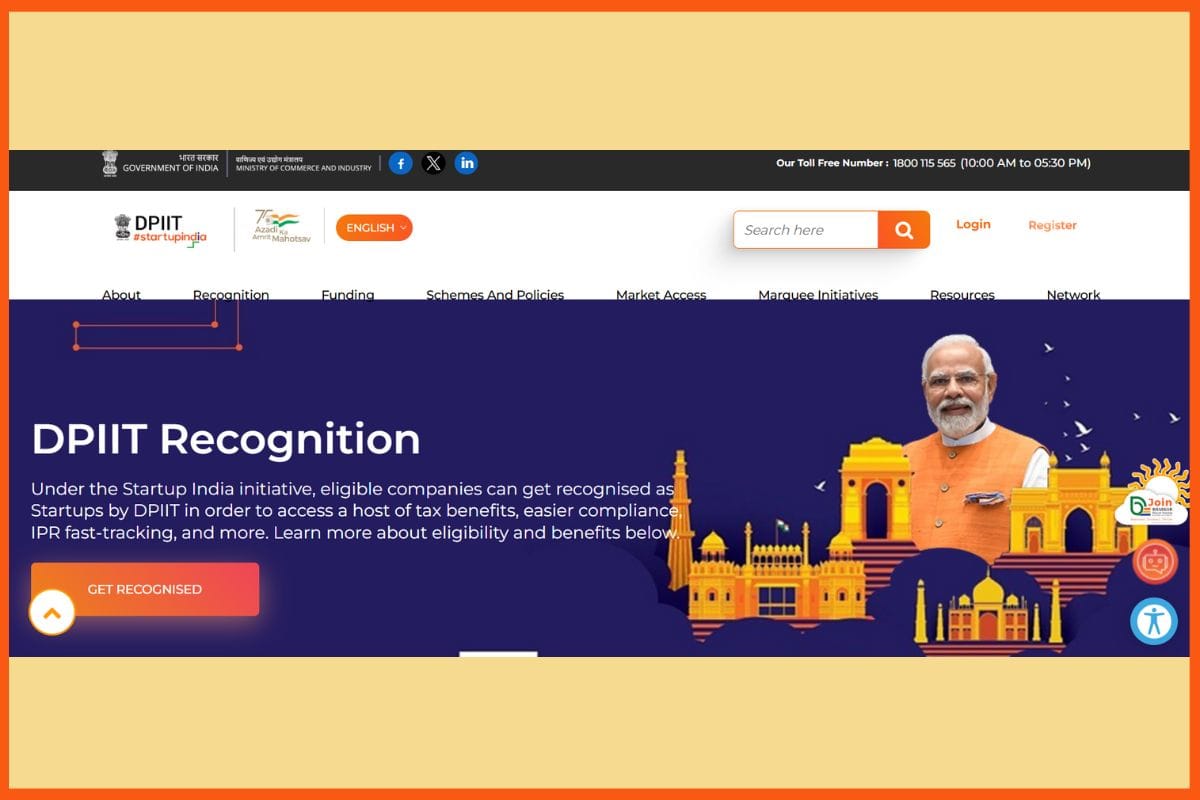
    1. Startup India Scheme

    Startup India Scheme
    Startup India Scheme

    Best for: Early-stage startups

    Key Benefits:

    • 3-year income tax exemption to reduce the initial financial burden.
    • Fast-track patent filing to protect innovative ideas quickly.
    • Self-certification under 9 labor and environmental laws.
    • Access to Startup India Seed Fund and Fund of Funds, providing crucial capital for growth.

    Eligibility Criteria:

    • Must be registered as a Private Limited Company, LLP, or Partnership.
    • Turnover less than INR 100 crore.
    • Business operational for less than 10 years.
    • Should have an innovative and scalable business model.

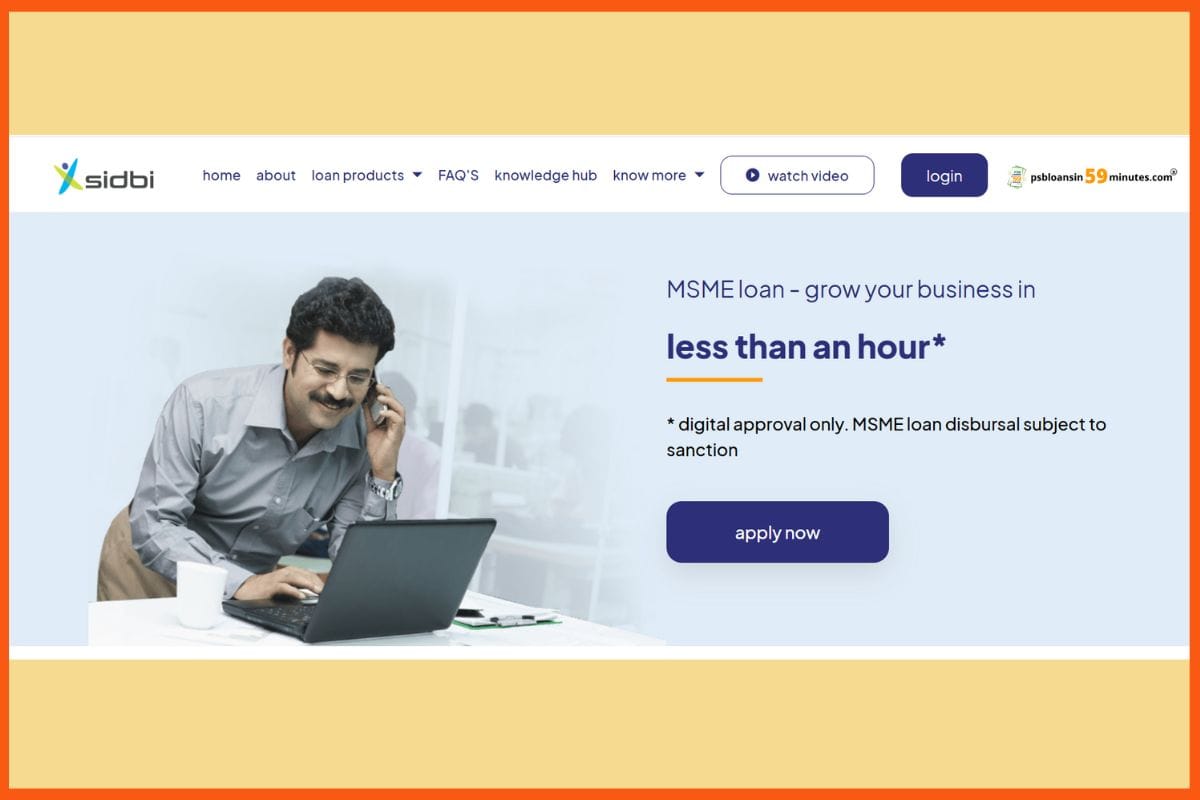
    2. MSME Business Loans in 59 Minutes

    MSME Business Loans in 59 Minutes
    MSME Business Loans in 59 Minutes

    Best for: New and existing MSMEs seeking quick financial support

    Key Benefits:

    • Fast approval within 59 minutes, enabling businesses to access funds quickly.
    • Loan amounts up to INR 1 crore, helping MSMEs expand operations or manage working capital.
    • Interest rates start from 8.5%, depending on the business type.
    • Process completion in 8–12 days, ensuring minimal delay for fund utilization.

    Eligibility Requirements:

    • GST verification to confirm business compliance.
    • Income tax verification for financial transparency.
    • Bank account statements for the last 6 months.
    • Ownership-related documentation to establish legitimacy.
    • KYC details of the business owner(s).

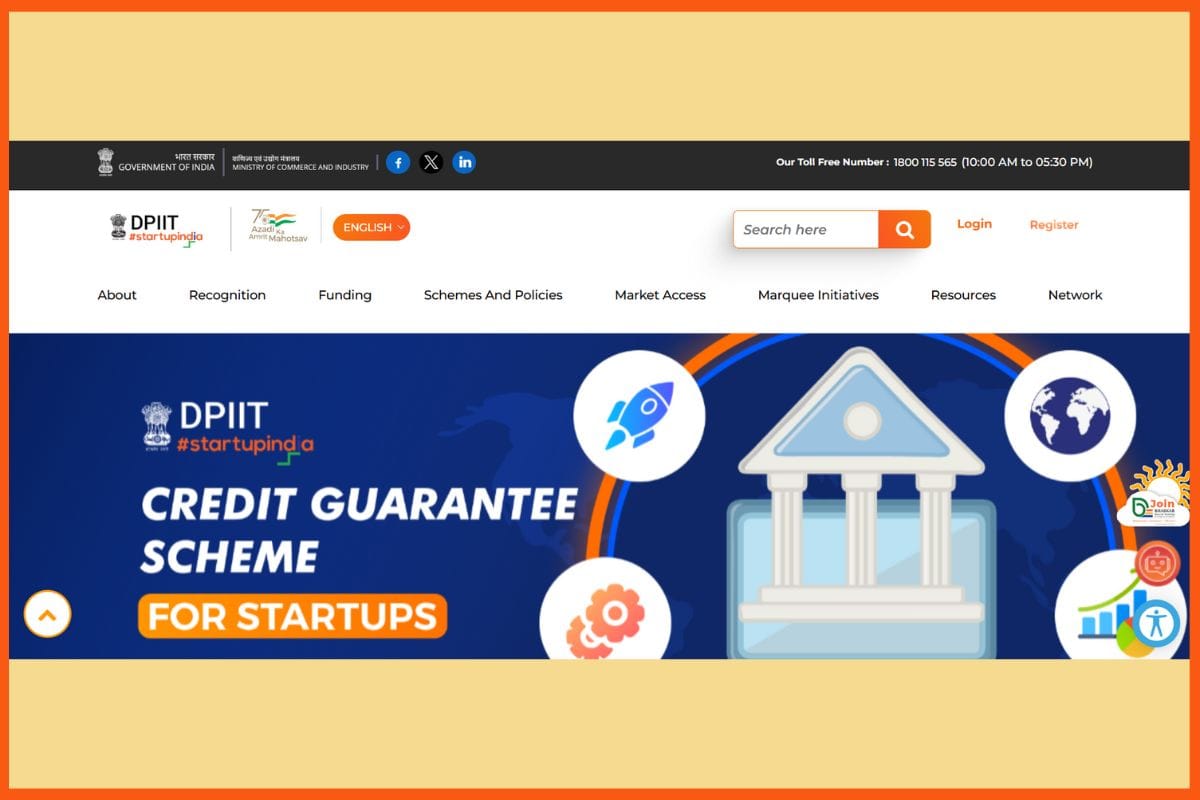
    3. Credit Guarantee Scheme for Startups (CGSS)

    Credit Guarantee Scheme for Startups (CGSS)

    Best for: Startups seeking credit without collateral

    Key Benefits:

    • Loans up to INR 5 crore through participating banks.
    • Flexible financing options, including term loans, working capital loans, and purchase order financing.
    • Up to 80% loan guarantee, reducing risk for both startups and banks.
    • Low interest rates with extended repayment periods to ease cash flow pressures.

    Eligibility Requirements:

    • Must be registered as a Private Limited Company.
    • Turnover up to INR 50 crore in the previous financial year.
    • Operates in an innovative and scalable business domain.

    4. Pradhan Mantri Mudra Yojana (PMMY)

    Best for: Small and medium businesses outside the farm and corporate sectors

    Loan Categories:

    • Shishu: Loans up to INR 50,000 for startups in the initial phase
    • Kishore: Loans ranging from INR 50,000 to INR 5 lakh for growing businesses
    • Tarun: Loans ranging from INR 5 lakh to INR 10 lakh for well-established enterprises

    Key Highlights:

    • Over 29.55 crore loans disbursed worth INR 15.52 lakh crore since its launch in 2015
    • Collateral-free loans designed to support entrepreneurship and promote financial inclusion
    • Encourages small business growth and employment generation across India

    List of Best Government Franchises in India
    Explore the comprehensive list of government franchises in India. Discover how to start your own government-approved franchise business and contribute to the nation’s economy.


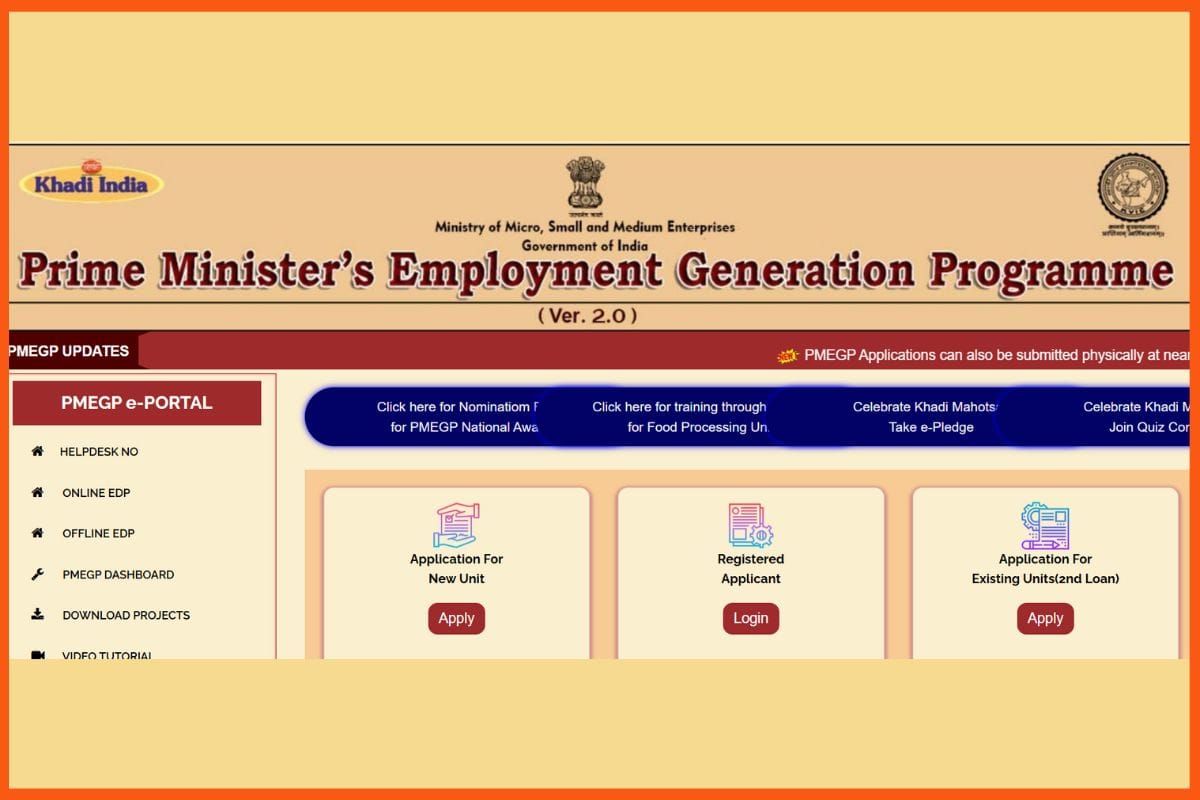
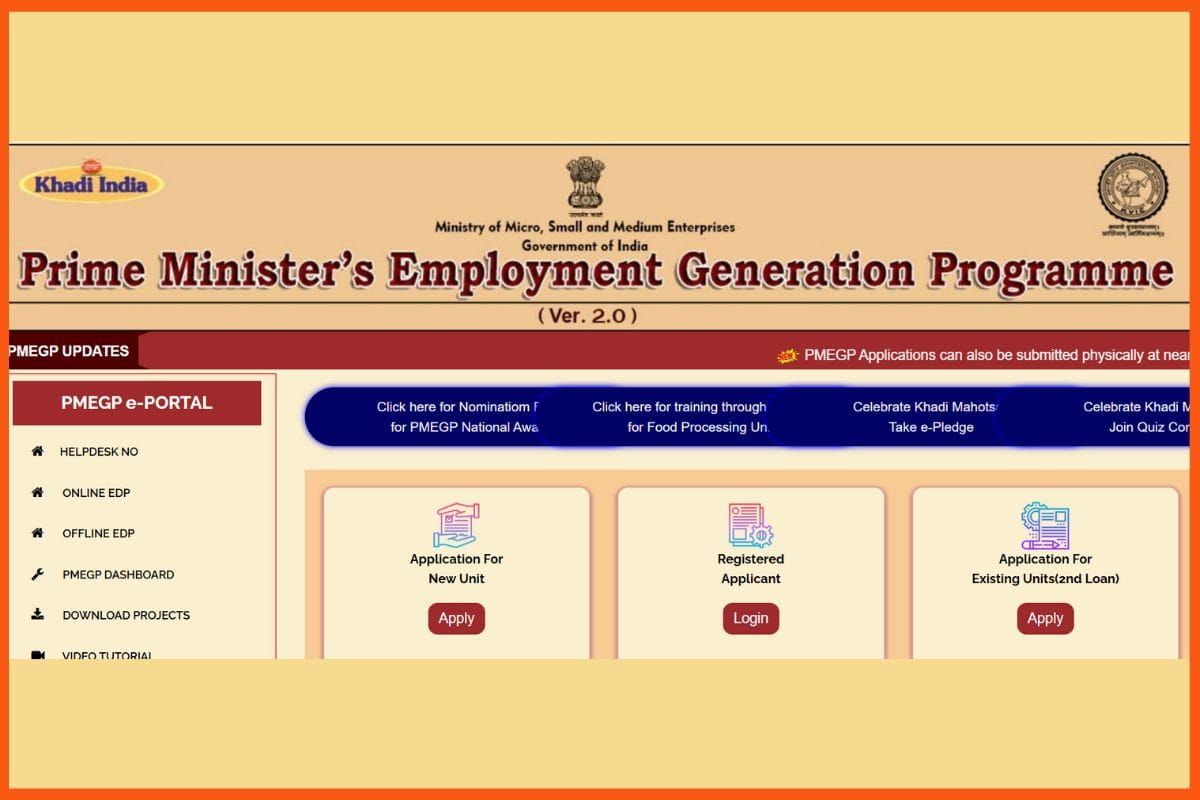
    5. Prime Minister Employment Generation Programme (PMEGP)

    Prime Minister Employment Generation Programme
    Prime Minister Employment Generation Programme
    • Managed by: KVIC & Ministry of MSME
    • Targets: New micro-enterprises in rural and urban areas

    Key Benefits:

    • Subsidy of 15–35% to reduce the initial investment burden
    • Loans up to INR 25 lakh for manufacturing units and INR 10 lakh for service enterprises
    • Strong focus on employment generation, supporting local economies

    Highlights:

    • Encourages entrepreneurship in both rural and urban regions
    • Promotes sustainable growth and job creation for micro enterprises

    Top 9 Schemes Financing Women Entrepreneurs in India
    If you are a women entrepreneur planning to start your own business, here we have compiled a list of top schemes boosting women entrepreneurs.


    6. Atal Innovation Mission (AIM)

    Atal Innovation Mission
    Atal Innovation Mission

    Best for: Startups in healthcare, education, and agriculture

    Key Benefits:

    • Grants up to INR 10 crore for innovative projects
    • Atal Tinkering Labs (ATL) and Atal Incubation Centers (AIC) support schools and startups
    • Funding for prototype development, market research, and capacity building

    Highlights:

    • Promotes innovation and entrepreneurship across sectors
    • Provides financial and mentorship support to scale ideas

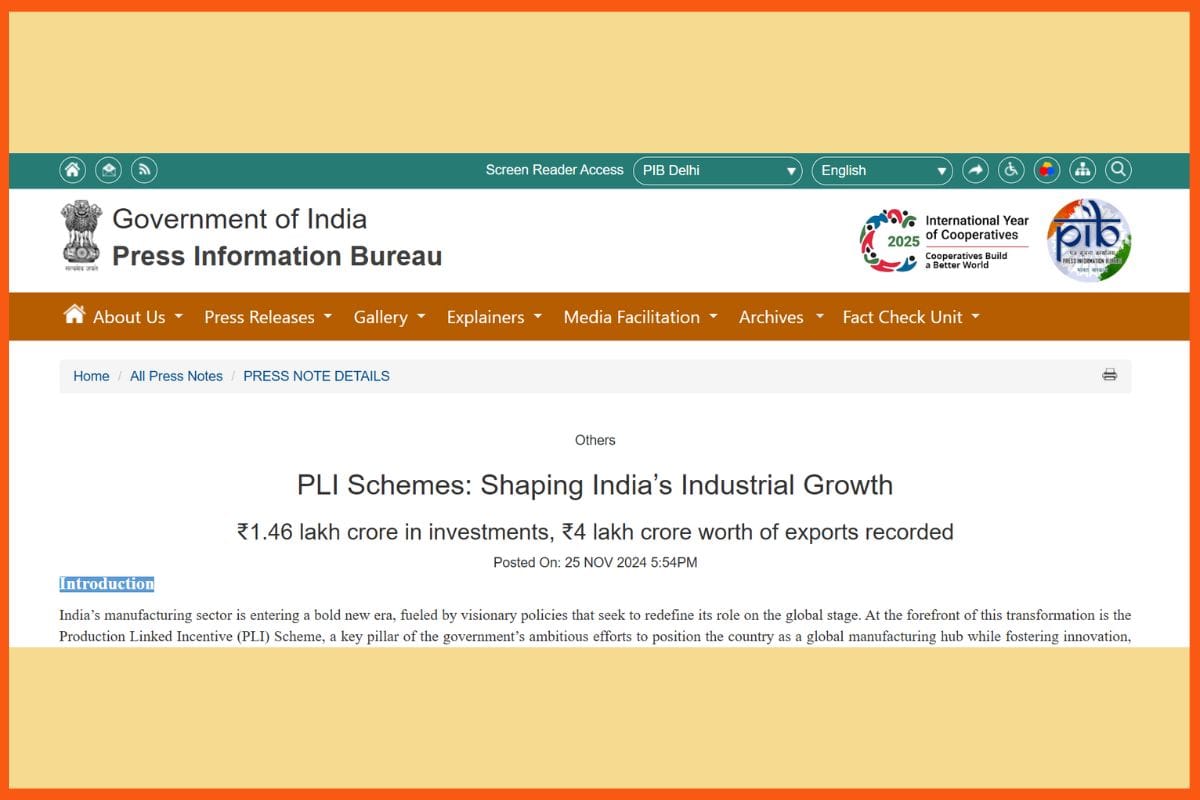
    7. Production Linked Incentive (PLI) Scheme

    Production Linked Incentive (PLI) Scheme
    Production Linked Incentive (PLI) Scheme

    Best for: Manufacturers in electronics, technology, pharmaceuticals, and automotive sectors

    Key Benefits:

    • Financial incentives to boost domestic manufacturing
    • Encourages “Make in India” by providing extra benefits for locally produced goods
    • Government allocation of INR 1.97 lakh crore for promoting industrial growth

    Highlights:

    • Strengthens India’s manufacturing ecosystem
    • Supports innovation, investment, and global competitiveness

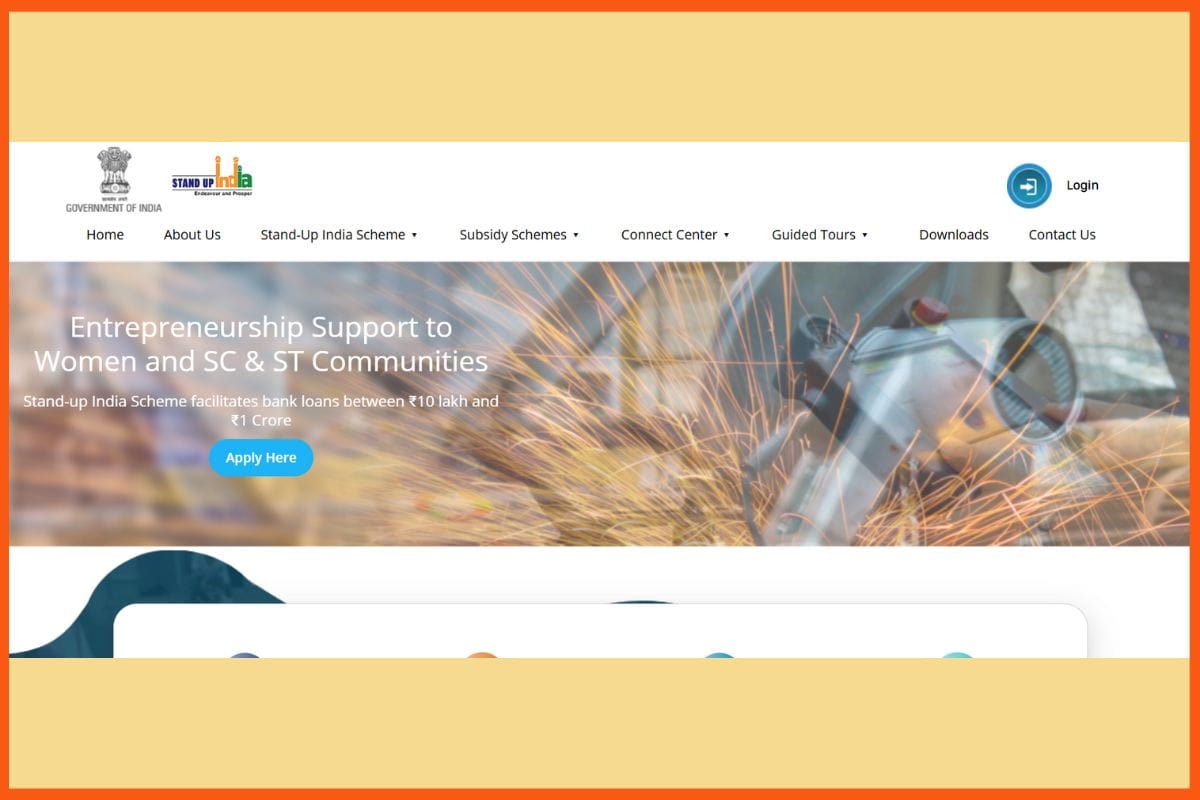
    8. Stand-Up India

    Stand-Up India
    Stand-Up India

    Designed for: SC/ST and women entrepreneurs

    Key Benefits:

    • Loans from INR 10 lakh to INR 1 crore for new businesses focus on greenfield projects, encouraging fresh startups
    • Up to 75% of the project cost is covered through financing
    • Available via all commercial banks, making access easier

    Highlights:

    • Promotes inclusive entrepreneurship and supports underrepresented groups
    • Helps startups overcome financial barriers to launch and scale

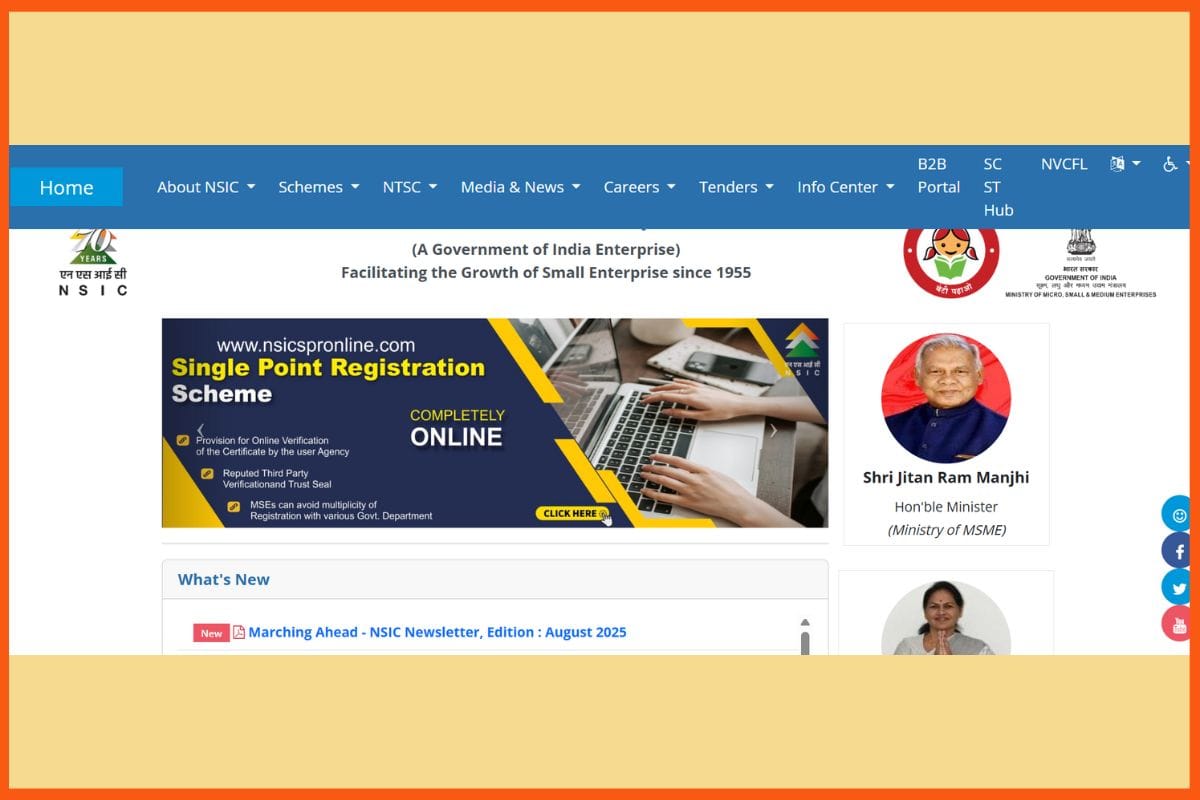
    9. National Small Industries Corporation (NSIC) Subsidy

    National Small Industries Corporation (NSIC) Subsidy
    National Small Industries Corporation (NSIC) Subsidy

    Best for: Small and medium-sized enterprises (SMEs)

    Key Benefits:

    • Promotion support to help businesses grow and reach new markets
    • Credit assistance for loans at low interest rates
    • Raw material support to ensure smooth production
    • NSIC facilitated loans worth INR 236 crore for MSMEs in 2020–21

    Highlights:

    • Helps small businesses improve credit scores and access financing
    • Supports overall growth and operational efficiency for MSMEs

    10. Market Development Assistance (MDA) Scheme

    Market Development Assistance (MDA) Scheme
    Market Development Assistance (MDA) Scheme

    Best for: MSMEs looking to expand into domestic and international markets

    Key Benefits:

    • Funding support for participation in trade shows, exhibitions, and buyer-seller meets
    • Helps MSMEs showcase products and connect with global buyers
    • Facilitates international shipments, boosting export potential

    Highlights:

    • Strengthens market presence for Indian MSMEs
    • Supports growth and competitiveness in both domestic and global markets

    Conclusion

    In 2025, India’s startup and MSME ecosystem will be stronger and more supportive than ever, thanks to a range of government schemes designed to fuel entrepreneurship and innovation. From tax exemptions, collateral-free loans, and credit guarantees to funding for research, market development, and international expansion, the government is creating an environment where businesses can grow with reduced risk. 

    By strategically implementing these schemes, startups and MSMEs can accelerate growth, enhance competitiveness, and contribute to job creation and economic development, making the journey of entrepreneurship smoother, smarter, and more sustainable in India’s dynamic business landscape.


    How to Get a Business Government Loan for Startup?
    The Indian government offers many government loans to help businesses. Here is the list of government loans for startups. Know how to get loans.

    FAQs

    Why are government schemes important for startups and MSMEs in India?

    Government schemes provide financial assistance, mentorship, tax benefits, and easier access to credit.

    What kind of financial help can entrepreneurs get from government schemes?

    They can get low-interest loans, subsidies, tax exemptions, grants, and even collateral-free credit facilities.

    What are the different categories of loans under the Pradhan Mantri Mudra Yojana (PMMY)?

    PMMY offers three categories:

    • Shishu: Up to INR 50,000 for new startups
    • Kishore: INR 50,000–5 lakh for growing businesses
    • Tarun: INR 5–10 lakh for established enterprises

    Do government schemes support women entrepreneurs?

    Yes, several schemes are designed specifically to encourage women entrepreneurs by providing easier access to funding and resources.

  • Why Meta’s Top AI Talent Is Walking Away: Chaya Nayak Quits to Join OpenAI

    On one hand, the world faces layoffs as thousands of jobs are lost to AI, while on the other hand, top AI talents are benefiting from the shift among big companies. Tech giants like Meta, OpenAI, Google, xAI, and others are poaching each other’s AI talent. Just a few days ago (August 25), Meta’s seven-figure ($1 million) top hire of 2025, Rishabh Agarwal, left the company after just 5 months.

    Now, we have Chaya Nayak, another high-profile employee and Director of Product Management for Generative AI, who shocked Meta by joining OpenAI. What’s interesting is that all these departures happened only after Meta announced a team reshuffle. Which brings to an important question: Is everything okay at Meta? Is this a typical exit or something Meta should worry about? Learn more. 

    What Happened at Meta?

    Chaya Nayak is an Indian-origin long-time executive of Meta. She worked for Meta for nearly 9 years, taking key roles, and then she called it quits on August 27, 2025. Here’s her timeline with Meta:

    • She joined Meta in October 2016 as Head of Data for Good till June 2018. 
    • She worked to create Disaster Maps, which are used to help different communities during times of crisis, such as natural disasters.
    • Later in June 2018, she moved into a new role, Product Manager & Head of Open Research & Transparency, till May 2023 (worked for 5 years).
    • In May 2023, she became the Director of Product Management for Generative AI.
    • According to her LinkedIn, she was part of Meta’s Llama models (these are Meta’s advanced AI tools, just like how ChatGPT is for OpenAI).  In August 2025, Chaya Nayak was hired by OpenAI. 

    Chaya Nayak at OpenAI

    She posted a long, descriptive update on her LinkedIn on August 27 about her departure from Meta and arrival at OpenAI.

    “At the same time, I couldn’t be more excited for what’s ahead. Today, I’m joining OpenAI to work with Irina Kofman on Special Initiatives – exploring new opportunities at the frontier of AI. It feels like the perfect next chapter: to take everything I’ve learned, and pour it into work that will help define what comes next for technology and society…”

    According to her:

    • She has officially joined OpenAI and will be working with Irina Kofman in the Special Initiatives team.
    • She’ll explore new experimental AI projects at OpenAI.

    Why Does This Matter to Meta?

    Although Meta is hiring top talent (50 AI hires from its rivals in 2025), it’s also losing talent. According to Wired Magazine, at least three high-profile AI experts left the company. And more specifically, from Meta’s Superintelligence Labs team, and in less than a month:

    • Avi Verma, a renowned AI Researcher hired by Meta, left the company to rejoin OpenAI.
    • Ethan Knight worked with OpenAI at the start of his career, then moved to Tesla, joined Meta, and left within a month to rejoin OpenAI.
    • Another popular name is Rishabh Agarwal, a man who received a $1 million package and left Meta within five months of joining.
    • And now Meta has also lost Chaya Nayak, too.

    With Meta losing its talent, will it still be able to create the world’s most powerful AI, ‘Superintelligence AI’, successfully? 

  • Porsche Marketing Strategy, Campaigns, Target Audience & Pricing Explained

    Porsche, a name synonymous with exhilarating high-performance automobiles, radiates unparalleled brilliance in the automotive realm. With a rich heritage spanning over seven decades, this iconic German automaker has left an indelible mark on the automotive landscape. Since its formation in 1931 by Ferdinand Porsche, the brand has consistently pushed the boundaries of engineering and design, captivating enthusiasts and racers alike.

    Porsche has experienced a remarkable journey from selling around 50,000 units annually in 1999 to exceeding 300,000 units in 2021. This phenomenal growth sets Porsche apart in the premium-luxury segment, outpacing competitors like Tesla with its unique positioning and pricing. The average price of a Porsche in Germany is 114 percent higher than that of a Tesla, and the gap widens to 316 percent in China and 24 percent in the United States.

    Porsche stands in a league of its own, occupying a position between traditional premium brands like Mercedes, BMW, and Audi, and the super luxury and supercar brands like Ferrari and Rolls-Royce. This strategic positioning makes Porsche the strongest brand within the Volkswagen group, offering exclusivity without being niche. It also provides a perfect platform for Porsche to innovate in electrification without compromising its image as a supercar brand, unlike Ferrari.

    In 2022, Porsche achieved worldwide sales of 309,884 units, a 3% increase from the previous year. The Indian market witnessed a remarkable 64% year-on-year growth, driven by strong demand for Porsche’s SUVs – the Macan and Cayenne – which experienced a robust 69% annual increase.

    Porsche's Worldwide Vehicle Deliveries from FY 2013 to FY 2022
    Porsche’s Worldwide Vehicle Deliveries from FY 2013 to FY 2022

    While Porsche saw gains in several markets, China remains its largest market despite a slight decline of 2.5%. In 2022, Porsche delivered over 90,000 units in China, solidifying its presence in this crucial market.

    Porsche’s legacy is intertwined with racing excellence. Its lightweight and quick-handling cars have won an estimated 24,000 auto races globally, including more than 50 class wins at the prestigious Le Mans.

    With total revenue of 40.1 billion euros in 2024, Porsche commands a significant share of the market. SUVs contribute the largest portion of Porsche’s revenue, accounting for 47%, followed by the Sports Cars segment.

    Porsche’s relentless pursuit of perfection, racing heritage, and ability to strike the perfect balance between luxury and performance have solidified its position as an unrivaled force in the automotive world. The brand continues to captivate enthusiasts with its exceptional growth, innovation in electrification, and unwavering commitment to its roots. Prepare to embark on a thrilling journey as you experience the power, elegance, and unparalleled driving pleasure that only Porsche can deliver.

    Porsche Target Audience
    Porsche Marketing Mix
    Porsche Marketing Campaigns
    Porsche Marketing Strategy

    Porsche Target Audience

    Porsche’s target audience consists of individuals who fit specific demographic, psychographic, and geographic criteria. Demographically, Porsche appeals to college graduates with a household income over $100,000, predominantly males (85%) but also attracting females (15%), and targeting the 25-54 age group. Geographically, Porsche has a global presence with dealerships in major cities worldwide, employing regional variations in their product mix.

    Porsche’s market expansion efforts have been marked by the introduction of the Cayenne in 2003, the first luxury SUV, and the Panamera in 2009, a four-door sports coupe. These models have created new market segments and contributed significantly to the brand’s profits.

    Porsche Cayenne | Porsche Marketing Strategy
    Porsche Cayenne | Porsche Marketing Strategy

    Through strategic segmentation and targeted marketing efforts, Porsche effectively reaches its desired audience, capturing their attention with the allure of performance, luxury, and everyday enchantment.


    BMW Marketing Strategy: How the Iconic Brand Reaches Its Target Market
    Discover BMW’s promotion and marketing strategy and how the luxury automaker uses advertising, sponsorships, emotional branding, and global events to connect with its premium audience and boost brand loyalty.


    Porsche Marketing Mix

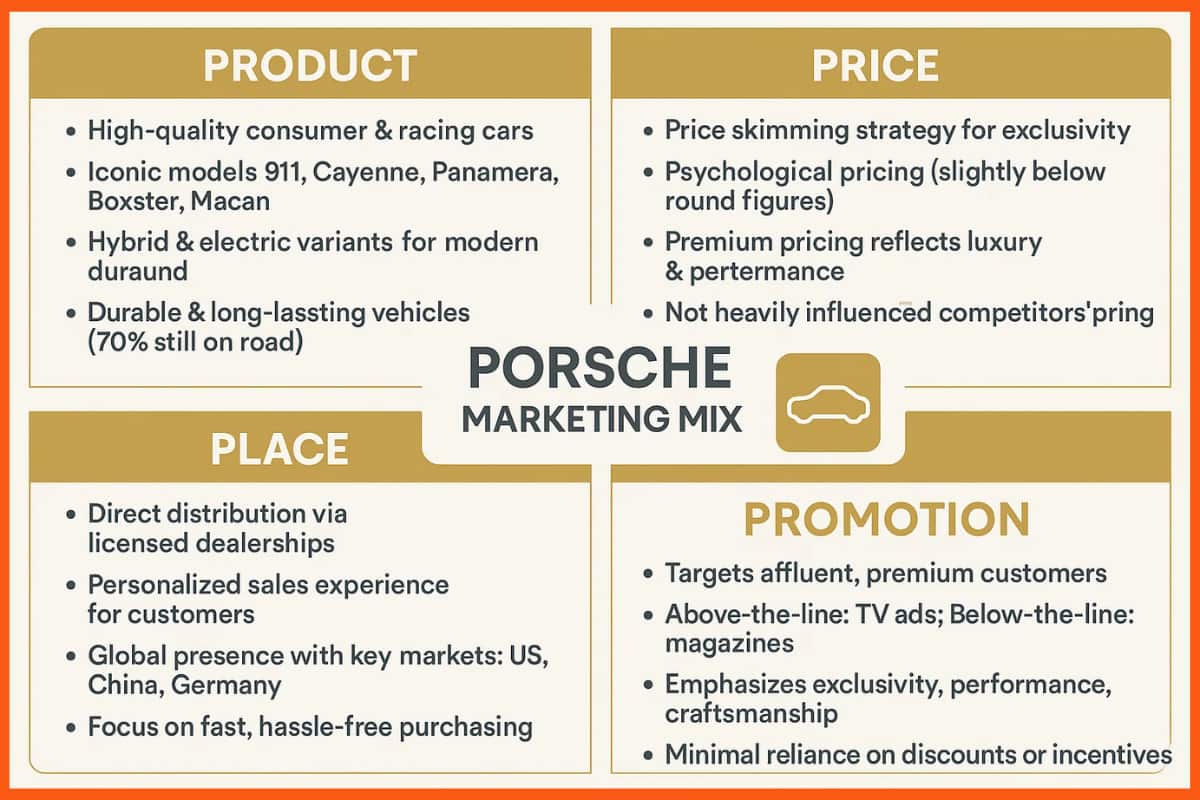
    Porsche, the German-based automobile manufacturer renowned for its high-performance vehicles, has successfully implemented a marketing mix targeting marketing mix the luxury segment. They have crafted a powerful and effective marketing mix to position themselves as a leader in the luxury sports car industry.

    Porsche Marketing Mix
    Porsche Marketing Mix

    Porsche Product Strategy

    With a strong emphasis on high-quality and premium offerings, Porsche has crafted a diverse product portfolio that appeals to discerning customers. The company offers a diverse portfolio of consumer cars, including iconic models like the Porsche 911, Cayenne SUV, Panamera, Boxster, and Macan. They also manufacture racing cars and develop concept cars to stay at the forefront of automotive innovation. In response to the growing demand for electric and hybrid vehicles, Porsche has invested in manufacturing hybrid and electric variants, with hybrid options available for models like the 911, Boxster, and Cayenne.

    Porche's Iconic Models
    Porche’s Iconic Models

    Porsche’s commitment to producing quality products is evident in the longevity and durability of its vehicles. With 70% of Porsche cars built still on the roads, the brand has established a reputation for delivering enduring and reliable vehicles. The company manufactures over 200,000 cars annually, primarily in Europe, with an additional production plant in Malaysia.

    Porsche Pricing Strategy

    Porsche’s pricing strategy is characterized by price skimming, where they initially introduce their products at a high price to highlight exclusivity and then gradually reduce prices over time to boost sales. This approach has proven successful, as evidenced by the Porsche Panamera S, which was initially priced at $130,000 but later lowered to $120,000. The brand also employs psychological pricing tactics, setting prices slightly below round figures to enhance customer perception of value. Their sales remain unaffected by price changes due to the exclusivity of their cars, and Porsche does not follow competitor-based pricing.

    Porsche Place Strategy

    The company’s distribution strategy sets it apart by adopting a direct distribution channel. Customers can directly approach licensed dealerships, where sales personnel provide in-depth information about the products. This approach ensures a fast and hassle-free purchasing experience. While Porsche has a global presence, the United States, China, and Germany are their top-selling markets.

    Porsche Promotion Strategy

    Porsche’s promotional and advertising strategy primarily targets affluent and wealthy individuals in the premium segment. They engage in above-the-line marketing through television advertisements and also utilize below-the-line marketing through magazines. However, Porsche does not heavily rely on incentives or discounts, as their target customers are less price-sensitive. Instead, they emphasize the exclusivity, performance, and craftsmanship of their vehicles in their promotions.

    Porsche has maintained its brand image and positioned itself as a leader in the luxury automobile segment. Through effective pricing strategies, a direct distribution channel, and targeted promotions, Porsche continues to thrive as a renowned and trusted brand in the global automotive industry.


    Bentley Marketing Strategy & Target Market: Inside Bentley Motors’ Luxury Branding, Design, and Cars
    Explore Bentley’s marketing strategy and target market, and discover how Bentley Motors crafts its luxury branding, design, and world-class cars to attract affluent buyers globally.


    Porsche Marketing Campaigns

    Porsche has implemented successful marketing campaigns to engage their audience and reinforce their brand image.

    One notable campaign is The Heist, a thrilling short film showcasing the Porsche Museum being infiltrated by car thieves. The campaign utilized social media, YouTube, and TV to capture the attention of car enthusiasts.

    Porsche Super Bowl Commercial EXTENDED CUT – “The Heist”

    Another campaign, Engineered for Magic. Everyday, emphasized the everyday usability of Porsche cars, showcasing real-life scenarios where owners integrated their vehicles into daily routines.

    Porsche commercial: Engineered for Magic. Everyday

    These campaigns effectively combine storytelling, excitement, and relatability to connect with the target audience and solidify Porsche’s position as a luxury automotive brand.


    Rolls-Royce Marketing Strategy & Advertising Campaigns: Target Market, Promotion & Brand Success
    Explore Rolls-Royce’s marketing strategy, advertising campaigns, target audience, and how the luxury brand promotes exclusivity and craftsmanship worldwide.


    Porsche Marketing Strategy

    Porsche has consistently demonstrated its prowess in the automotive industry through its exceptional marketing strategies. With a focus on attracting a younger and more diverse audience, Porsche has successfully positioned itself as a brand that blends innovation, performance, and elegance. Let’s delve into Porsche’s top marketing strategies, highlighting their effectiveness and brilliance in capturing the hearts of consumers.

    Targeting Strategy

    Porsche’s targeting strategy revolves around catering to privileged and upscale clients, with a particular emphasis on increasing the number of female Porsche owners and reducing the average age of its customer base. By leveraging brand ambassadors like Maria Sharapova, Porsche successfully reached out to young female audiences. This approach resulted in a significant increase in female buyers, as evidenced by the rise in sales of models like the Cayenne SUV and Panamera.

    Porsche's Brand Ambassador Maria Sharapova
    Porsche’s Brand Ambassador Maria Sharapova

    Digital Marketing Strategy

    Porsche understands the power of digital platforms in engaging with customers. The brand utilizes social media as the foundation of its digital marketing strategy, interacting with millions of followers through platforms like Facebook, Instagram, and Twitter. Porsche’s social media accounts showcase visually stunning car photos, informative blog articles, and relevant content, ensuring that customers have a remarkable brand experience.

    Innovative Advertising Campaigns

    Porsche’s advertising campaigns are both captivating and memorable. One notable campaign is the Timeless Machine series, which pays tribute to the iconic 911 model’s influence on pop culture over the years. The multimedia campaign features a whimsical 30-second spot, “Pop Star”, showcasing the 911 transforming into various objects it has appeared as, creating a sense of nostalgia and timelessness.

    The new Porsche 911. Timeless machine.

    Emphasizing the Porsche Experience

    Porsche’s marketing strategies go beyond promoting cars; they focus on delivering an immersive experience to customers. The brand organizes events and driving experiences such as the Porsche World Roadshow, where enthusiasts can test-drive Porsche models on racetracks, fostering a deep connection and passion for the brand. These experiences not only strengthen customer loyalty but also serve as effective word-of-mouth marketing.

    Porsche World Road Show - Singapore 2023
    Porsche World Road Show – Singapore 2023

    Collaborations and Partnerships

    Porsche has successfully partnered with other prestigious brands to enhance its marketing reach. For instance, the collaboration with Boeing resulted in the Boeing 777X meets Porsche 911 campaign, highlighting the shared values of innovation, performance, and precision engineering between the two iconic brands. Such collaborations amplify the brand’s visibility and attract diverse audiences.

    Customization and Personalization

    Porsche offers extensive customization options, allowing customers to create a car that suits their unique preferences. The Porsche Exclusive Manufaktur program enables customers to select personalized colors, materials, and finishes, providing a bespoke experience. This customization approach not only strengthens the emotional connection between customers and the brand but also showcases Porsche’s commitment to delivering individualized luxury.

    Heritage and Storytelling

    Porsche often highlights its rich history in marketing. A great example is the “Timeless Machine” campaign, which celebrated the 70th anniversary of the Porsche 911. The campaign showcased how 911 has evolved over the years while keeping its classic design and performance. Through videos and social media posts, Porsche connected the car’s legacy with both longtime fans and new enthusiasts, making the brand feel timeless and inspiring.

    Engaging Content Marketing

    Porsche excels in content marketing, leveraging its rich heritage and engineering expertise to create engaging and informative content. The brand publishes articles, videos, and documentaries that delve into the design, technology, and performance aspects of its cars. By providing valuable insights and stories, Porsche cultivates a sense of exclusivity and expertise, attracting enthusiasts and potential buyers.

    Influencer Marketing

    Porsche effectively utilizes influencer marketing to amplify its brand presence. Partnering with influential figures, such as professional racing drivers or celebrities passionate about cars, allows Porsche to tap into their large followings and reach new audiences. These influencers promote the brand, showcase their personal Porsche experiences, and engage with their fan bases, expanding the brand’s reach and relevance.

    Conclusion

    Porsche’s marketing strategies exemplify its commitment to innovation, personalization, and captivating storytelling. The brand’s ability to adapt and connect with diverse audiences while maintaining its core values is a testament to its marketing prowess.

    Porsche’s marketing strategies serve as a masterclass in capturing the hearts and minds of consumers. With a targeted approach, they have successfully expanded their audience and attracted a younger, more diverse demographic. Their innovative advertising campaigns, emphasis on the Porsche experience, and partnerships with influential figures have elevated the brand to new heights. Marketers and start-ups can draw inspiration from Porsche’s playbook, learning to craft compelling narratives, embrace digital channels, and create unforgettable brand experiences. It’s time to rev up your marketing engines and take a page from Porsche’s success story.

    FAQs

    What is Porsche target market?

    Porsche appeals to college graduates with a household income over $100,000, predominantly males (85%) but also attracting females (15%), and targeting the 25-54 age group.

    Which is the largest market for Porsche?

    China remains Porsche’s largest market despite a slight decline of 2.5%. In 2022, Porsche delivered over 90,000 units in China, solidifying its presence in this crucial market.

    What are the marketing strategies employed by Porsche?

    Below are the top marketing strategies followed by Porsche-

    • Targeting Strategy
    • Digital Marketing Strategy
    • Innovative Advertising Campaigns
    • Emphasizing the Porsche Experience
    • Collaborations and Partnerships
    • Customization and Personalization
    • Engaging Content Marketing
    • Influencer Marketing

    What is Porsche brand strategy?

    Focus on luxury, performance, and innovation; highlight heritage and exclusivity; offer premium, durable vehicles; target affluent, discerning customers worldwide.

    How does Porsche promote their cars?

    Porsche promotes its cars by combining heritage storytelling with modern marketing. Campaigns like “Timeless Machine” celebrate iconic models, while TV ads, magazine features, and social media reach affluent audiences. The brand also uses exclusive events, test drives, and motorsport sponsorships to showcase performance and craftsmanship, emphasizing luxury and exclusivity over discounts.

    How does Porsche advertise?

    Porsche advertises through TV and print ads, social media campaigns, heritage storytelling, and exclusive events, focusing on luxury, performance, and brand exclusivity.

    Which luxury SUV brands’ pricing best aligns with their brand image??

    Luxury SUV brands align their pricing with their brand image by reflecting exclusivity, performance, and prestige. For example, Porsche, Range Rover, and BMW set premium prices to emphasize sportiness, craftsmanship, and technological sophistication, while Bentley and Rolls-Royce use ultra-high pricing to reinforce rarity and bespoke luxury. This strategy makes the price itself a symbol of status and quality.